

This guide ranks the 10 best DeFi staking platforms in 2026 and shows what each one pays, what it charges and what can go wrong. It covers ETH, SOL, BTC and stablecoin options, so you can match a platform to the coins you already hold. We checked every yield and deposit figure against DefiLlama and each platform’s own site on 2 October 2026.
Staking used to mean locking coins and waiting. Today most top platforms hand you a token back, so your stake keeps working while it earns. That is useful, but it also stacks new risks on top of the old ones. This guide explains both sides in plain words, and it ends with what to know if you plan to build a staking platform of your own.
In this guide:
- The 10 best DeFi staking platforms, with a side by side table of yields, deposits and tokens
- Why the coin you stake sets your yield far more than the platform does
- The main types of DeFi staking, from liquid staking to restaking and Bitcoin staking
- The real risks, the 2026 rules and the tax point most stakers miss
- Which platforms closed or left this list, and how founders build a staking platform
See How Our MVP System Can Launch Your DeFi Staking Platform Faster
DeFi Staking Platform Development — done right.
- MVP System : Launch your top-tier staking platform 90% faster with ready-to-deploy DeFi modules.
- Pre-Built Wallets & Staking Engine : Seamlessly integrate token staking, rewards, and governance — no coding required.
- Brand & Customization : Your UI, your tokens, your staking pools — fully white-labeled.
- Revenue Engine : Earn from staking fees, token incentives, and liquidity rewards.
Get a free branded DeFi staking platform demo in 48 hours — before investing a cent!
Book a Free Demo to discover how our Best DeFi Staking Platform Development System can take you from idea to a live, secure staking platform in 8–12 weeks.
10 Best DeFi Staking Platforms in 2026
The 10 best DeFi staking platforms in 2026 are Lido, Rocket Pool, ether.fi, Jito, EigenCloud, Babylon, StakeWise, Aave, Ethena and Stake DAO. Five of them are built for ETH holders. The rest cover Solana, Bitcoin, stablecoins and governance tokens.
- Lido: the largest liquid staking platform, for ETH
- Rocket Pool: ETH staking spread across many small node runners
- ether.fi: ETH staking plus restaking in one token
- Jito: the main liquid staking platform on Solana
- EigenCloud: restaking, where staked ETH also secures other services
- Babylon: staking for native Bitcoin, with no wrapping
- StakeWise: ETH staking through vaults you choose
- Aave: stake aTokens to protect the lending market and earn rewards
- Ethena: stake the USDe dollar token for a variable yield
- Stake DAO: boosted yields from locked governance tokens such as CRV
DeFi Staking Platforms Compared
The table sets the 10 side by side. “Deposits” is the total value staked (TVL) per DefiLlama’s protocol data, and “Yield” is the 30-day average paid to stakers after fees, per DefiLlama yields. Both are from 2 October 2026 and change daily.
| Platform | You stake | You get | Deposits | Yield (30 days) | Best for |
| Lido | ETH | stETH | $26.6B | 2.25% | Deep liquidity and wide DeFi use |
| Rocket Pool | ETH | rETH | $1.4B | 2.16% | A spread-out node set; run a node with 4 ETH |
| ether.fi | ETH | eETH or weETH | $5.2B | 2.33% | Staking and restaking in one token |
| Jito | SOL | JitoSOL | $1.2B | 4.83% | Solana holders |
| EigenCloud | ETH, staked ETH tokens, EIGEN | A restaked position | $7.1B | Varies by service | Experienced restakers |
| Babylon | BTC | Nothing; BTC stays on Bitcoin | $3.4B | Paid in BABY, varies | Bitcoin holders |
| StakeWise | ETH | osETH | $1.0B | 2.30% | Picking your own vault |
| Aave (Umbrella) | aUSDC, aUSDT, aWETH and more | A staked aToken | $18.2B (whole Aave V3 market) | Lending rate plus rewards | Stablecoin holders |
| Ethena | USDe | sUSDe | $4.9B | 4.84% | Dollar yield, with funding risk |
| Stake DAO | CRV and other governance tokens, LP tokens | sdTokens | $0.16B | Varies by strategy | Boosted Curve-style yields |
1. Lido
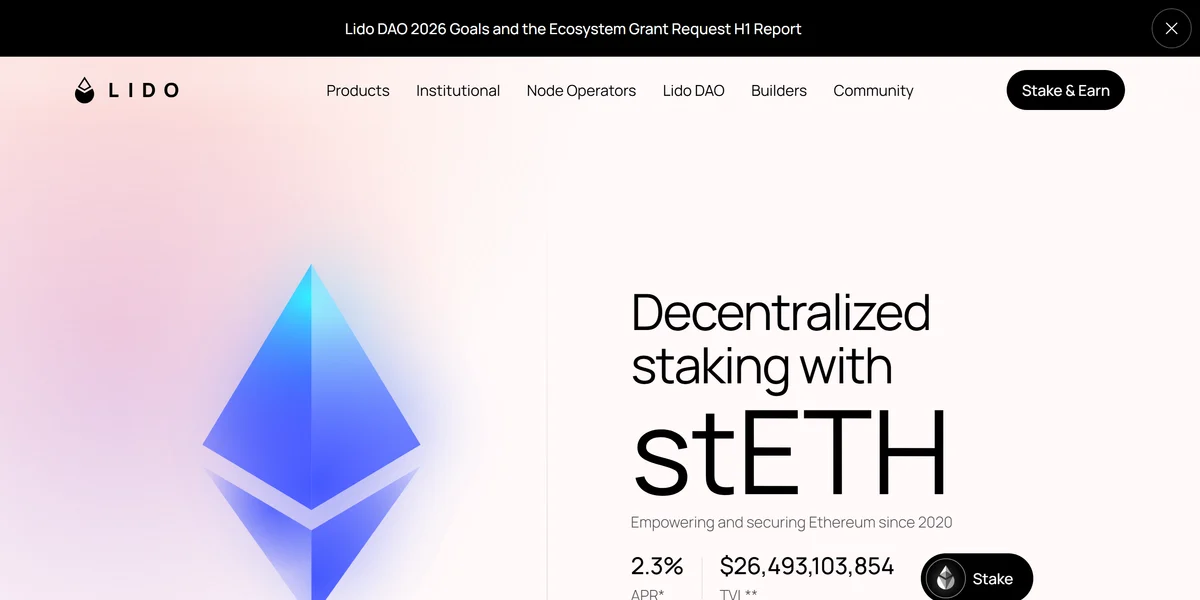
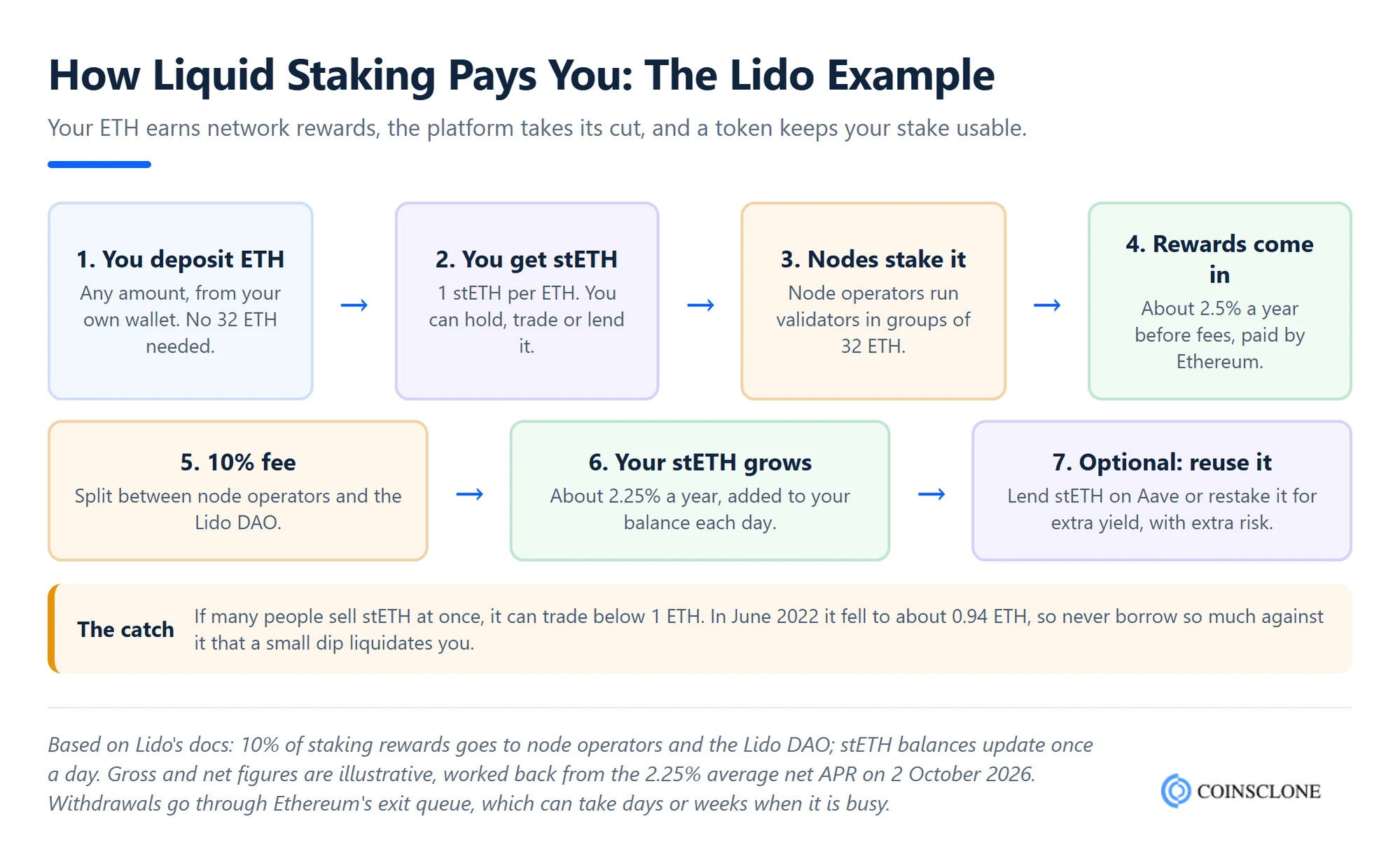
Lido is the largest DeFi staking platform, with about $26.6 billion of ETH staked. You deposit any amount of ETH and get stETH back, one for one. Your stETH balance then grows each day as rewards come in, and you can trade it or use it as collateral at any time.
Lido now stakes ETH only. It closed its Solana, Polygon, Polkadot and Kusama products, so older guides that list those chains are out of date. In January 2026 it launched Lido V3 and stVaults, which let firms and layer 2 networks set up their own staking rules on top of Lido.
- Fee: 10% of rewards, shared by node operators and the Lido DAO, per Lido’s docs
- Yield: about 2.25% a year after fees
- Governance token: LDO
- Watch out for: stETH can trade a little below 1 ETH when many people sell at once
2. Rocket Pool
Rocket Pool is an ETH staking platform run by thousands of small node operators instead of a short list of large ones. Stakers can deposit as little as 0.01 ETH and get rETH, which rises in value against ETH as rewards build up. The 32 ETH figure in older guides applies to solo staking, not to Rocket Pool.
Its biggest upgrade, Saturn One, went live on 18 February 2026. Node operators now need only 4 ETH per validator, and rETH stakers supply the other 28 ETH. The upgrade also added “megapools”, which let one operator run many validators from one contract, and a fee switch that pays part of the protocol’s ETH rewards to staked RPL.
- Yield: about 2.16% a year for rETH holders
- Node option: run your own validator with a 4 ETH bond and earn a share of the fees
- Watch out for: rETH has thinner trading markets than stETH, so large exits can cost more
3. ether.fi

ether.fi is a liquid staking platform that also restakes your ETH. You deposit ETH and get eETH, or weETH if you want a version that does not change balance. About $5.2 billion sits in its staking product, which makes it the second largest DeFi liquid staking platform for ETH, behind Lido.
Restaking means your staked ETH also helps secure other services, which pay extra rewards. That adds income, but it also adds new ways to lose part of your stake. ether.fi has since grown into a wider money app with a card and savings products, so stakers should know which product they are using.
- Yield: about 2.33% a year on weETH, before any restaking extras
- Token: eETH or weETH, widely used as collateral in DeFi
- Watch out for: restaking risk sits on top of normal staking risk
4. Jito
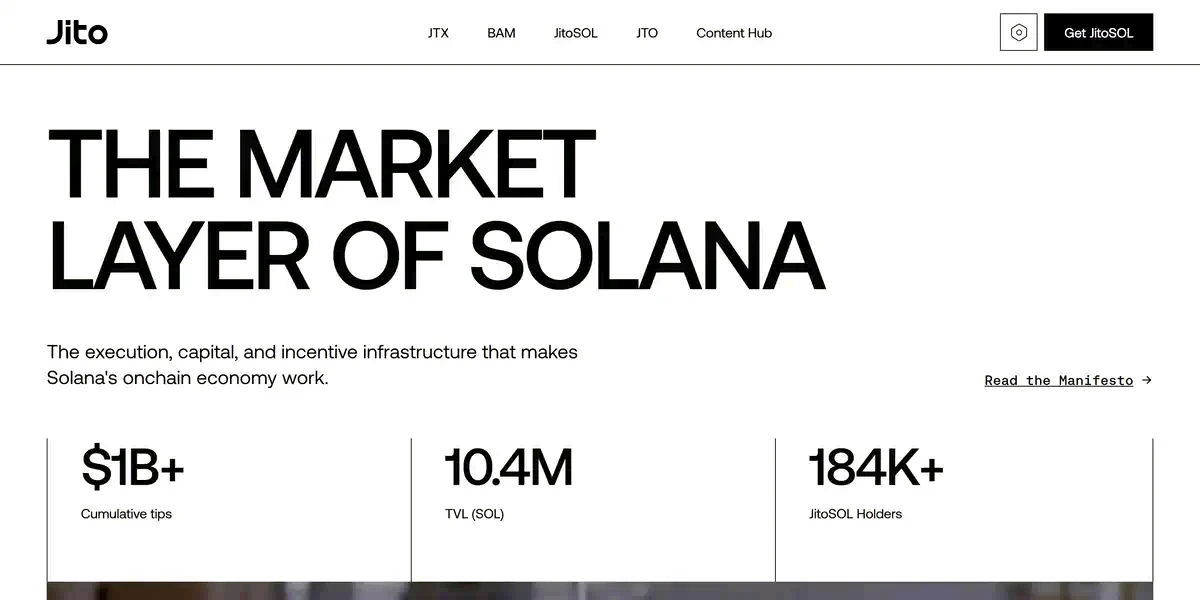
Jito is the leading liquid staking platform on Solana. You stake SOL and get JitoSOL, which earns normal staking rewards plus a share of the tips traders pay to get their trades into blocks (MEV). About 10.4 million SOL is staked through it, worth around $1.2 billion.
That extra tip income is why Jito usually pays more than a plain SOL stake. JitoSOL also works across Solana DeFi apps, so you can lend it or add it to liquidity pools.
- Fee: 4% of rewards, plus 0.1% only if you unstake directly on the Jito site, per Jito’s FAQ
- Yield: about 4.83% a year
- Watch out for: returns rise and fall with Solana trading activity
5. EigenCloud
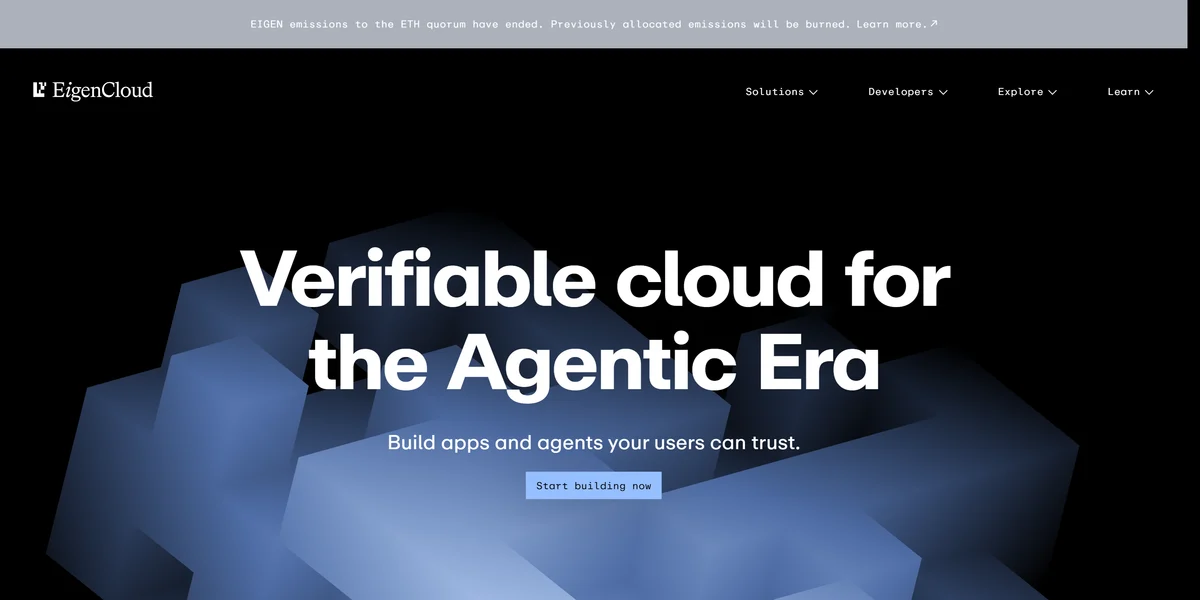
EigenCloud, the 2025 rebrand of EigenLayer (its restaking layer still uses that name), is the largest restaking platform, with about $7.1 billion deposited. You restake ETH or staked ETH tokens such as stETH, then choose an operator who uses that stake to secure other services. Those services pay rewards, and they can also slash your stake if the operator breaks their rules.
EigenCloud now pitches itself to app builders as much as to stakers. Its own site notes that EIGEN token rewards to the ETH pool have ended. So ETH restaking rewards now depend on what the services pay, which is less than many early users expected.
- Yield: varies by operator and service, and is not fixed
- Best for: experienced users who check each operator’s record
- Watch out for: stacked slashing risk and changing reward programs
6. Babylon
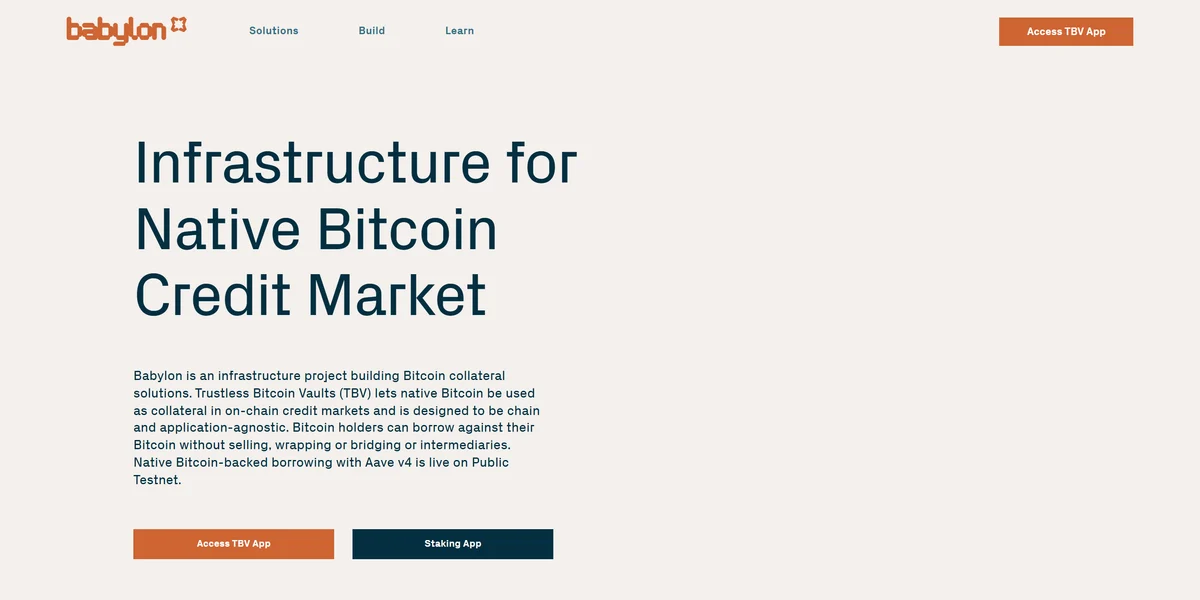
Babylon is the main platform for staking native Bitcoin. Your BTC stays on the Bitcoin chain in a time-locked script you control, so there is no wrapped token and no bridge. About $3.4 billion of BTC is staked through it.
Stakers help secure other chains and earn rewards, mostly in Babylon’s own BABY token. In 2026 Babylon also began building Trustless Bitcoin Vaults, which let people borrow against native BTC. Its Aave v4 test is live on a public testnet.
- Yield: paid in BABY, so the dollar value moves with that token’s price
- Token: none for direct staking; your BTC never leaves Bitcoin
- Watch out for: unstaking takes a waiting period, and rewards are not in BTC
7. StakeWise

StakeWise is an ETH staking platform built around vaults. Each vault is run by a chosen operator, so you can pick who stakes your ETH instead of joining one big pool. If you want a liquid token, you can mint osETH against your stake, and about $1.0 billion is staked across its vaults.
StakeWise also suits solo stakers and firms that want their own vault with their own rules. Its “Boost” feature uses lending markets to raise returns, which adds borrowing risk.
- Yield: about 2.30% a year on osETH
- Token: osETH, which replaced the older sETH2 model
- Watch out for: boosted strategies can be liquidated if prices move sharply
8. Aave
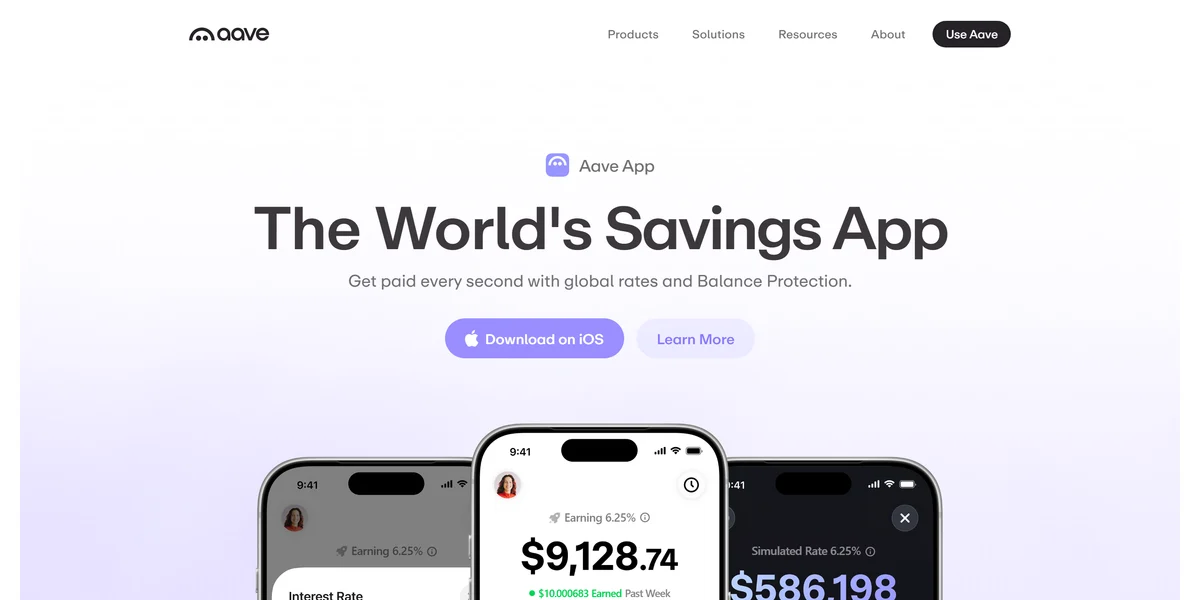
Aave is the largest DeFi lending platform, with about $18.2 billion in its V3 markets. Its staking product changed in June 2025, when Aave switched on Umbrella, its new safety module. Instead of staking the AAVE token in the old Safety Module, users now stake aTokens such as aUSDC or aUSDT.
Stakers earn the normal lending rate plus extra rewards. In return, their stake is burned automatically if that market ends up with bad debt. Aave is also a well known model for founders, and many startups look at developing a DeFi protocol like Aave with their own features.
- Yield: the lending rate on your asset plus Umbrella rewards
- Stake: aTokens on supported networks, not any ERC20 token
- Watch out for: you can lose part of your stake if the market takes a loss
9. Ethena
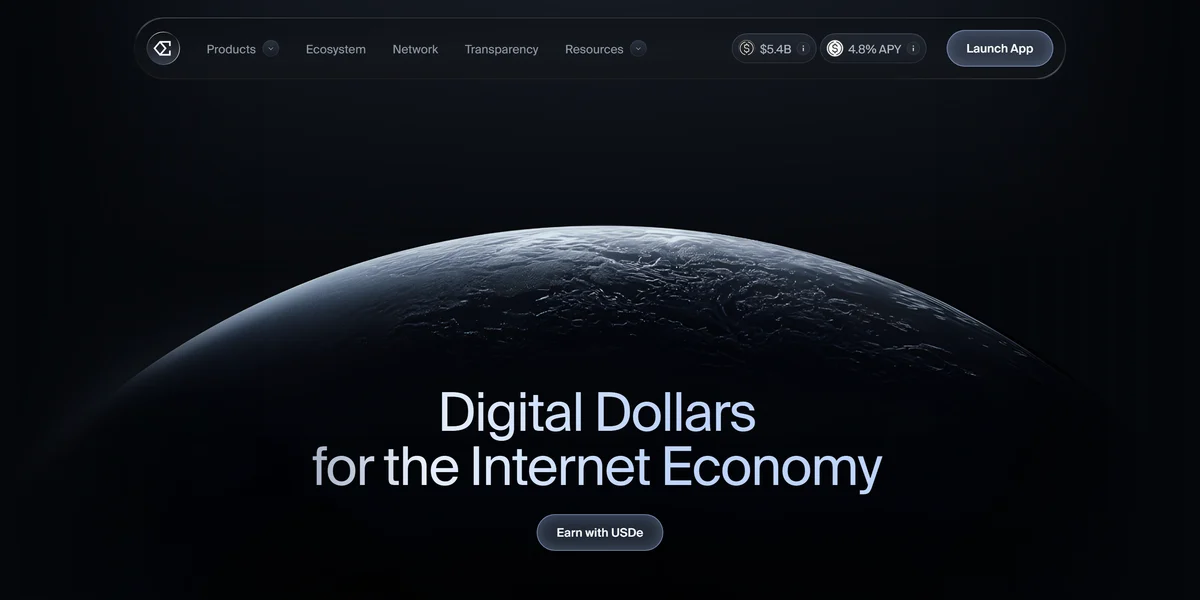
Ethena issues USDe, a synthetic dollar, and lets you stake it as sUSDe for a yield. About $4.9 billion of USDe is in use. The yield comes from futures funding payments and staked ETH, not from loans, so it can rise fast in busy markets and fall fast in quiet ones.
This makes sUSDe the go-to “dollar staking” choice in many guides. It is not a bank deposit, though, and it is not a fiat-backed stablecoin like USDC.
- Yield: about 4.84% a year on a 30-day average
- Token: sUSDe, which grows in value against USDe
- Watch out for: negative funding periods and a cooldown before you can unstake
10. Stake DAO
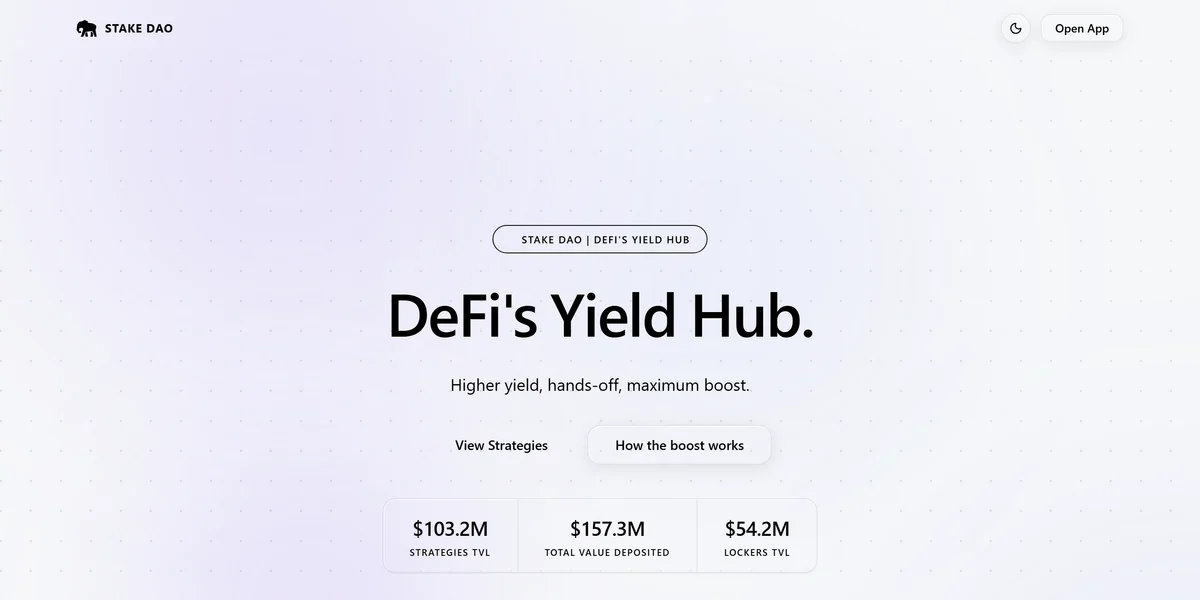
Stake DAO is a yield platform built around governance tokens. Protocols such as Curve reward people who lock their tokens for years. Stake DAO locks them for you and gives you a liquid sdToken back, so you keep the boosted rewards without the long lock.
About $157 million is deposited across its strategies and lockers. Its own token, SDT, can be locked as vlSDT for voting power and a share of protocol revenue.
- Yield: varies by strategy and by the token you lock
- Token: sdTokens such as sdCRV
- Watch out for: sdTokens can trade below the token they represent
What Is a DeFi Staking Platform?
A DeFi staking platform is an app where you lock up crypto to help run a blockchain or a protocol, and get rewards for it. It works a bit like a fixed deposit at a bank. You put money in, and you earn interest over time. The big difference is that smart contracts, not a bank, hold the funds and pay the rewards.
On proof of stake chains such as Ethereum and Solana, staked coins secure the network. The chain pays stakers new coins and part of the fees. A staking platform pools many small deposits, hands them to node operators, and passes the rewards back to you after its fee.
Most of the best DeFi staking platforms now give you a “liquid” token for your stake. So you are no longer stuck waiting. You can trade, lend or move that token while the stake behind it keeps earning.
How Does a DeFi Staking Platform Work?
Staking on a DeFi platform is easy to follow, even with basic knowledge. The steps are the same on most platforms:
- Get the coin: buy the asset the platform stakes, such as ETH, SOL or BTC, and keep it in a wallet you control.
- Connect your wallet: open the platform’s app and connect a non-custodial wallet such as MetaMask.
- Check the terms: look at the fee, the unstaking time and any lock period before you sign.
- Stake: confirm the deposit. On a liquid staking platform, you get the receipt token (stETH, rETH, JitoSOL) right away.
- Track rewards: rewards add to your balance or raise the token’s value, usually once a day.
- Unstake: either swap the token back on a DEX in seconds, or request a withdrawal and wait for the queue.
The chart below follows one ETH deposit through Lido, from wallet to rewards.
As the market for DeFi staking grew, so did demand for feature-rich staking platforms. That is why DeFi staking platform development has become a steady trend, with startups and established firms both launching their own products.
Types of DeFi Staking
The best DeFi staking platforms do not all do the same job. They fall into six types, and each one carries a different risk.
- Liquid staking: you stake a chain’s own coin and get a token back that you can use elsewhere. Lido, Rocket Pool, StakeWise and Jito work this way.
- Restaking: staked ETH also secures extra services for extra rewards. EigenCloud and ether.fi lead here.
- Node staking: you run your own validator, either alone with 32 ETH or with a smaller bond through Rocket Pool.
- Bitcoin staking: native BTC secures other chains without leaving Bitcoin. Babylon is the main option.
- Safety and stablecoin staking: you stake to cover a protocol’s losses (Aave Umbrella) or stake a dollar token for yield (Ethena).
- Governance locking: you lock a protocol’s token for votes and boosted rewards, often through a helper like Stake DAO.
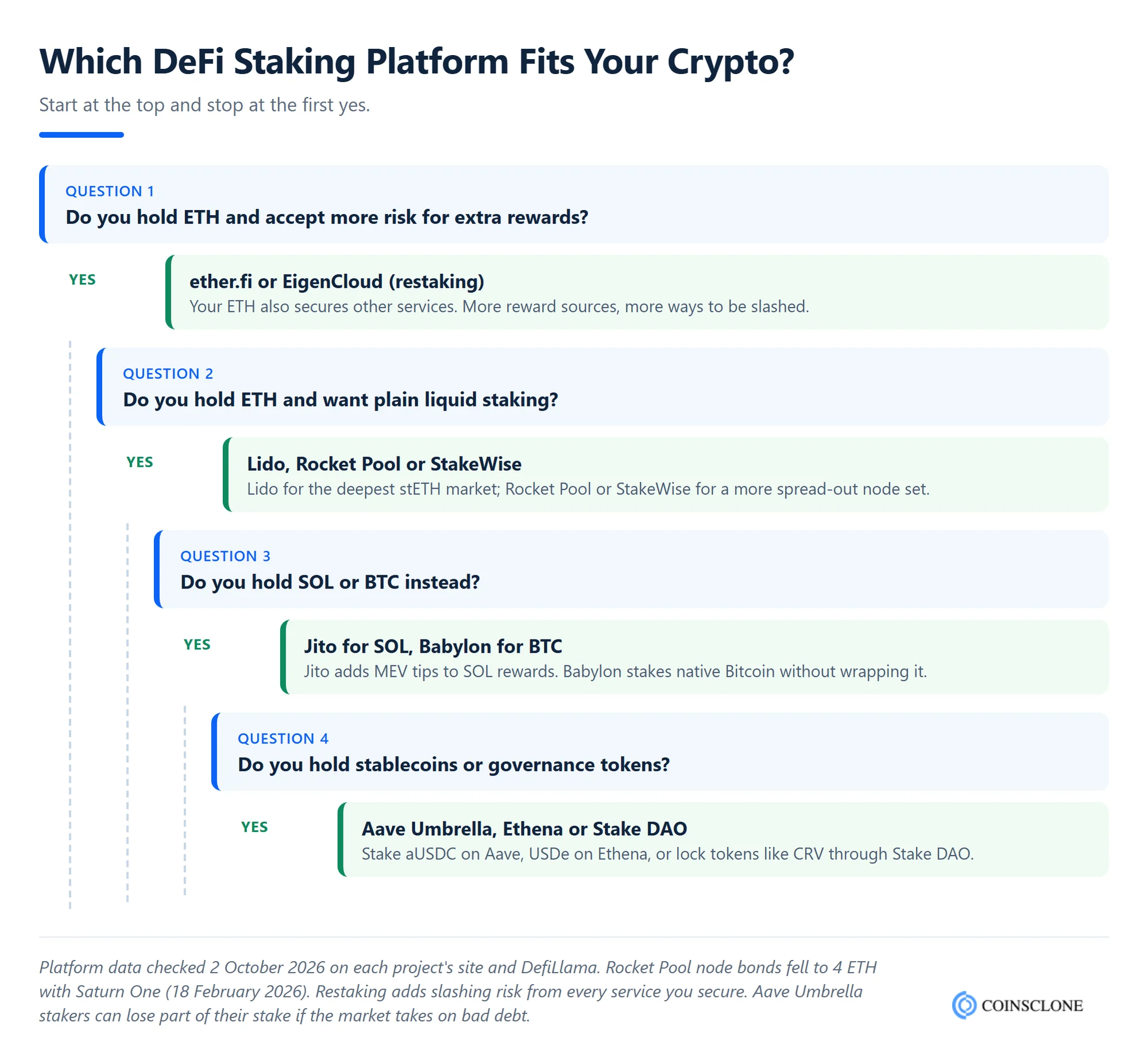
How to Choose the Best DeFi Staking Platform
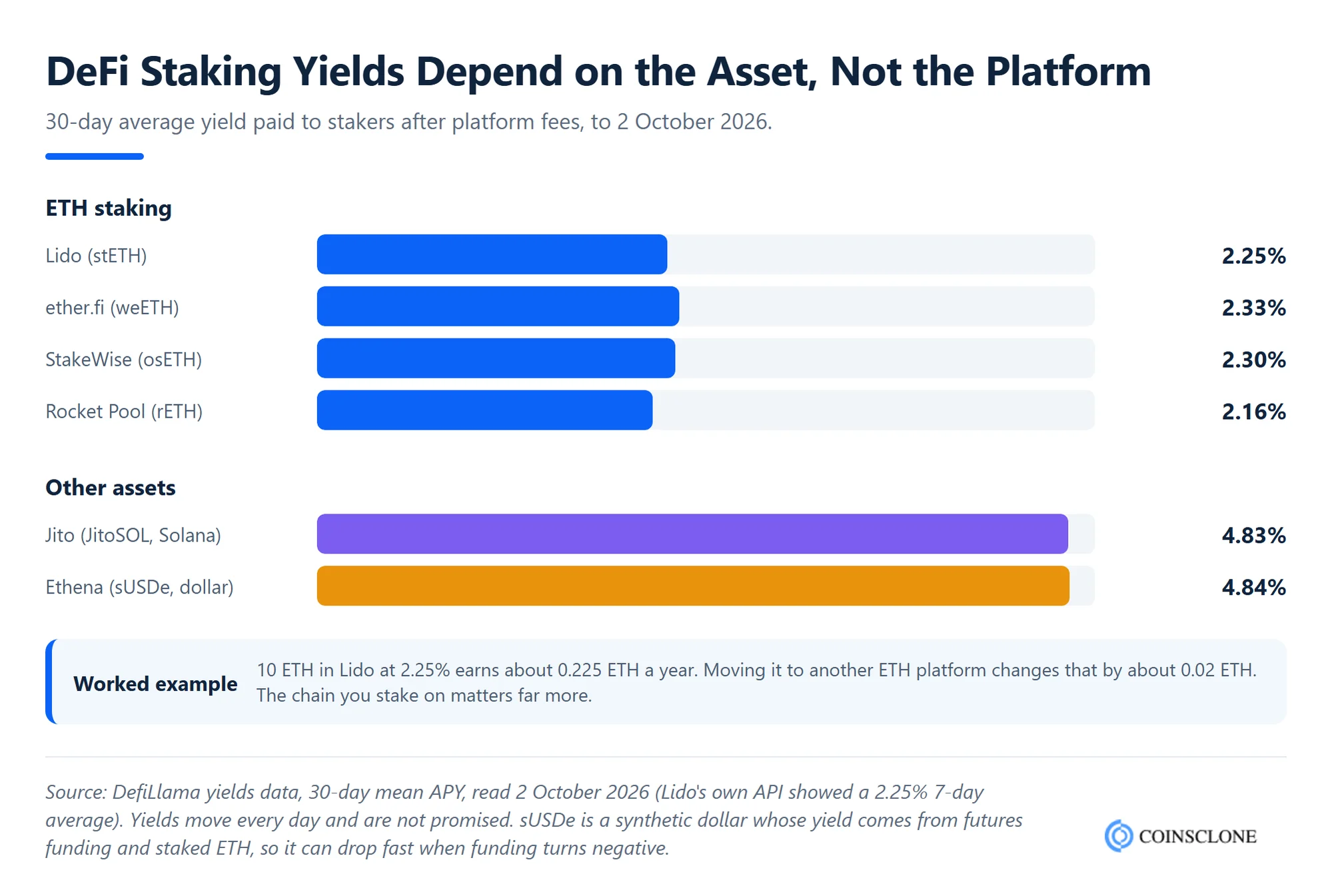
Start with the coin you hold. The yield chart above shows that ETH platforms all pay within about 0.2 points of each other. Moving from one to another changes very little, while staking a different asset changes a lot. So the real choice is about risk, liquidity and trust, not a few basis points.
Check these points before you pick:
- Track record: how long the contracts have run without a major loss, and how many audits they have.
- Liquidity of the token: can you sell stETH or JitoSOL quickly, at close to full value?
- Fees: most platforms take about 4% to 15% of rewards, which is already built into the yields above.
- Exit time: how long a direct withdrawal takes, and what it costs to exit early on a DEX.
- Spread of node operators: a wider spread lowers the risk of one bad operator hurting everyone.
- Who controls upgrades: whether a small team or a DAO vote can change the contracts.
Risks of DeFi Staking
DeFi staking rewards are real, but they are payment for taking risk. These are the main ones:
- Smart contract risk: a bug or hack in the platform’s code can drain funds. Audits lower this risk but never remove it.
- Slashing: if a validator breaks the chain’s rules, part of the stake is destroyed. Restaking adds more rules, and so more chances to be slashed.
- Depeg risk: liquid tokens can trade below the coin they stand for. In June 2022, stETH fell to about 0.94 ETH during a market sell-off.
- Exit queues: on Ethereum, withdrawals wait in a queue that can stretch to days or weeks when many people leave at once.
- Leverage: borrowing against a staked token to stake more can turn a small price dip into a forced sale.
- Reward token risk: if rewards are paid in a platform token, such as BABY, their value moves with that token’s price.
A simple rule helps. Every extra layer, from restaking to lending your staked token, adds yield and adds a new way to lose money. Only stack layers you understand.
DeFi Staking Rules and Taxes in 2026
In the US, the SEC’s staff said in May 2025 that protocol staking is not a securities offering. In August 2025 it added that certain liquid staking activities, and the receipt tokens they create, are not securities either. Restaking and products with set or promised returns fall outside those statements.
In the EU, MiCA rules apply to firms that offer staking as a service, while fully decentralized protocols sit outside its scope. Other countries vary, so check your local rules before you stake large sums.
Taxes are the part most people miss. In the US, the IRS says in Revenue Ruling 2023-14 that staking rewards count as income when you gain control of them, at their value on that day. Many other countries take a similar view, so keep a record of every reward.
Platforms That Left This List
Two platforms named in earlier versions of this guide no longer fit it:
- Bake (formerly Cake DeFi): it suspended all crypto services on 15 April 2026 and turned remaining balances into US dollars.
- AQRU: it now sells business accounts for funds and holding companies in the Cayman Islands, not retail crypto yield. It was also a custodial service, not a DeFi platform.
How to Develop a DeFi Staking Platform?
You can build a DeFi staking platform from scratch, which is a long and demanding process. You choose the UI/UX design, the front end and back end, the features and the security setup yourself. Because you take on every part, it takes longer to develop a DeFi staking platform this way, and it costs more.
A faster route is white label staking software. The core is already built and tested, so you can launch sooner. You can still add your own features, rules and security controls, and change the design, theme and settings to match your brand.
Whichever route you take, the leaders above show what users now expect:
- A liquid receipt token, so users can stake and still use their funds
- Clear fees and exit times, shown before users sign
- Audited contracts and a bug bounty, before launch
- Wide operator choice, so no single node runner holds too much stake
- DeFi integrations, so the token works as collateral and in liquidity pools
Join Hands With Coinsclone for DeFi Staking Platform Development
Coinsclone is a DeFi development company that offers DeFi staking platform development services at a fair cost. We have been building blockchain products since 2018, with 350+ platforms delivered for 200+ clients across 20 industries. Our team builds staking platforms with liquid tokens, audited smart contracts and the DeFi links users expect from platforms like Lido and Rocket Pool.
We follow DeFi trends closely and know what it takes to compete in this space. Our clients trust us because we keep our staking, lending and wallet services up to date. So, contact our team to start your DeFi staking journey.
Frequently Asked Questions
What is the best DeFi staking platform?
For most ETH holders, Lido is the best DeFi staking platform in 2026, thanks to its size and the wide use of stETH. Rocket Pool and StakeWise suit people who want a more spread-out node set. For SOL the leader is Jito, and for BTC it is Babylon.
Is DeFi staking safe?
DeFi staking carries real risks: smart contract bugs, slashing, liquid tokens trading below value, and long exit queues. Large, audited platforms with years of history lower these risks, but none can remove them. Never stake money you may need at short notice.
Which DeFi staking is the most profitable?
On 2 October 2026, SOL staking through Jito and dollar staking through Ethena paid about 4.8% a year, against about 2.2% to 2.3% for ETH. Higher yields usually mean higher risk, and they change every day, so treat any rate as a snapshot, not a promise.
How much can I earn through DeFi staking?
At 2.25% a year, 10 ETH staked with Lido earns about 0.225 ETH. At 4.83%, 100 SOL in Jito earns about 4.8 SOL. Your result in dollars also depends on the coin’s price, which can move far more than the yield.
What is the difference between staking and DeFi staking?
Plain staking means locking a chain’s coin with a validator, often through an exchange that holds your keys. DeFi staking uses smart contracts, keeps you in control of your wallet, and usually gives you a liquid token you can use in other DeFi apps.
Can I use staked tokens as collateral in DeFi?
Yes. Tokens such as stETH, weETH, rETH and JitoSOL are accepted as collateral on major lending platforms, including Aave. Borrowing against them adds liquidation risk, so keep a wide safety margin.
Are DeFi staking rewards taxed?
In the US, staking rewards count as income when you gain control of them, under IRS Revenue Ruling 2023-14. Selling the rewards later can also create a capital gain or loss. Rules differ by country, so keep records of every reward you receive.
Related articles with more insight into DeFi:
Best Decentralized Exchanges to Get Started With
Best DeFi Liquidity Pools to Look Out For
Top DeFi Lending Platforms in 2026
See How Our MVP System Can Launch Your DeFi Staking Platform Faster
DeFi Staking Platform Development — done right.
- MVP System : Launch your top-tier staking platform 90% faster with ready-to-deploy DeFi modules.
- Pre-Built Wallets & Staking Engine : Seamlessly integrate token staking, rewards, and governance — no coding required.
- Brand & Customization : Your UI, your tokens, your staking pools — fully white-labeled.
- Revenue Engine : Earn from staking fees, token incentives, and liquidity rewards.
Get a free branded DeFi staking platform demo in 48 hours — before investing a cent!
Book a Free Demo to discover how our Best DeFi Staking Platform Development System can take you from idea to a live, secure staking platform in 8–12 weeks.