
Today’s crypto exchanges are no longer just built in grey areas. Around the world, governments are tightening rules, defining licensing structures, and setting clear boundaries for how crypto platforms can legally operate. While some countries are opening their doors to regulated crypto businesses, others are making compliance harder, slower, and more expensive. This creates a huge challenge for founders in deciding where to launch a crypto exchange.
Choosing the right country isn’t just about being “crypto-friendly.” It’s about legal stability, regulatory clarity, banking access, and long-term business security. A wrong jurisdiction could limit your growth potential, restrict your partnerships, or expose your business to potential shutdowns.
This blog break downs the legal avenues available for launching a crypto exchange in 2026. By understanding where regulations will help support your growth as opposed to hinder it, founders and businesses will be able to make informed choices when selecting the proper jurisdiction to achieve long-term success.
Why Legal Jurisdiction Matters For Crypto Exchange Launch in 2026?
Launching an exchange in 2026 is more than just a technological decision; it’s also a legal and regulatory strategy. As countries develop regulations on a global scale, exchanges will be subject to various types of structured compliance, including licensing, controls for holding funds, payments, protecting consumer data, and protecting consumers. The jurisdiction you choose will affect your ability to operate an exchange legally. It will also determine how easily you can grow, form partnerships, and build trust with your customers.
Compliance-first Crypto Economy
The entire crypto ecosystem is evolving to a regulation-driven model of growth. These jurisdictions require that all exchanges implement structured frameworks like AML, KYC, licensing, and reporting. Exchanges must make compliance a key part of their operations, not just an afterthought.
Institutional Partnerships & Banking Access
Banks, payment gateways, and institutional firms only work with licensed exchanges that operate in a regulated jurisdiction. When an exchange is licensed, it can conduct business with banks and create enterprise-level partnerships with other financial institutions, providing access to banking services, custody of cash, and access to fiat currency.
Investor Trust & Regulatory Credibility
Before an investor allocates capital to your project, they will evaluate your company’s regulatory standing. A company that is operating legally will bring credibility and transparency to your potential investors, which will help to build trust and long-term developer and investor confidence.
Long-term Scalability and Global Expansion
Regulatory jurisdictions facilitate international expansion through approved identification, passporting rights, and regulatory harmonization between countries.
Avoiding Regulatory Shutdowns and Licensing Risks
Exchanges operating in unregulated territories face the risk of being shut down, receiving fines, and being subject to litigation. Selecting the appropriate jurisdiction is critical to maintaining business continuity and operating in a secure environment.
In a market governed by regulatory frameworks, the first crucial decision is choosing the right jurisdiction. A wise choice enables access to banking, builds trust, and supports global growth, while a poor selection can stifle your business before it even scales. Now let us see…
Top Countries To Launch A Crypto Exchange Legally in 2026
Countries worldwide are enacting comprehensive regulations for cryptocurrencies, offering options for legally launching crypto exchanges through licensing, compliance frameworks, and regulatory authorities. Many jurisdictions not only permit legal cryptocurrency activity but also outline how to establish and operate a crypto exchange, including requirements like VASP/CASP licenses and fintech sandboxes. Regulatory compliance, licensing ease, banking integration, and scalability options vary by country and exchange type.
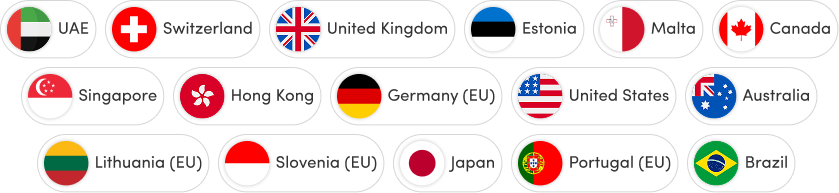
1. UAE (United Arab Emirates)
In the UAE, crypto exchanges can be launched through formal VASP licensing under VARA (Dubai) and ADGM/DIFC (Abu Dhabi). Exchanges can legally operate by creating a local entity, obtaining the appropriate regulatory approvals, and meeting their compliance standards.
The government encourages participation in fintech and is very supportive of the development of new technologies and services in this space, through the establishment of fintech hubs and regulatory sandboxes. The UAE has a strong connection between banks and financial institutions that support the crypto market. As a result, it’s very likely to successfully grow a crypto exchange in the UAE.
Best For – International exchanges, institutions, and businesses engaged in cross-border trade.
2.Switzerland
In Switzerland, cryptocurrency exchanges have access to a regulated VASP framework overseen by FINMA and financial marketplace compliance mechanisms. The country offers a clearly defined legal framework that establishes the registration, licensing, and operation of cryptocurrency platforms.
Bank access to cryptocurrency, regulatory certainty, and a stable legal environment all help support the long-term success of establishing and operating a cryptocurrency exchange.
Best For – Cryptocurrency exchanges that are institutional in nature and/or offer high levels of trust within their financial services.
3. United Kingdom
The UK legal framework permits operating as a crypto exchange with the FCA’s approval through the UK category of cryptocurrency exchange and VASP registration. Crypto exchanges must meet AML, KYC, and consumer-protection requirements to be registered as VASPs by the FCA.
The UK legal framework supports crypto by enabling a strong fintech ecosystem and innovative regulatory programs. Once validly registered as a category of crypto exchange by the UK FCA, the exchange may have bank access and provide financial services once validated.
Best For – Cryptocurrency exchanges that are compliance-focused and want to establish business operations in the European Market.
4. Estonia
Estonia allows cryptocurrency exchanges to operate under a MiCA-compliant CASP license as regulated under the EU. Crypto exchanges may be established digitally, comply with MiCA CASP requirements, and operate legally throughout the EU.
Estonia supports crypto by providing digital government services, expedited regulatory approvals, and facilitation of access to the EU market through MiCA’s passporting rights.
Best for – Start-ups and digital-first cryptocurrency exchange platforms.
Also Read: How To Launch a Crypto Exchange in European Union?
5. Malta
Through the Malta Financial Services Authority (MFSA) licensing process, Malta provides a regulated pathway for the establishment of exchanges in compliance with MiCA. Therefore, crypto platforms can now operate legally within a structured regulatory approval framework and governance model.
Additionally, Malta’s government is committed to the encouragement of blockchain technology by developing national policy in support of Blockchain Innovation and by providing robust legal recognition of blockchain companies.
Best for – EU-focused crypto exchanges and regulated service providers.
6. Hong Kong
In Hong Kong, the Securities and Futures Commission (SFC) has created a Value Added Tax (VAT) licensing system that allows for the legal operation of a crypto exchange. This system serves as a regulatory framework under which crypto businesses can operate.
In addition, the SFC has set standards for custody of customer assets, compliance with AML and KYC procedures, and investor protection. Once a crypto exchange meets these standards, it is allowed to open a crypto exchange.
Best For – Institutional exchanges and Asia-Pacific expansion.
7. Singapore
Singapore has a Payment Services Act (DPT license) that established a licensing system for crypto exchanges. The Payment Services Act provides the framework for the licensure of crypto exchanges and allows for operating crypto exchanges in Singapore in compliance with Singapore’s laws.
Similar to Hong Kong, the Monetary Authority of Singapore (MAS) has set general standards for the custody of customer assets, compliance with AML and KYC regulations, and investor protection.
Best For – Fintech exchanges and payment-focused platforms.
8. Japan
Crypto exchanges can legally operate in Japan by obtaining a license from the FSA under the Payment Services Act. These licenses require the exchange to comply with strict regulations and to submit regular audits.
The Japanese government actively encourages the adoption of cryptocurrencies by investing in formal integration with the country’s financial institutions, and the strong level of consumer confidence that users have in the regulated nature of many crypto exchanges.
Best For – Crypto exchanges that want to focus on security and trust.
9. United States
Crypto exchanges can legally operate in the US by obtaining a state-issued license and registering with federal agencies (FinCEN/SEC/CFTC). There are typically multiple layers of licensing and approval procedures for each exchange to begin operations. The US has a rich capital markets ecosystem that facilitates crypto adoption by institutional and enterprise customers through access to institutional/enterprise funding. Despite this, there has been a rise in the number of crypto service providers and platforms tailored to the local market.
Best For – Large, enterprise-level crypto exchanges.
10. Canada
In order to legally operate a crypto exchange in Canada, an exchange must have a CSA registration and be subject to FINTRAC compliance requirements. To be legally operating, exchanges must also meet additional requirements regarding licensing, reporting, and compliance. Canada has created an innovative regulatory framework that promotes innovation in the cryptocurrency industry, with a strong level of trust between regulators and the cryptocurrency industry.
Best For – Crypto exchanges focused on the North American market.
11. Germany
Crypto exchanges are allowed to operate in Germany with a BaFin-issued license under MiCA-aligned CASP regulations. Legal operation of the exchange is only possible if certain registration, capital, and regulatory compliance requirements are met. The government supports the adoption of cryptocurrencies by providing strong regulatory confidence to large businesses and helping facilitate institutional crypto adoption/corporate blockchain integration.
Best For – Regulated crypto exchanges in the EU and/or enterprise platforms.
12. Australia
Crypto exchanges can launch legally via AUSTRAC registration and compliance with Anti-Money Laundering and Counter-Terrorism Financing Frameworks. Legal recognition allows for banking and fiat integration. Innovation and crypto can prosper in Australia with additional support through government regulation of Fintech and a stable regulatory environment with increased retail acceptance.
Best For – Retail exchanges and the Asia Pacific region.
13. Portugal
Portugal allows for crypto exchanges to operate legally under the EU MiCA framework and licensing/approval processes. Exchanges can also operate legally via a compliance registration process and be aligned with EU regulations. Portugal supports the growth of digital finance by creating a startup-friendly ecosystem and providing easy access to the EU market. It has attracted digital nomads and crypto investors looking for a favorable tax environment.
Best For – EU-based startups and global crypto entrepreneurs.
14. Slovenia
Slovenia legally allows crypto exchanges to operate under EU MiCA regulations. Legal compliance, registration, and governance processes provide support for the launch of exchanges. Slovenia’s government has also created a community-oriented ecosystem to support blockchain innovation.
Best For – Blockchain startups and entry to the European market.
15. Lithuania
Lithuania enables the launch of crypto exchanges through the issuance of CASP (Crypto Asset Service Provider) Licenses as permitted by the EU regulation. Legal registrations, compliant approvals, and capital rules make the operations of crypto exchanges lawful. Lithuania has a consistent regulatory framework for the innovation of Fintech and provides expedited licensing and easy business regulations.
Best For – Exchanges using Fintech to demolish barriers for entry into the country and for those in the EU.
16. Brazil
Brazil provides a legal pathway for cryptocurrency exchanges to operate via the required approvals from both its financial authority and its central bank. Additionally, cryptocurrency Exchanges can register, fulfill the various requirements, and begin operating. With a large number of retail growth opportunities and vibrant digital finance markets, there is strong government support for broad mass adoption of cryptocurrencies.
Best for – Exchanges that are focused on the Latin American market.
Every country has alternative legal pathways for; Licensing models, compliance burdens, and operational structures when launching a crypto exchange. Understanding these differences is the key to making the right strategic decisions for your business model.
To give you a direct comparison between the different jurisdictions as to which jurisdiction fits best with your business model, compliance capability, and growth goals, the next section details a structured comparison that will allow you to easily evaluate and compare regulations, licensing strength, and legal readiness side by side.
Country-wise Crypto Exchange Regulatory Comparison
This comparison categorizes regulatory environments for crypto exchanges, highlighting differences in crypto adoption and regulation. It outlines how jurisdictions balance innovation, regulatory clarity, and the operational aspects of launching and growing compliant exchanges.
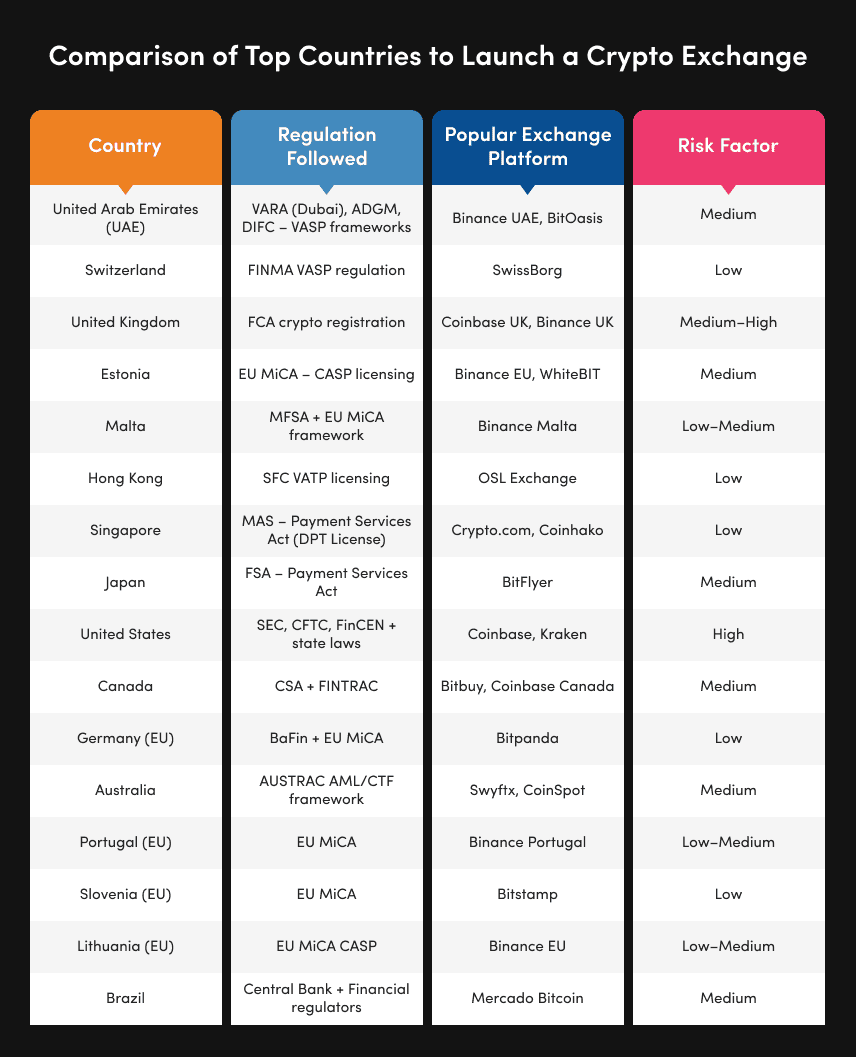
By analyzing these key areas, founders and entrepreneurs can identify where regulation supports growth; where the compliance burden may be higher; and in which of the jurisdictions the regulation will provide the best long-term scalability, investor confidence, and sustainability of exchange operations.
Key Legal Criteria to Choose A Country for Crypto Exchange Launch
To launch a cryptocurrency exchange by 2026, you will need to develop a solid legal foundation for your crypto exchange. You must ensure that the country or jurisdiction that you choose has a strong foundation. Many exchanges make the mistake of launching their exchanges in countries without doing any due diligence on their legal ecosystems, exposing their exchanges to operational risk, regulatory conflicts, and the inability to scale.
Regulatory Framework
The regulatory framework establishes the rules that the country defines for the lawful operation of a cryptocurrency exchange. A country with regulated crypto will provide you with clarity about the operation of your crypto exchange, reducing the unknowns associated with your legal compliance, legal obligations, and compliance rights.
Exchange Licensing Structure
Licensing is a requirement for operating, growing, and partnering with third parties. A country with a clear and well-defined licensing system will bolster investor and regulatory confidence in your exchange.
AML/KYC Compliance Standards
A country with robust AML and KYC frameworks will improve your ability to comply with Regulations and reduce your exposure to fraud, money laundering, and other financial crimes. A country with a standardized compliance framework will reduce the cost and complexity of aligning with regulations.
Banking and Fiat Integration
Your exchange will not be able to operate if your country lacks a banking ecosystem, payment gateway, or fiat on-and-off-ramps. Choosing a jurisdiction with a crypto-friendly banking system will improve the ease of integrating your exchange with existing banking and financial systems.
Crypto Taxation Policies
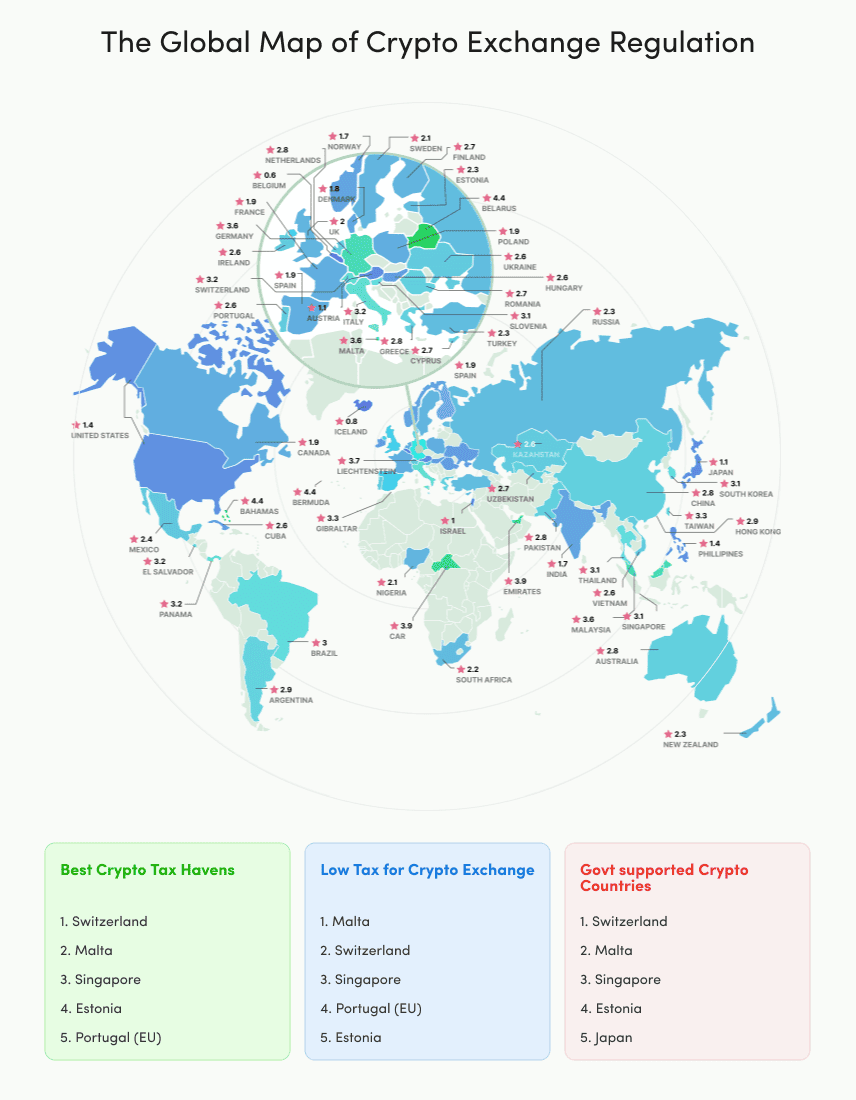
Your profit margins, operating costs, and sustainability will be impacted by the country’s tax policies. The greater the clarity you have on the crypto taxation policies of the country where you launch, the better your financial planning and business sustainability will be over the long term.
Government Stance on Digital Assets
Governments with an innovation-friendly attitude create a favorable environment for digital assets through their policies, funding, and regulatory framework support. With government backing, ecosystem development and business confidence will flourish.
Data Protection and Cyber Security
Strong data protection and cybersecurity laws create a level of trust, security, and compliance with regulations between the asset holder and the platform, thereby ensuring the protection of both.
International Support for Cross-border Operations
Governments that support cross-border business operations enable business growth through global scalability and licensing recognition, as well as enable business compliance with cross-border compliance requirements.
Choosing the right country to establish a business is important, but execution of the strategy is equally vital for success. An effective strategy must encompass licensing, compliance, regulatory frameworks, security standards, and financial integration, all of which demand extensive industry knowledge and experience. Partnering with the right development team is crucial to achieving success in executing a business’s strategy.
Coinsclone is a professional Cryptocurrency Exchange Development Company, with proven expertise in building legally compliant, scalable, and secure crypto exchange platforms. From regulatory-aligned architecture and compliance integration to exchange development, security infrastructure, and deployment, we help businesses launch exchanges that are not just technically strong but legally ready for long-term growth in regulated markets.
Final Verdict
Choosing the right jurisdiction is crucial for launching a crypto exchange in 2026. As global regulations evolve, legal clarity, licensing, and government support are key to sustainable growth. The countries identified in this blog currently have supportive regulatory environments and, therefore, present solid financial environments for exchange operations.
Beyond an appropriate jurisdiction, success would be hard-pressed to occur without strategic and considered planning before launching an exchange. Additionally, aligning regulations with the technical elements required for an exchange to operate successfully will be necessary. Working with a knowledgeable crypto exchange development company like Coinsclone will help you launch exchanges that follow the law. This partnership will address compliance risks and operational challenges. With our support, you can focus on building exchanges for long-term growth and global reach within the regulated crypto market by 2026.
FAQs on Crypto Friendly Countries
1. Which country is best to legally start a crypto exchange in 2026?
There is no single best answer; it depends on your target market and business model. Countries like the UAE, Singapore, Switzerland, Estonia, and Lithuania stand out due to clear licensing rules, regulatory support, and strong banking access.
2. Is crypto exchange licensing mandatory in 2026?
Yes, most regulated countries will require you to get a license or register to operate a cryptocurrency exchange. If you don’t, you risk being shut down, fined, and having trouble accessing banking or payment networks.
3. What are the minimum legal requirements to launch a crypto exchange?
Generally, you need to register your business, get any necessary regulatory licenses, follow anti-money laundering (AML) and know-your-customer (KYC) laws, and set up cybersecurity measures. You must also ensure data protection and gain approval for banking and fiat integration. Requirements can vary by country, but strong compliance is essential for running a cryptocurrency exchange.
4. Which countries offer fast crypto exchange licensing?
Countries like Estonia, Lithuania, Slovenia, Malta, and the UAE offer faster regulatory processing because they use digital governance, have clear regulatory frameworks, and quicker approval processes.
5.What happens if I launch without regulation?
Not following regulations can lead to legal trouble for the exchange, shutting it down, freezing funds, losing user trust, and making it hard to access banks and payment processors. These issues can severely limit the exchange’s growth and partnerships.
6. Is EU crypto licensing better for global expansion?
Yes! With the EU MiCA-aligned CASP licensing, countries that may have stricter licensing can grant “passporting rights.” This means exchanges licensed in any EU member country can operate freely in other EU countries under the same rules, helping them expand globally while following the law.