
The NFT market of 2026 is not the market most “top 10” lists still describe. Sales counts are at multi-year highs while average prices have collapsed, three of the platforms commonly recommended have shut down, and the winner is now different on every chain. This guide ranks the marketplaces that still hold real liquidity, what each one charges, and which one fits what you are trying to do.
Explore the Best NFT Marketplaces and Launch Your Own Platform
NFT Marketplace Development — made simple.
- Top Marketplaces: Build a marketplace like OpenSea or Rarible.
- Multi-Chain Support: Integrate Ethereum, Solana, Polygon, and more.
- Brand & Customization: Your design, your tokens, your NFT ecosystem.
- Revenue Engine: Profit from listings, trades, and exclusive drops.
See a free branded demo of your NFT marketplace in 48 hours — before you invest a cent.
Book a Free Demo to discover how these Best NFT Marketplaces can take you from idea to live platform in just 8–12 weeks.
10 Best NFT Marketplaces in 2026
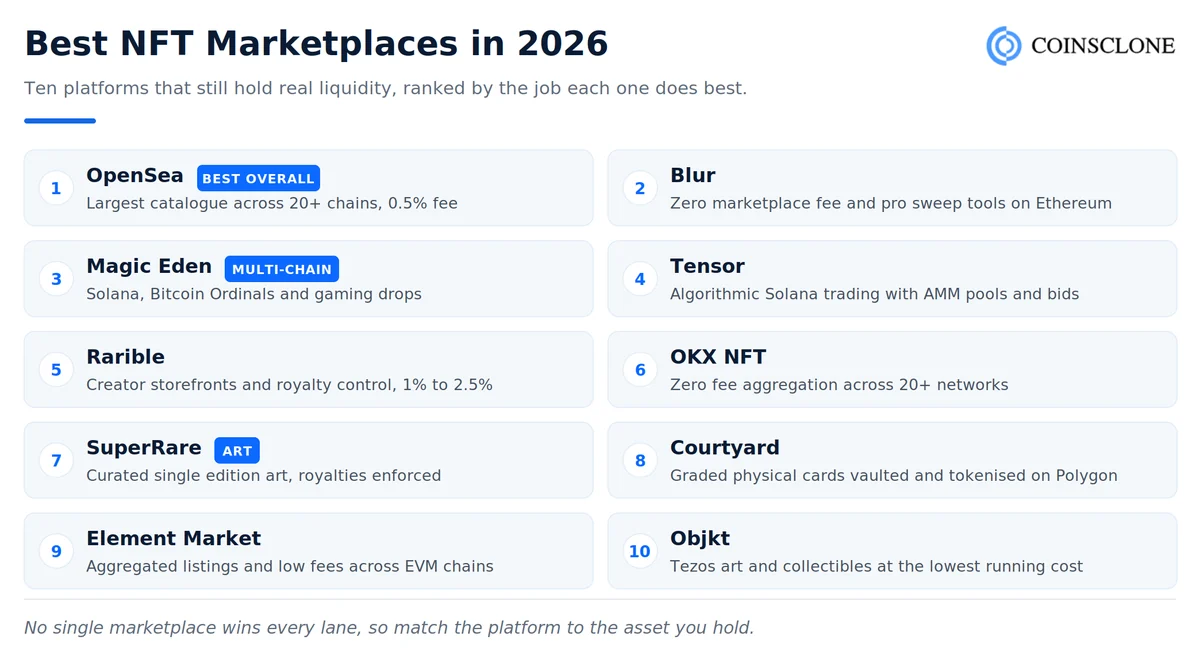
The ten marketplaces below are the ones still carrying meaningful volume, active buyers and working infrastructure in 2026. They are ordered by overall usefulness across the market rather than by a single volume figure, because the leader changes depending on the chain.
- OpenSea
- Blur
- Magic Eden
- Tensor
- Rarible
- OKX NFT Marketplace
- SuperRare
- Courtyard
- Element Market
- Objkt
1. OpenSea: The Largest NFT Marketplace
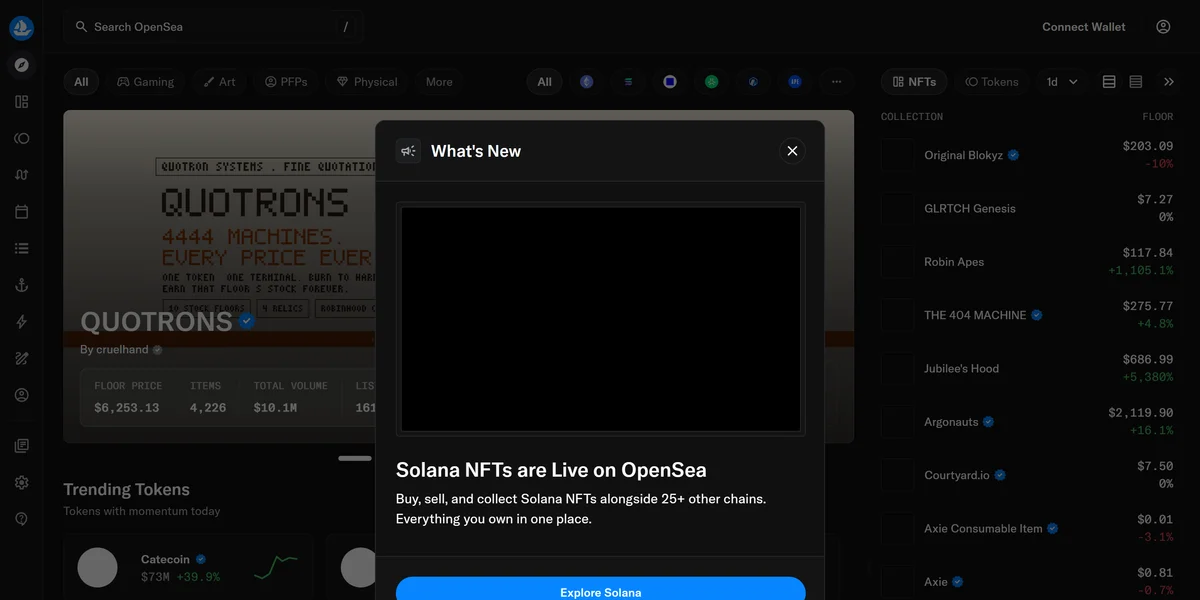
OpenSea is the largest NFT marketplace by catalogue size and cumulative trading volume, and it remains the default starting point for most buyers. Launched in 2017 by Devin Finzer and Alex Atallah, it was fully rebuilt as OS2, which cut the marketplace fee and added token trading alongside NFTs.
- Marketplace fee: 0.5%, down from the 2.5% charged before the OS2 rebuild
- Chains: more than 20, including Ethereum, Solana, Polygon, Base and Arbitrum
- Best for: first purchases, broad discovery, and collections that need the widest possible audience
- Notable: cumulative volume close to 40 billion dollars according to DappRadar, plus cross-chain buying that lets ETH pay for a Solana NFT
2. Blur: Built for Professional Ethereum Traders
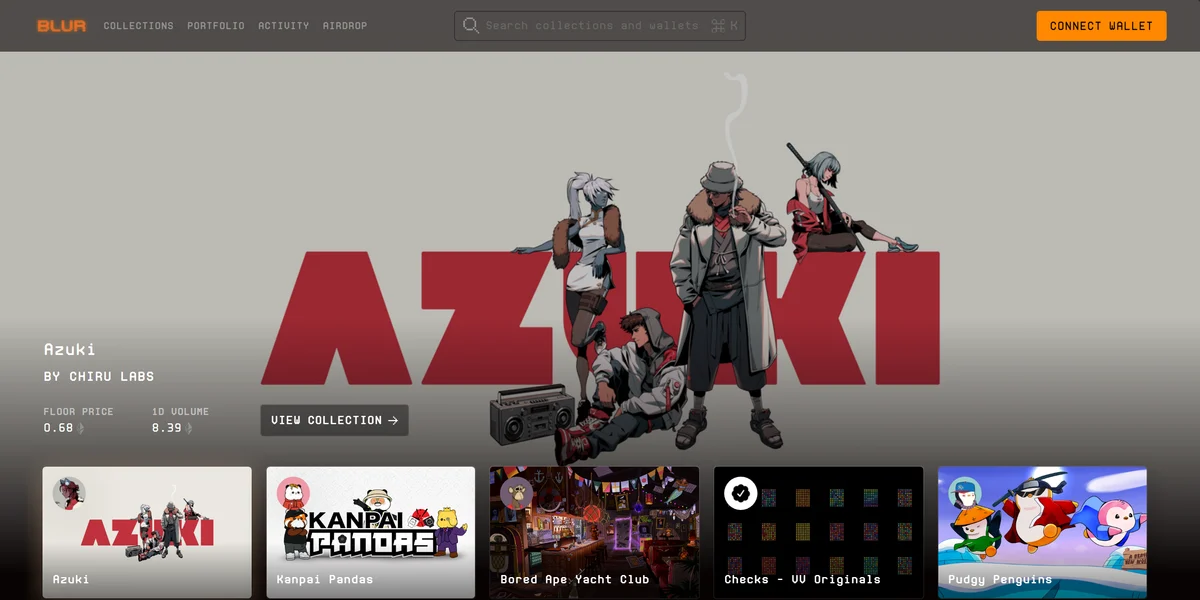
Blur is the marketplace professional Ethereum traders use, because it charges no marketplace fee and is built around bulk actions rather than browsing. It launched in October 2022 and took market leadership within months by combining zero fees with token incentives.
- Marketplace fee: 0%
- Chains: Ethereum
- Best for: floor sweeping, bulk listing, collection bidding and short hold flipping
- Trade-off: creator royalties are capped at 0.5%, and the terminal-style interface is difficult for a first-time buyer
3. Magic Eden: The Strongest Multi-Chain Marketplace
Magic Eden is the most genuinely multi-chain marketplace in 2026, covering Solana, Bitcoin Ordinals, Ethereum, Polygon and Base from one account. It launched in late 2021 as a Solana-native platform and became the first major marketplace to integrate Bitcoin Ordinals, which is how it took the largest share of the market in 2024.
- Marketplace fee: 0% listing and 2% taker
- Chains: Solana, Bitcoin, Ethereum, Polygon, Base and other EVM networks
- Best for: Solana collections, Bitcoin Ordinals and Runes, and gaming drops through its Launchpad
- Notable: the ME token, launched in late 2024, carries fee discounts and rewards across its chains
4. Tensor: Algorithmic Trading on Solana
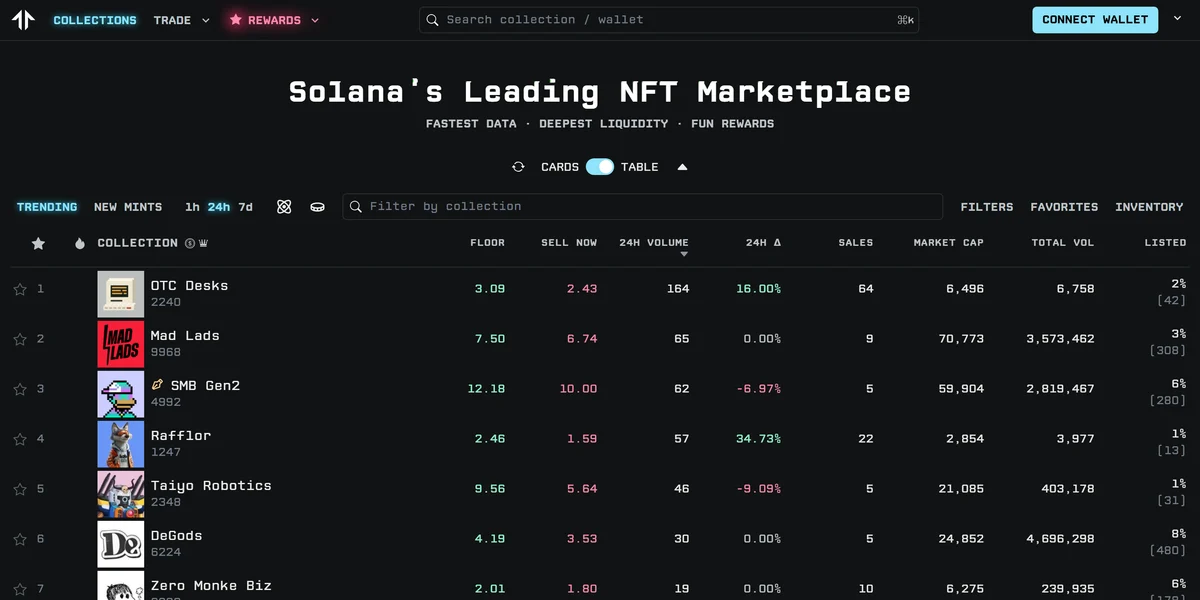
Tensor is the Solana marketplace built for active traders, with an on-chain NFT AMM, collection-wide bidding and real-time analytics. It became a serious rival to Magic Eden during the 2023 Mad Lads launch and has held the professional segment since.
- Marketplace fee: 1.5% to 2% on the taker side and 0% on the maker side
- Chains: Solana only
- Best for: sweeps, pool trading and anyone who wants a trading terminal rather than a gallery
- Notable: royalties are enforced on MIP-1 collections, so creator income survives on part of the catalogue
5. Rarible: Creator Control and Multi-Chain Storefronts
Rarible is the strongest option for creators who want their own branded storefront and control over royalties without writing code. It launched in 2020 and is governed through the RARI DAO, which gives token holders a say in fees and policy.
- Marketplace fee: roughly 1% to 2.5% on a sliding scale by volume
- Chains: Ethereum, Solana, Polygon, Immutable and others
- Best for: independent creators, brands launching a first collection, and multi-chain listings
- Notable: its aggregator lets buyers purchase listings sourced from other marketplaces inside the Rarible interface
6. OKX NFT Marketplace: Zero Fee Aggregation
The OKX NFT Marketplace is an aggregator with no marketplace fee, which makes it one of the cheapest routes to an NFT that is already listed elsewhere. It sits inside the wider OKX exchange and wallet ecosystem, so funding and trading happen in the same place.
- Marketplace fee: 0%
- Chains: more than 20 networks
- Best for: price hunting across marketplaces and traders already using OKX for spot trading
- Notable: it became the second largest venue for Bitcoin Ordinals behind Magic Eden
7. SuperRare: Curated Single Edition Art
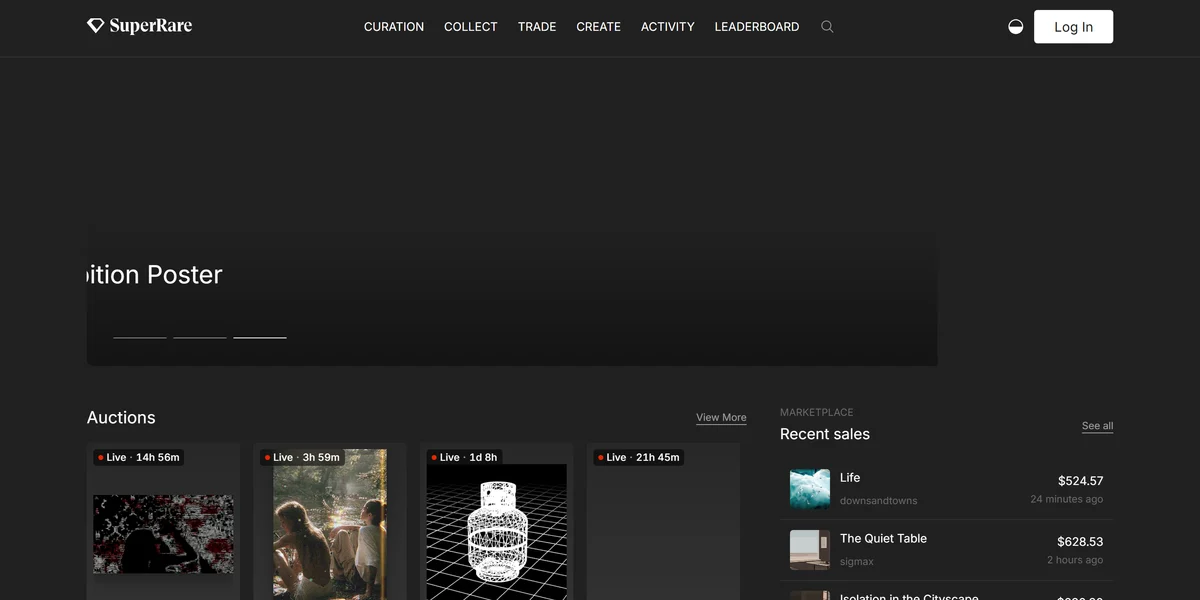
SuperRare is the marketplace for single edition digital art where the artist is vetted before listing, and it is the clearest example of curation being the product. Founded in 2018, it enforces creator royalties instead of making them optional.
- Marketplace fee: 3% paid by the buyer on secondary sales, with a 15% commission on primary sales
- Chains: Ethereum
- Best for: collectors of one-of-one art and established artists who want gallery-style positioning
- Trade-off: the highest fees in this list and a deliberately small catalogue
8. Courtyard: Physical Collectibles as NFTs
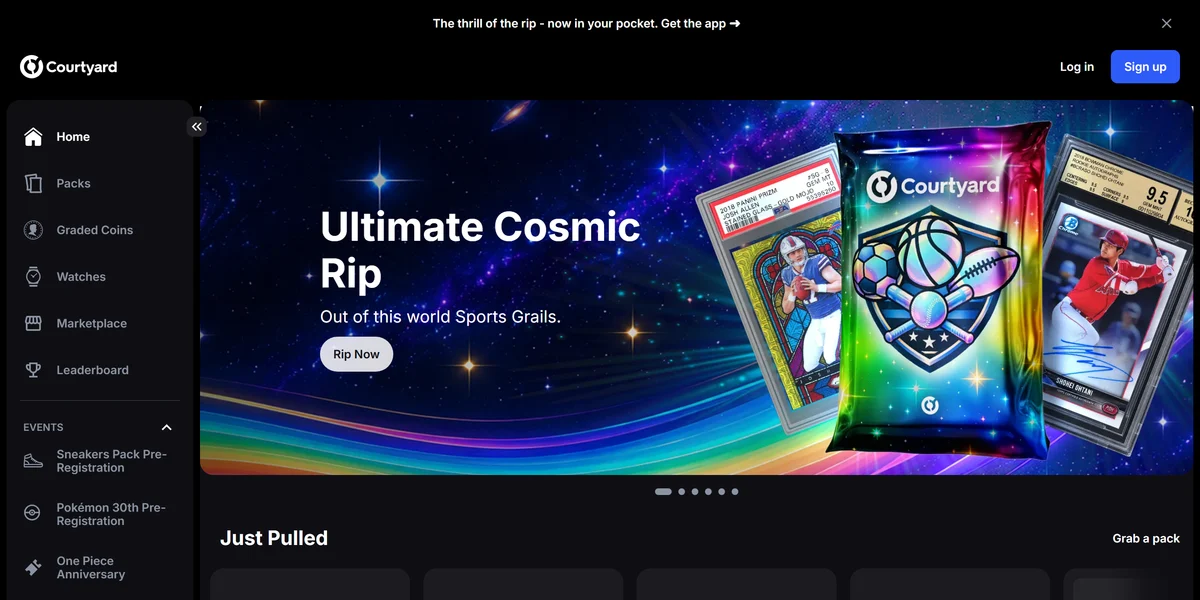
Courtyard tokenises graded physical trading cards that sit in an insured vault, so the NFT is a claim on a real object that can be redeemed. It has ranked among the highest-volume NFT platforms in recent DappRadar reporting, which makes it the clearest evidence that physical-backed assets are carrying the market.
- Chains: Polygon
- Best for: sports and trading card collectors who want liquidity without shipping cards around
- Notable: redemption is the differentiator, because the token can be exchanged for the physical card
9. Element Market: Aggregated Listings Across EVM Chains
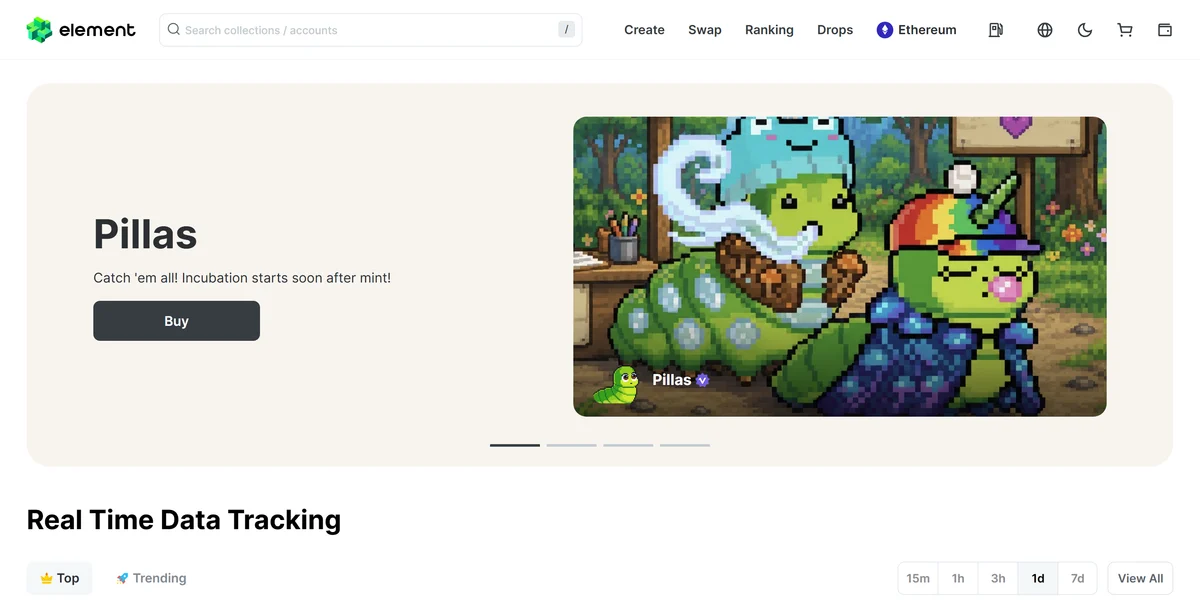
Element Market is a multi-chain aggregator that has consistently appeared among the top platforms by trading volume in DappRadar data. It combines listings from other venues with its own order book and keeps fees low to win price-sensitive trades.
- Chains: Ethereum, BNB Chain, Polygon and other EVM networks
- Best for: buyers comparing prices across EVM marketplaces in one interface
- Notable: strongest traction in Asian markets, where it often outranks better-known Western brands
10. Objkt: The Low Cost Art Marketplace on Tezos
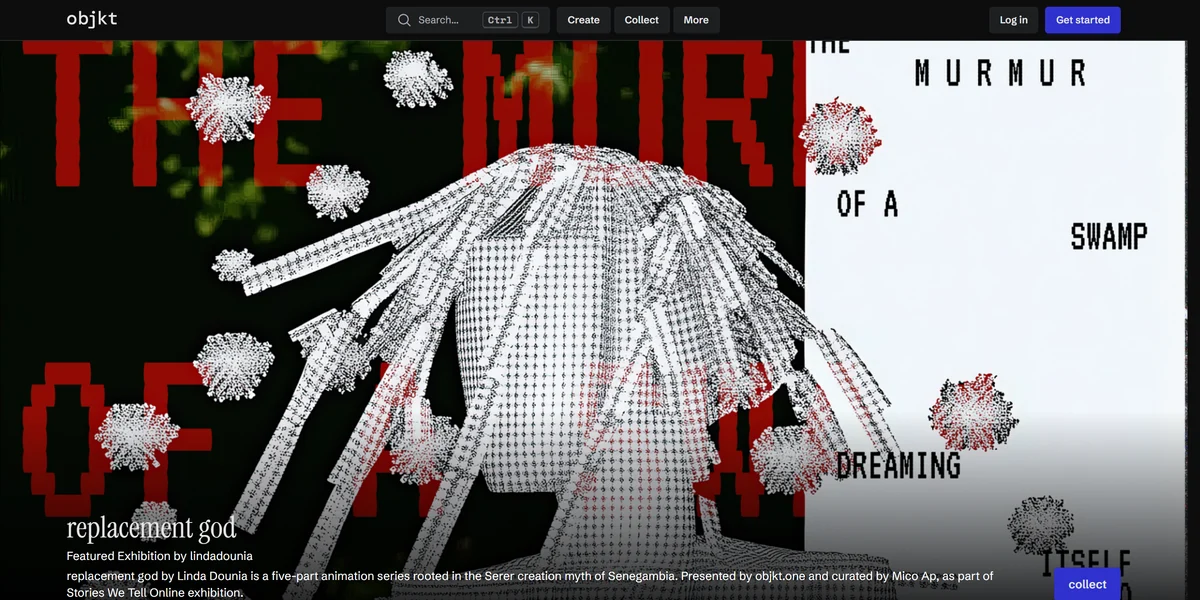
Objkt is the main marketplace on Tezos and the cheapest serious venue for artists, because minting and trading cost a fraction of Ethereum. The platform fee is about 2.5%, but the real saving is the network cost per action.
- Chains: Tezos
- Best for: generative art, high-volume editions and artists who mint frequently
- Notable: low transaction costs make experimentation viable in a way Ethereum mainnet does not
What Is an NFT Marketplace?
An NFT marketplace is a platform where users mint, list, buy and sell non-fungible tokens, with the trade settled by a smart contract on a blockchain rather than by the platform holding the asset. The marketplace provides discovery, pricing and escrow logic, while ownership stays in the user’s own wallet.
- Open marketplaces such as OpenSea and Rarible let anyone mint and list without approval.
- Curated marketplaces such as SuperRare vet the artist before anything goes live.
- Aggregators such as Blur and OKX NFT pull listings from several marketplaces into one order book so buyers see the best available price.
- Niche marketplaces focus on one ecosystem or asset class, such as Tensor on Solana or Courtyard for vaulted physical trading cards.
Top NFT Marketplaces by Trading Volume
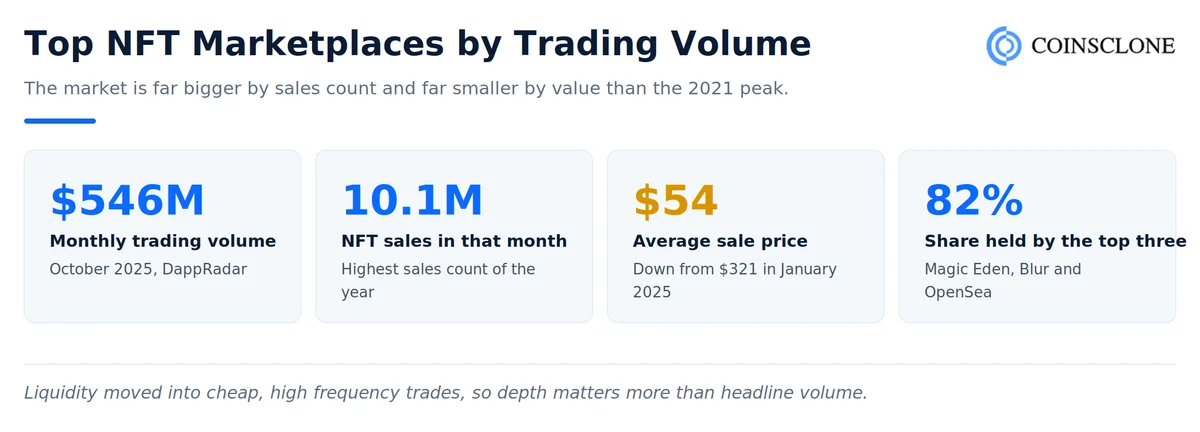
By monthly trading volume in the most recent full DappRadar reporting, Magic Eden, Blur and OpenSea together account for roughly 82% of NFT trading, with OpenSea holding the largest cumulative volume of any marketplace. Courtyard, CryptoPunks and Element Market have also ranked among the highest-volume platforms.
- October 2025 recorded about 546 million dollars in monthly NFT trading volume across 10.1 million sales, according to DappRadar data.
- The average sale price fell to roughly 54 dollars from 321 dollars in January 2025, which is why sales counts can hit records while headline volume falls.
- The Block put annualised NFT trading volume at roughly 5.5 billion dollars in 2025, down from more than 50 billion dollars at the 2022 peak.
What Is the Largest NFT Marketplace?
OpenSea is the largest NFT marketplace by cumulative trading volume and by number of listings, with close to 40 billion dollars traded across its history. Magic Eden and Blur have each led on monthly volume at different points, so the answer depends on whether the question means all-time size or current activity.
- Blur has repeatedly led Ethereum NFT volume share, reaching close to 69% of Ethereum volume in mid-2025 reporting.
- Magic Eden leads Solana and Bitcoin Ordinals, which is where a large share of retail activity now sits.
- OpenSea leads on breadth, listings and total historical volume across more than 20 chains.
NFT Marketplace Fees Compared
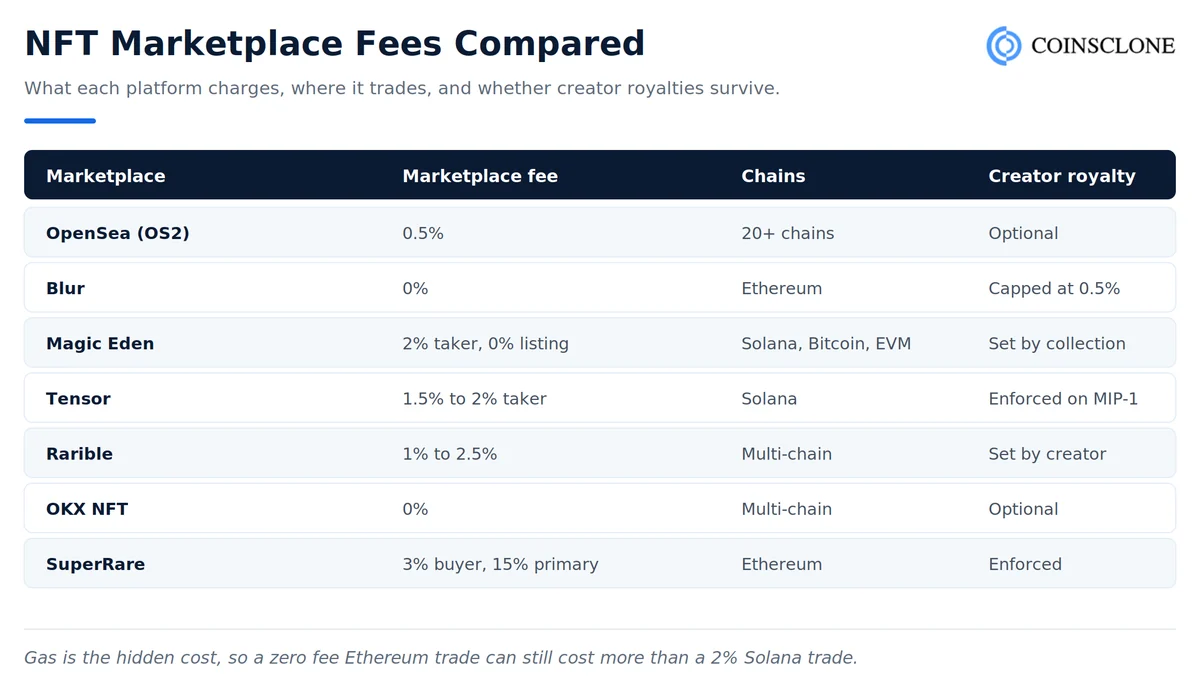
Marketplace fees in 2026 range from 0% on Blur and OKX NFT to 15% on SuperRare primary sales, with OpenSea at 0.5% and Magic Eden at 2%. The published fee is only part of the cost, because network gas and optional creator royalties change the real total.
- A zero fee trade on Ethereum mainnet can cost more in gas than a 2% fee trade on Solana, where network costs sit well under a cent.
- Royalty treatment differs sharply: Blur caps royalties at 0.5%, OpenSea makes them optional, and SuperRare enforces them.
- Fee schedules change, so confirm the current rate on the marketplace itself before a large trade.
Best NFT Marketplace for Low Gas Fees and Lazy Minting
For low cost minting, Objkt on Tezos and Magic Eden on Solana are the cheapest serious options, while Rarible and Mintable offer lazy minting on Ethereum so the gas cost moves to the buyer at the point of sale. Lazy minting means the token is only written to the chain when someone buys it.
- Rarible and Mintable both support gasless or lazy minting, which lets a creator list without paying upfront.
- Solana and Tezos transactions cost a fraction of a cent, so high-volume creators avoid the problem entirely.
- On Ethereum, minting in batches and listing during low congestion periods is still the largest single saving available.
Best NFT Marketplace for Beginners
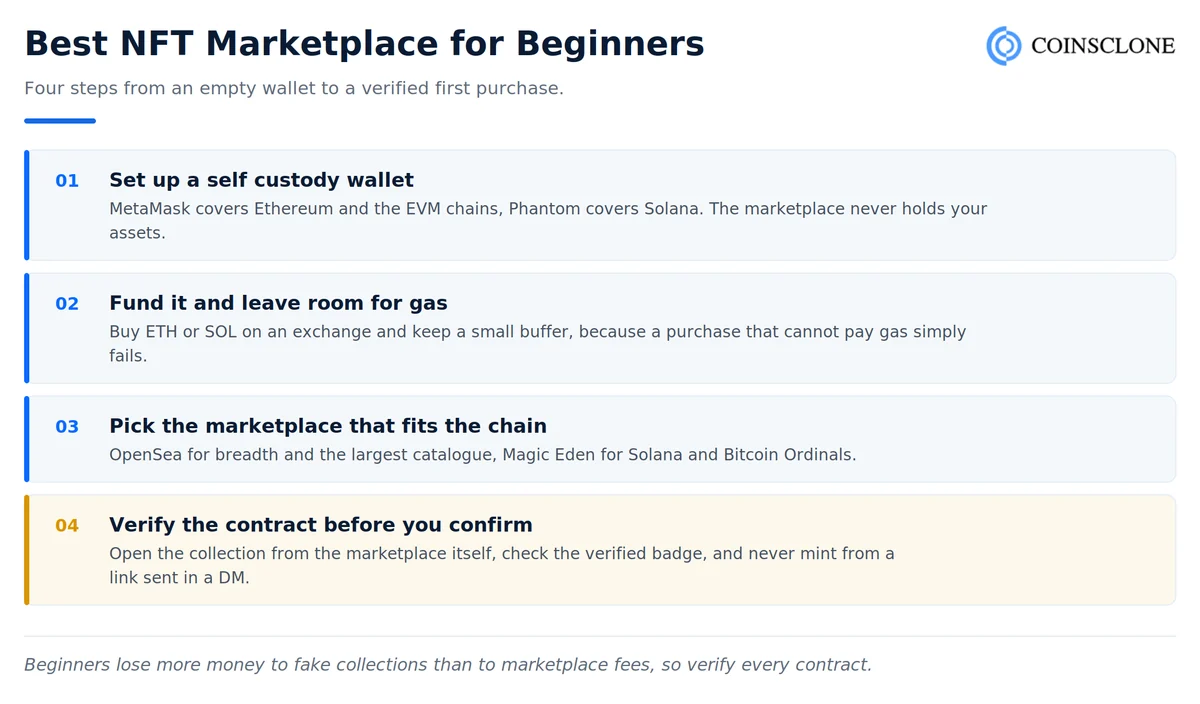
OpenSea is the best NFT marketplace for beginners because it has the largest catalogue, the widest wallet support and a 0.5% fee, with Magic Eden the better first stop for anyone buying Solana or Bitcoin collections. Blur is cheaper on paper but is built for professional traders, not first purchases.
- Start with a self custody wallet, MetaMask for Ethereum and EVM chains or Phantom for Solana.
- Keep a small balance beyond the purchase price, because a transaction that cannot cover gas will fail.
- Open every collection from inside the marketplace and check the verified badge, since fake collections cost beginners far more than fees do.
Best NFT Platforms for Beginners in Pakistan and Other Restricted Markets
OpenSea, Magic Eden and Rarible are all accessible to beginners in Pakistan and similar markets because they are non-custodial and need only a wallet, not a local bank relationship. The harder problem is the on-ramp rather than the marketplace.
- Buying ETH or SOL usually happens first on an exchange or a peer-to-peer service, then the funds move to a self custody wallet.
- Card payments through marketplace on-ramp partners are often geo-restricted, so plan to fund in crypto rather than fiat.
- Local rules on crypto holdings vary and change, so confirm the current position with a qualified local adviser before trading at size.
Best Multi-Chain NFT Marketplaces Like Rarible and Magic Eden
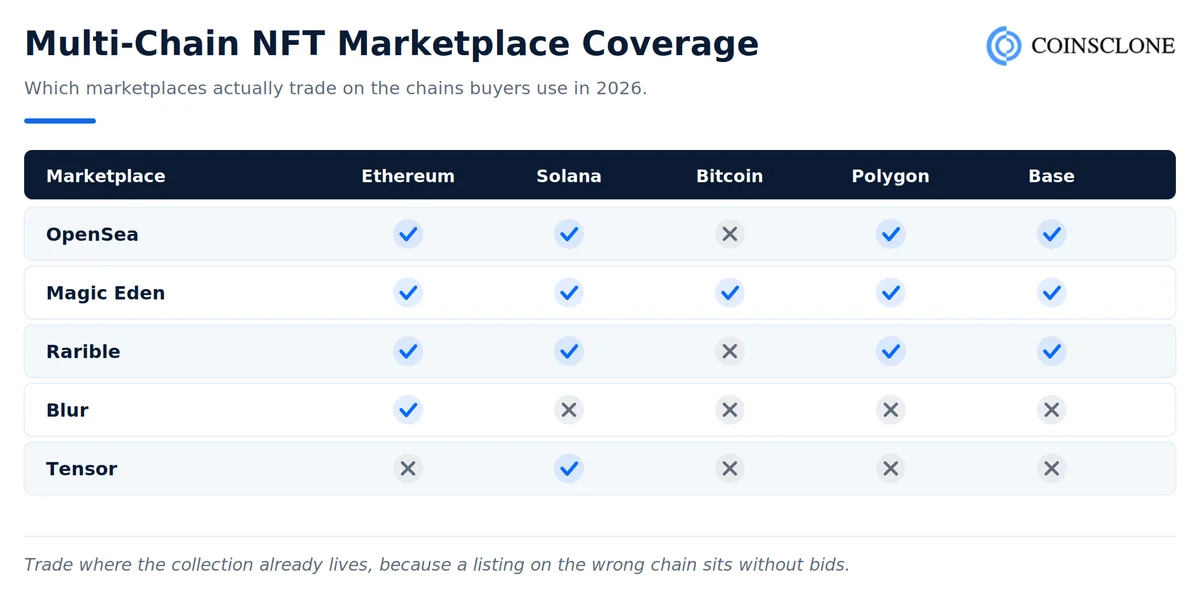
Magic Eden, OpenSea and Rarible are the three marketplaces that genuinely operate across multiple chains rather than claiming to. Magic Eden is the only major platform that covers Solana, Bitcoin Ordinals and EVM chains together.
- Magic Eden covers Solana, Bitcoin, Ethereum, Polygon and Base from a single account.
- OpenSea supports more than 20 networks and can settle a cross-chain purchase without a manual bridge.
- Rarible covers Ethereum, Solana, Polygon and Immutable, and adds custom storefronts on top.
Top NFT Marketplace on Solana in 2026
Magic Eden and Tensor are the two Solana NFT marketplaces that matter, with Magic Eden holding the larger casual audience and Tensor holding the professional traders. Most Solana collections list on both, because the audiences barely overlap.
- Magic Eden charges 0% to list and 2% on the taker side, and runs the Launchpad most major Solana drops use.
- Tensor charges 1.5% to 2% on the taker side, 0% on the maker side, and enforces royalties on MIP-1 collections.
- Exchange Art remains the choice for Solana fine art, where royalty enforcement is strongest.
Head to Head NFT Marketplace Comparisons
Magic Eden vs OpenSea
OpenSea wins on catalogue size, chain count and fee, at 0.5% against Magic Eden’s 2%, while Magic Eden wins on Solana and Bitcoin Ordinals depth. For an Ethereum or Polygon collection choose OpenSea, and for a Solana or Ordinals collection choose Magic Eden.
- OpenSea holds the largest cumulative volume and the widest wallet support, which matters for resale liquidity.
- Magic Eden was first among major marketplaces to integrate Bitcoin Ordinals and still leads that category.
- Listing on both costs nothing beyond gas, since neither platform demands exclusivity.
OpenSea vs Blur vs Rarible for NFT Flipping
For short hold flipping on Ethereum, Blur is the strongest tool because it charges no marketplace fee and supports bulk sweeps and collection bids, while OpenSea gives better exit liquidity and Rarible is the weakest of the three for speed. Flipping economics are decided by fees plus gas plus exit depth, not by interface.
- Blur: 0% fee, royalties capped at 0.5%, built for sweeping and instant relisting.
- OpenSea: 0.5% fee and the largest buyer pool, which usually means a faster exit at the floor.
- Rarible: 1% to 2.5% and lower trading depth, better suited to creator sales than to flipping.
OpenSea vs Binance NFT: Fees Compared
This comparison no longer has two live sides, because Binance shut down its centralised NFT service on 3 July 2026 and moved NFT support into Binance Wallet. OpenSea at 0.5%, Magic Eden at 2% and OKX NFT at 0% are the practical replacements for anyone who traded NFTs through an exchange account.
- Binance gave holders a 30 day window to withdraw transferable NFTs, after which unwithdrawn assets became inaccessible on the exchange.
- Binance had already dropped Bitcoin Ordinals support in 2024 and removed Polygon from its NFT marketplace in 2023.
- Exchange-integrated NFT trading has effectively ended, so self custody plus a marketplace is now the standard path.
Where to Buy and Sell NFTs
OpenSea, Magic Eden and Blur are where most NFTs are bought and sold in 2026, covering EVM chains, Solana with Bitcoin, and professional Ethereum trading respectively. Buying and selling both happen through the same wallet connection, with no account funding step.
- To buy: connect a wallet, pick a collection, check the verified contract, then accept a listing or place a bid.
- To sell: hold the NFT in the connected wallet, set a fixed price or auction, and approve the collection once before the first listing.
- Listing on more than one marketplace is normal and increases the chance of a fill, since none of the major platforms require exclusivity.
Best NFT Selling Platform for Creators
For creators, Rarible and SuperRare are the strongest selling platforms, because Rarible offers a custom storefront with creator-set royalties and SuperRare enforces royalties on every resale. OpenSea remains the best secondary venue for reach even when the primary sale happens elsewhere.
- Rarible allows a branded storefront and multi-chain listing without development work.
- SuperRare requires acceptance but enforces royalties, which protects long-term income.
- Manifold is the common choice for artists who want to mint on their own contract and then list wherever they choose.
How to Find the Lowest Price in an NFT Marketplace
The lowest price in an NFT marketplace is the floor price, which is the cheapest active listing in a collection, and aggregators such as Blur and OKX NFT show the true floor across several marketplaces at once. A single marketplace only shows its own listings, so its floor can be higher than the real one.
- Sort a collection by price ascending and filter out unverified or wrapped versions of the collection.
- Cross-check the floor on an aggregator, because the cheapest listing often sits on a different venue.
- Check recent sales rather than listings, since an unsold listing is an asking price and not a market price.
Where to See the Most Valuable NFTs
The most valuable NFTs trade on the CryptoPunks marketplace, OpenSea and SuperRare, with sales data tracked publicly by CryptoSlam and DappRadar. High value activity concentrates in a small number of blue chip collections rather than spreading across the market.
- CryptoPunks has continued to record premium sales through the wider downturn.
- SuperRare holds the highest average prices for single edition art.
- CryptoSlam and DappRadar both publish ranked sales data that is free to check before buying.
NFT Marketplace Tools and Data APIs
The core tools for serious NFT trading are aggregators for pricing, analytics dashboards for floor and volume history, and marketplace APIs for programmatic access. Blur, Tensor and OKX NFT all combine trading and analytics in one interface.
- Aggregators: Blur and OKX NFT for Ethereum, Tensor for Solana.
- Analytics: DappRadar and CryptoSlam for volume, sales counts and collection rankings.
- Portfolio and alerts: most major wallets now surface floor price movement on held collections.
Best Marketplace Data API for Solana NFT Pricing and Sales History
For Solana NFT pricing and sales history, the Magic Eden and Tensor public APIs are the primary marketplace sources, while Helius indexes on-chain Solana NFT data including compressed NFTs. Marketplace APIs give listings and sales for their own order books, so full coverage usually needs an on-chain indexer alongside them.
- Magic Eden’s API exposes collection stats, listings and activity, which suits floor tracking.
- Tensor’s API is oriented toward active trading data such as bids and pool state.
- An indexer is the right choice when you need complete history rather than one venue’s view, especially for compressed NFTs.
NFT Marketplace Tokens and Trader Rewards
Most major NFT marketplaces now run a token that rebates fees or rewards activity, including BLUR on Blur, ME on Magic Eden, TNSR on Tensor, RARI on Rarible and LOOKS on LooksRare. These tokens are the main reason traders concentrate volume on one venue rather than another.
- LooksRare distributes a share of platform fees to LOOKS stakers, which was the original model for rewarding sellers by trading volume.
- ME carries fee discounts and rewards across Magic Eden’s Solana, Bitcoin and EVM marketplaces.
- Token incentives can invert real economics, so compare the fee paid against the reward actually received.
OpenSea Token Launch Plans
OpenSea announced the SEA token alongside the OS2 rebuild in February 2025 and targeted a first quarter 2026 launch, with 50% of supply allocated to the community. The launch was scheduled for 30 March 2026 and then delayed by OpenSea, which cited difficult market conditions and has not published a replacement date.
- Allocation is based on historical OpenSea usage as well as recent activity through the Voyages rewards programme.
- OS2 expanded OpenSea into token swaps, and token trading has accounted for the large majority of its recent volume.
- Claiming will happen on OpenSea’s own site, and every other claim portal should be treated as a scam.
NFT Marketplace Updates in 2026
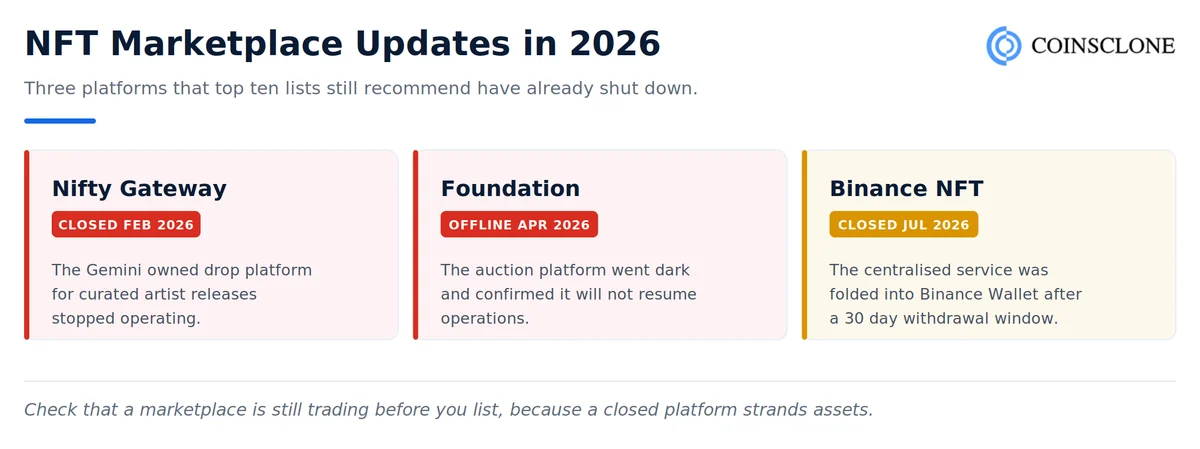
Three marketplaces that still appear on published top ten lists have closed: Nifty Gateway shut down in February 2026, Foundation went offline in April 2026, and Binance closed its centralised NFT service on 3 July 2026. Kraken NFT and X2Y2 also shut down during the same period.
- Foundation confirmed the platform would not resume operations, although NFTs minted through its contracts remain on-chain and in owners’ wallets.
- Nifty Gateway closed after facilitating more than 300 million dollars in sales at its peak.
- The pattern is consolidation rather than collapse, with volume concentrating into a smaller number of venues.
How to Choose the Best NFT Marketplace in 2026
Choose an NFT marketplace by matching four things to your situation: the chain your collection lives on, the total cost of a trade, the depth of buyers, and whether royalties are enforced. Everything else is secondary.
- Chain match: a listing on the wrong chain gets no bids regardless of how good the platform is.
- Total cost: add marketplace fee, gas and royalty together rather than comparing headline fees.
- Liquidity: check active traders and recent sales, not lifetime volume, because lifetime figures hide dead platforms.
- Royalty policy: creators lose recurring income on platforms where royalties are optional.
- Custody and security: a non-custodial marketplace never holds the asset, which is why exchange NFT closures stranded assets and marketplace closures did not.
- Platform viability: confirm the marketplace is still trading, since three well-known names closed within eight months.
Frequently Asked Questions
Is there a list of the top 20 NFT marketplaces?
Beyond the ten above, the next tier includes LooksRare, Mintable, Exchange Art, Immutable Marketplace, NBA Top Shot, Sorare, Axie Marketplace, UniSat, Gamma and Zora. Most of these are strong inside one ecosystem rather than across the market.
What is the best NFT selling platform for a first collection?
Rarible for a branded storefront on Ethereum or Polygon, and Magic Eden Launchpad for a Solana drop. Both then benefit from a secondary listing on OpenSea for reach.
Which NFT marketplace has the lowest fees?
Blur and OKX NFT charge no marketplace fee, followed by OpenSea at 0.5%. Gas cost usually decides the real total on Ethereum.
Are NFT marketplaces still worth building in 2026?
Sales counts reached multi-year highs in recent quarters even as prices fell, and the closures have concentrated demand into fewer venues. The opportunity has moved from general marketplaces toward focused ones serving a single chain, asset class or community.
Explore the Best NFT Marketplaces and Launch Your Own Platform
NFT Marketplace Development — made simple.
- Top Marketplaces: Build a marketplace like OpenSea or Rarible.
- Multi-Chain Support: Integrate Ethereum, Solana, Polygon, and more.
- Brand & Customization: Your design, your tokens, your NFT ecosystem.
- Revenue Engine: Profit from listings, trades, and exclusive drops.
See a free branded demo of your NFT marketplace in 48 hours — before you invest a cent.
Book a Free Demo to discover how these Best NFT Marketplaces can take you from idea to live platform in just 8–12 weeks.
Build Your Own NFT Marketplace with Coinsclone
Coinsclone builds NFT marketplaces for founders who want a specific lane rather than another general platform. Our white label and clone script solutions cover multi-chain support, launchpad and minting flows, royalty logic, aggregated listings and the trading tools that decide whether a marketplace retains users.
We work from a live demo rather than a slide deck, so you can see the platform before committing to a build. Talk to our team about the chain, asset class and fee model that fit your market, and we will map the fastest route to launch.