
How does an OpenSea clone make money? The same way OpenSea does. It takes a small cut of every NFT sale, a larger cut of new drops, and adds paid extras on top. This guide shows how OpenSea earns today, with its real 2026 fees and income. Then it turns that model into a plan you can use for your own site.
You will also see what a single sale earns, why OpenSea’s income rose and fell so sharply, and how much trading a new site needs to make the numbers work. In short, it is a hands-on plan for founders who want to launch an NFT site like OpenSea in 2026.
In this guide:
- The short answer: OpenSea’s current fees, and what it does and does not earn from each trade.
- One sale, worked through: where the money goes when a $1,000 NFT sells.
- Real income history: OpenSea’s yearly take from 2019 to 2025, and the lesson it holds for a clone.
- A five-phase plan: more than 20 ways an OpenSea clone can earn, in the order to add them.
- What to charge: the fees rival sites set in 2026, plus a worked example of one month’s income.
Learn How an OpenSea Clone Can Power Your NFT Revenue Model
How Does OpenSea Clone Make Money — discover the profit strategies behind NFT marketplaces.
- Transaction & Listing Fees: Earn a steady income from every NFT sale.
- Premium Listings: Offer visibility boosts and featured placements for creators.
- Membership Perks: Add subscription models for exclusive tools or analytics.
- Strategic Expansion: Grow revenue through ads, partnerships, and creator royalties.
See a free branded demo of your NFT marketplace in 48 hours — before you invest a cent.
Book a Free Demo to explore how our OpenSea Clone can help you build a profitable NFT marketplace in just 8–12 weeks.
How Does an OpenSea Clone Make Money?
An OpenSea clone makes money mainly from sale fees. Each time an NFT sells, the platform keeps a small share of the price. On top of that, it can charge a higher fee on first-time drops, sell paid features to creators, and run extra products such as a launchpad or token swaps.
That is just how OpenSea works. So before you plan your own model, it helps to see what OpenSea charges today. Most guides still say 2.5%, but that rate is years out of date.
How OpenSea Makes Money in 2026
Here are OpenSea’s current fees, from its fee help page, last updated in May 2026:
| Fee | Rate | Who pays |
| NFT sale fee | 1% | The seller (built into the price buyers see) |
| Primary drop mint fee | 10% | Taken from mints in a new collection’s drop |
| Token swaps | 0% OpenSea fee | Only third-party and network fees apply |
| Private listings | 0% | No marketplace fee |
| Gas | Not OpenSea income | Paid to the blockchain’s validators |
| Creator earnings | Set by the creator | Paid to the creator, not to OpenSea |
The 1% rate is fairly new. OpenSea charged 2.5% in its early years. In February 2023 it briefly dropped its fee to zero to fight Blur. Then, in 2025, it charged 0.5% on its new OS2 platform. It then raised it to 1% on 15 September 2025. So the main money maker is still a simple cut of each sale.
Two points often get mixed up. First, gas fees are not OpenSea income. They go to the network that processes the trade. Second, royalties belong to creators. OpenSea only collects them and passes them on. However, it can enforce them on newer contracts such as ERC721-C, which makes it more attractive to artists.
OpenSea has also grown beyond NFTs. Its OS2 app, launched in May 2025, lets people swap tokens across many chains. In 2026 it added perps trading that runs on Hyperliquid’s builder-code rails. So it earns a small share of each trade it sends there. Hyperliquid caps that builder fee at 0.1% on perps. At the end of August 2026, OpenSea also added Solana NFT trading.
Finally, there is the SEA token. OpenSea planned it for early 2026, with half of its revenue going to buy back the token at launch. However, in March 2026 it delayed the launch and has not set a new date. So for now, fees are still the whole story.
What One NFT Sale Earns
To see the model at work, take one $1,000 NFT that sells on OpenSea. The creator has set a 5% royalty that the contract enforces.
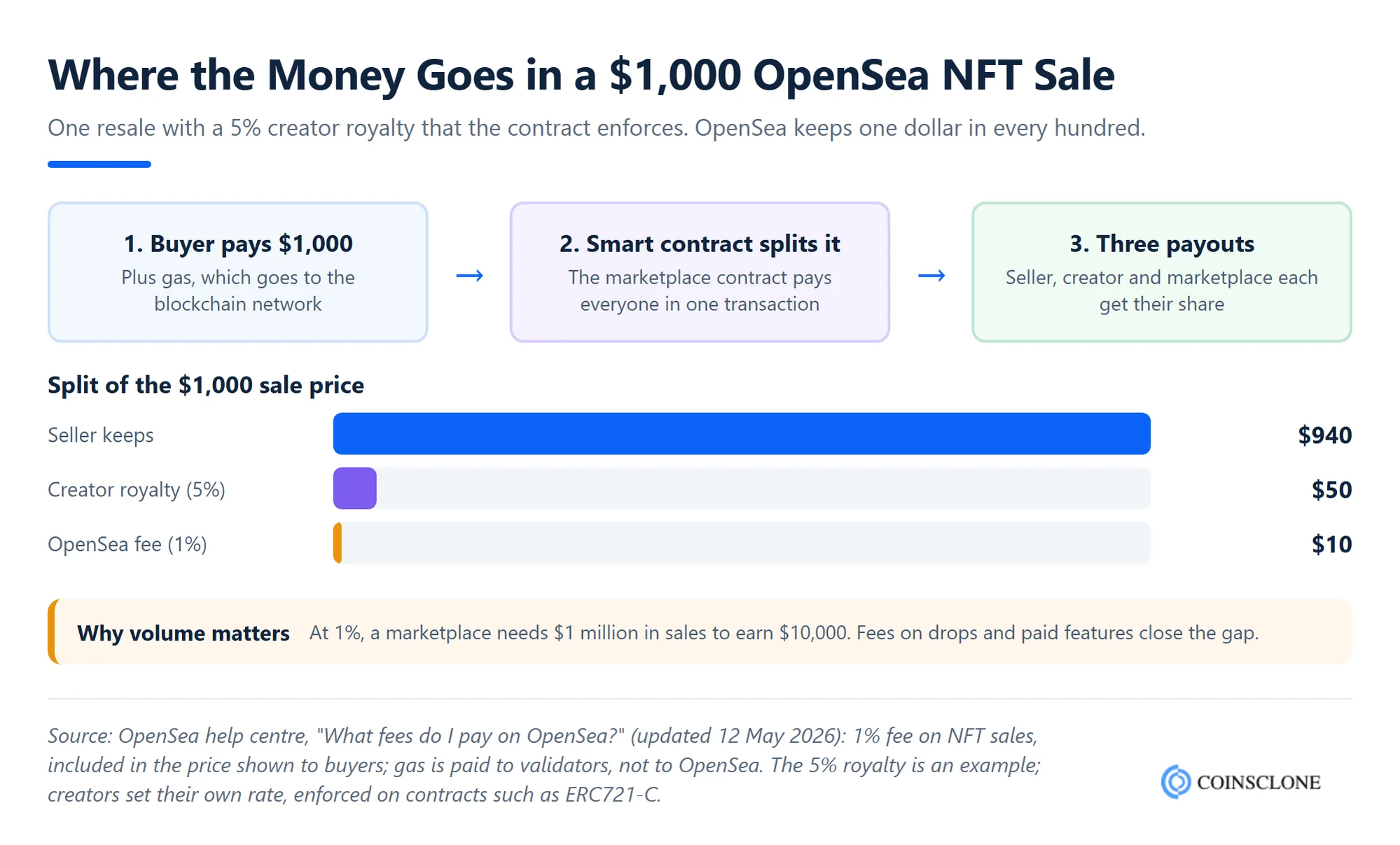
The seller keeps $940, the creator gets $50 and OpenSea keeps $10. The buyer also pays gas, but that goes to the network. In other words, OpenSea earns only one cent on each dollar traded. That is why volume matters so much for this model, and why the next section is so important for anyone building a clone.
OpenSea’s Revenue Over Time: The Lesson for a Clone
OpenSea is the clearest proof that a fee model can earn huge sums. Since 2018 it has kept about $920 million in fees, per DefiLlama, which tracks its on-chain income across 11 chains. Yet nearly all of that came in just two years.
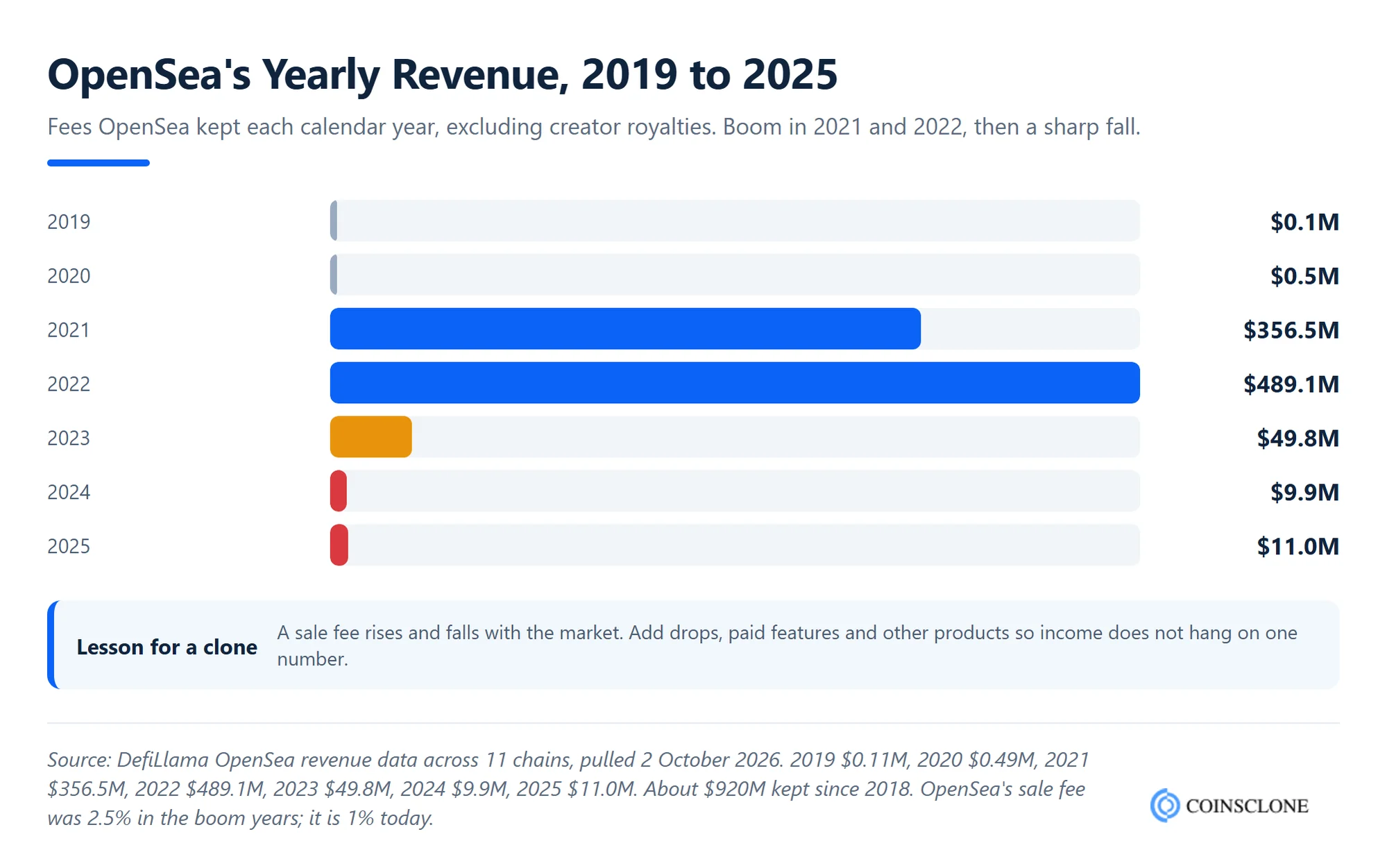
In 2022, OpenSea kept $489 million. By 2024, that fell to under $10 million. Lower fees explain part of the drop, but most of it came from a much smaller market. NFT sales fell 37% to $5.63 billion in 2025, according to CryptoSlam data. Over the last 12 months, OpenSea kept about $7 million.
So what does this mean for you? Three things:
- Fees alone are weak: when trading slows, a business built on sale fees shrinks with it. You need income that does not depend on daily volume.
- Rivals will push fees down: Blur’s zero-fee launch in 2022 forced OpenSea to cut its rate. Plan your model so you can survive a fee war.
- Branching out works: OpenSea itself now trades tokens and perps, not just NFTs. A clone can add the same extras from day one.
This is why a smart OpenSea clone uses several ways to earn, added in phases. The rest of this guide shows how.
Why Monetizing Your NFT Marketplace Matters in 2026
Well, because it is 2026! Yes, the answer is as simple as that.
Do you remember the early days of NFTs and the first marketplaces? Many of them launched for fun, hype and fast growth. Few thought about how to earn.
Even OpenSea, Blur and Rarible did not begin with a solid plan to earn. First, they pulled in creators, collectors and attention. Then they worked out how to earn. But that phase is long gone. Today, the market is smaller and buyers are pickier, so a new marketplace has to earn from the start.
At the same time, the leaders keep adding value. They keep users with lower fees, enforced royalties and new products, while staying profitable. That’s why, if you plan to launch your own NFT site like OpenSea, you should plan how it will earn before you write a line of code.
In short, your success does not depend on launching fast, but on monetizing smart! Now that you know why it matters, let’s break down how to do it, step by step.
Revenue Model of OpenSea Clone
When you plan how to make money with an OpenSea clone, you do not need to switch on every idea at once. Instead, a phase-wise plan helps you grow smartly. You add each stream when your platform and your audience are ready for it.
To make it easier, we have grouped the ways to earn into five phases. For a wider view across every kind of NFT platform, see our guide to the NFT marketplace revenue model.
Phase 1: Revenue Streams to Build Trust
Focus: Earn benefits by making your OpenSea-like NFT platform a place people trust.
Zero or Low Fee Launch: Zero or very low fees, until the site gets the attention it needs, can draw a big user base. It is not a direct revenue stream at first. But it builds volume, trust and word of mouth, which you need for long-term income. Blur used this tactic to win traders from OpenSea in 2022.
Incentives for First-Time Users: First-time users get a benefit, such as a fee-free first sale or a small credit. These perks turn first-time visitors into loyal, active users.
Referral Programs: Referrals are nothing new, but they still work. The platform gives existing users a fee share or reward for each new user they bring. In return, you spend less on marketing and paid ads.
Launchpad Collections: A launchpad helps NFT projects debut their collections. You earn by charging a launchpad fee or taking a share of the primary sale. OpenSea takes 10% of mints in its drops, which shows how much more a first sale can earn than a resale.
Verified Badges: Like many Web3 apps, you can offer blue-tick badges. Creators pay to apply or to keep their status. This adds trust for buyers and a small, steady fee for the platform.
Phase 2: Ways to Earn From Your Users
Focus: Build steady income that grows with your users.
Transaction Fee: This is the core income stream. The platform keeps a small share of every sale. As the platform grows, so does the number of trades. Most marketplaces charge between 0.5% and 2% today, as the fee table below shows.
Primary Drop (Minting) Fee: When a creator sells a brand-new collection, you take a larger share of the first sale. This fee is usually much higher than the resale fee, because the platform brings the buyers and the launch tools.
Subscription Fee: Based on your niche, offer a premium plan. Pro traders may pay for lower fees, faster tools, bulk buying and advanced analytics. Plan a clear roadmap and decide which features sit behind the paywall.
Listing Fee: Some marketplaces charge a fee for each new NFT listing. Besides the extra income, this weeds out spam and low-quality collections. Keep it small, though, because most big rivals charge nothing to list.
NFT Staking Fee: You can add an optional staking feature, where users lock their NFTs to earn rewards. The platform can charge a small fee for running a secure staking service.
Phase 3: Revenue Streams via Upgrading Your Platform
Focus: Grow the platform by adding new services, which open new income streams.
White Label Services: You can license your White Label NFT Marketplace Software to brands and firms that want their own NFT store. You then earn set-up charges, support fees and a monthly licence fee.
Featured Listings and Ads: Creators pay to place their collections on the home page, in search results or in email features. You can also rent ad space to NFT projects, wallets and Web3 tools that want to reach your users.
Host Web3 and NFT Events: You can run virtual expos, NFT launches and artist meetups that reflect your brand. You can earn from these events through sponsors, ticket sales or exclusive NFT auctions, and they also bring traffic.
Custom Services for Brands: Besides fees, you can build custom storefronts for brands, artists and companies. This makes you stand out as an innovative NFT marketplace and adds project income.
Cross-Selling: This is an old-school method. You promote relevant partner products, such as hardware wallets or NFT tools, and earn a share of each sale. It adds income while it grows your ecosystem.
Phase 4: Earn Around Your Community
Focus: Grow how your community members interact, and turn that into income.
Exclusive Drops: These drops are open only to certain members, such as early supporters, DAO voters or token holders. Since access signals status among collectors, users may pay to join them.
Community Tipping and Gifting Tools: Users can tip creators or send NFTs as gifts. The platform takes a small fee on each tip or gift, and premium gifting features can raise user activity.
DAO Add-Ons: With a DAO, members vote on platform decisions. You can charge for extra voting tools, such as vote dashboards or ready-made proposal forms.
Copy Trading: This is a niche feature for beginners. Copy trading lets new buyers mirror the trades of top NFT traders. The platform can charge a fixed fee or share the profits with the trader being copied.
Phase 5: Earn From Product Features
Focus: Help both users and admins, and earn from the features of your OpenSea-like NFT platform.
Custom NFT Themes and Templates: Many creators struggle to brand their NFTs. You can offer a range of ready-made storefront themes and templates. This can be a one-time sale or a monthly membership.
API and SDK Access: Offer usage-based pricing for your API and SDK tools. Other apps, wallets and games can then pull your listings, prices and trade data into their own products.
Token Swaps and Trading Tools: Like OpenSea’s OS2, you can add token swaps or route trades to a perps venue. Even a small fee or builder share on token trades adds income that does not depend on NFT sales.
NFT Launch Scheduler: This tool lets creators set their drop dates ahead of time, with countdowns and reminders. It builds buzz and makes launches look professional, while it avoids congestion on drop day.
AI Tool Integration: Paid AI tools give the platform an edge. They can offer smart pricing, fraud checks and rarity scores, and they also help your team run the site more smoothly.
These five phases give you a clear view of how each stream works. But the real value comes when you decide which ones to switch on, and when. So let’s look at the numbers.
What to Charge: NFT Marketplace Fees in 2026
Your sale fee is the most important price you will set. Too high, and traders move to cheaper rivals. Too low, and you cannot cover your costs. Here is what the main NFT marketplaces charge today, from each platform’s own help pages or docs:
| Marketplace | Main chain(s) | Sale fee |
| OpenSea | Ethereum, Base, Solana and 20+ more | 1% (10% on primary drops) |
| Blur | Ethereum | 0% |
| Magic Eden | Solana | 2% |
| Tensor | Solana | 2% taker, 0% maker |
| Rarible | Ethereum, Base, Polygon, Solana | 2% on EVM chains, 1.5% on Solana |
| LooksRare | Ethereum | 0.5% |
| Element | Ethereum, BNB Chain and more | 0.5% on Ethereum, 2% on most other chains |
So a new general marketplace will struggle to charge more than 1% to 2%. But a niche one can often charge more. Music, sports, real estate and gaming buyers care about access and trust more than about a 1% saving. You can compare these platforms in detail in our list of OpenSea alternatives.
How Much Can an OpenSea Clone Earn? A Worked Example
Now let’s put the streams together. Below is a sample month for a niche site like OpenSea with $2 million in resold NFTs. The fee rates are in line with the table above.
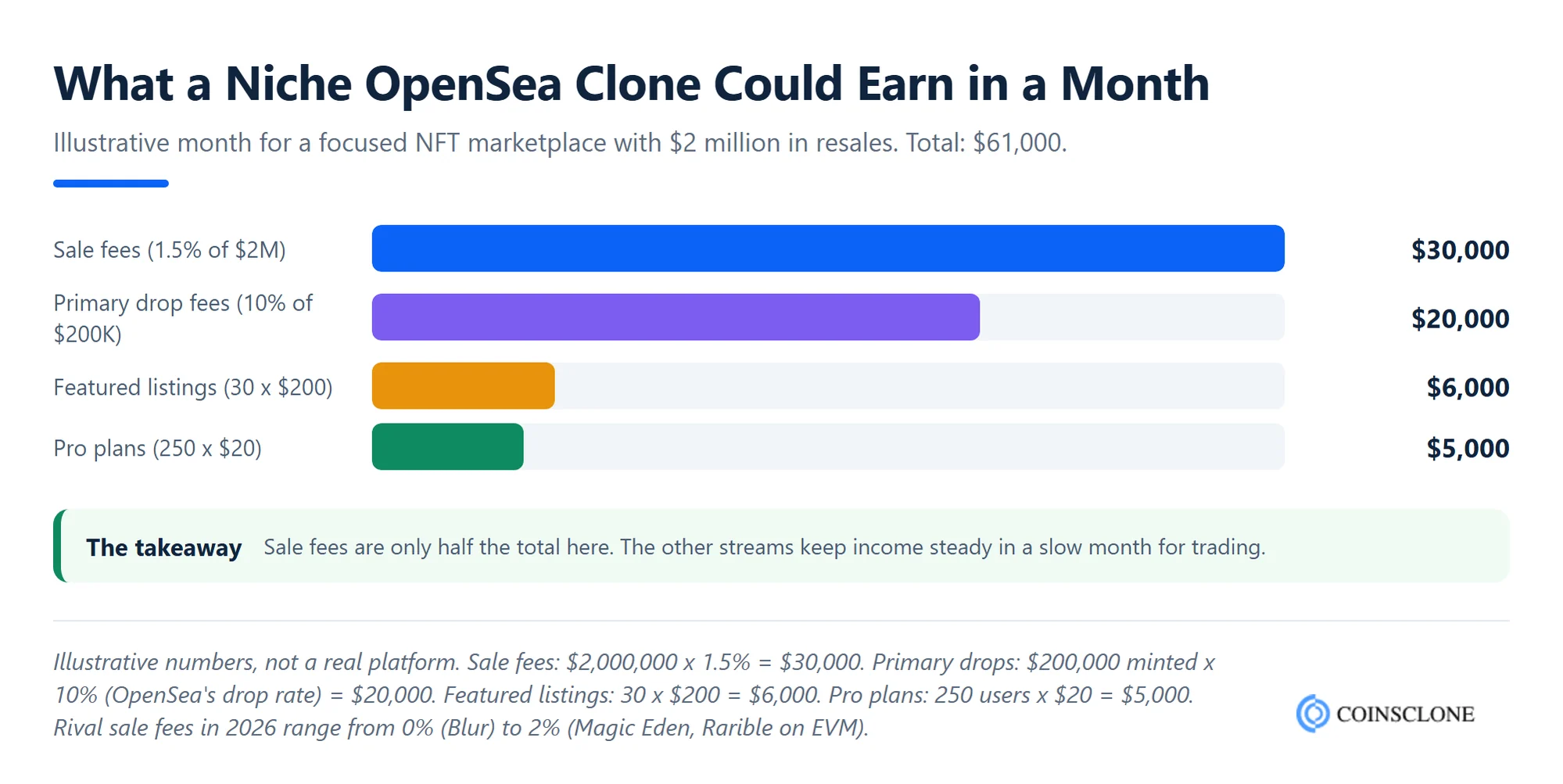
In this example, sale fees bring in $30,000, and the other streams add another $31,000. That is the key lesson from OpenSea’s own history. The resale fee pays the bills in busy months, while drops, paid features and plans keep income steady when trading slows.
For context, OpenSea kept about $638,000 in the 30 days to 2 October 2026, per DefiLlama. So a small, focused site does not need OpenSea’s scale to run a healthy business. It needs a clear niche, fair fees and more than one stream. To plan your budget against these numbers, see our breakdown of NFT marketplace development cost.
KickStart Your NFT Venture With This OpenSea Clone Business Model!
If you want to launch this business model, partner with a leading NFT Marketplace Clone Script provider like Coinsclone. Our OpenSea clone script is ready-made software that lets you launch your own NFT site like OpenSea. You can fully change it, so it fits your fee plan, user flow and brand.
The money-making ideas above are just a sample of what an NFT marketplace can earn. At Coinsclone, we have delivered 350+ platforms for 200+ clients across 20 industries since 2018. We handle everything from your first idea to a secure launch. We can also set up the fee engine, drops, royalties and paid features from day one.
Learn How an OpenSea Clone Can Power Your NFT Revenue Model
How Does OpenSea Clone Make Money — discover the profit strategies behind NFT marketplaces.
- Transaction & Listing Fees: Earn a steady income from every NFT sale.
- Premium Listings: Offer visibility boosts and featured placements for creators.
- Membership Perks: Add subscription models for exclusive tools or analytics.
- Strategic Expansion: Grow revenue through ads, partnerships, and creator royalties.
See a free branded demo of your NFT marketplace in 48 hours — before you invest a cent.
Book a Free Demo to explore how our OpenSea Clone can help you build a profitable NFT marketplace in just 8–12 weeks.
Frequently Asked Questions
How does OpenSea make money?
OpenSea makes money mainly from fees on NFT trades. It keeps 1% of each NFT sale and 10% of mints in primary drops. It charges no OpenSea fee on token swaps, but it earns a small builder share on perps trades routed through Hyperliquid.
What fee does OpenSea charge on NFT sales?
OpenSea charges a 1% fee on NFT sales, built into the price buyers see. It has charged 1% since 15 September 2025, after a period at 0.5%. Older guides that quote 2.5% are out of date.
Does OpenSea make money from gas fees?
No. Gas fees go to the validators of the blockchain that processes the trade. OpenSea’s help centre says gas is not paid to OpenSea and that it does not control gas prices. Creator royalties also go to creators, not to OpenSea.
Is OpenSea still profitable?
OpenSea is a private company and does not publish its profits. It still earns steady fees, though far less than at its peak. DefiLlama tracks about $7 million in fees kept over the past 12 months, against $489 million in 2022.
How does an OpenSea clone script work?
An OpenSea clone script is ready-made software with the core tools of OpenSea: wallet login, minting, listings, auctions, offers, royalties and an admin panel. You add your brand, choose your chains and set your fees. The smart contracts then collect the platform fee on every sale automatically.
Can I customize the revenue model of an OpenSea clone?
Yes. You can set your own sale fee, a higher fee for new drops, listing fees, paid plans and featured spots. You can also add extra streams such as a launchpad, token swaps or API access as your platform grows.