

The best crypto exchanges in 2026 are Binance, Coinbase and Kraken, followed by seven more that each win on one thing: fees, coin choice, futures, rewards or self-custody. This guide ranks the top 10 cryptocurrency exchanges on trust, volume, fees, coins and licences, and it adds a separate table of the 7 exchanges that can legally serve people in the USA, with each one’s licence, fee and state limits.
We checked every fee, licence and volume figure at the source on 2 October 2026 and the US licence and state data again on 23 October 2026. If you plan to build an exchange of your own, you will also see how these platforms work from the admin side.
In this guide:
- The ranked list: 10 exchanges, what each one does best, and where it falls short.
- Real costs: what a $1,000 market order costs on each one, from $0 to $12.
- Crypto exchanges in the USA: the 7 that serve US users, which hold a New York licence, and which states each one blocks.
- Where you live matters: which exchanges hold an EU licence, and what changed for Binance in Europe.
- A quick way to choose: a four-question decision tree, plus the red flags that mark a bad exchange.
- The business side: how exchanges work for the admin, and how to launch one.
10 Best Cryptocurrency Exchanges in 2026
Here is the short list. We ranked each exchange on trust and volume first, then on fees, coin choice and licences. The table gives the facts at a glance, and the sections below explain the trade-offs.
| # | Exchange | Best for | Founded | Coins (CoinGecko) | Serves US users? |
| 1 | Binance | The deepest market at low fees | 2017 | 499 | Through Binance.US |
| 2 | Coinbase | Beginners and US users | 2012 | 405 | Yes |
| 3 | Kraken | Security record and coin choice | 2011 | 713 | Yes |
| 4 | OKX | Active traders and Web3 tools | 2017 | 308 | Through OKX US |
| 5 | Bybit | Futures and derivatives | 2018 | 392 | No |
| 6 | Bitget | Copy trading and new coins | 2018 | 829 | No |
| 7 | Crypto.com | Rewards and an all-in-one app | 2019 | 391 | Yes |
| 8 | Bitfinex | Zero trading fees and deep BTC books | 2012 | 62 | No |
| 9 | Gemini | Safety-first US investors | 2014 | 76 | Yes |
| 10 | Uniswap | Swapping from your own wallet | 2018 | Any listed token | Yes |
Best Crypto Exchanges in the USA in 2026
US users have fewer choices, because Bybit, Bitget and Bitfinex block US residents and Binance and OKX serve the US only through separate local arms. The 7 crypto exchanges in the USA below all run under US rules. The surest sign of that is a New York licence: a BitLicense or a trust charter from the New York Department of Financial Services (NYDFS), the strictest state regulator. Five of the seven hold one.
| Exchange | New York licence (NYDFS) | Spot fee, entry tier | Coins | State limits | Best for |
| Coinbase | BitLicense and money transmitter licence since January 2017 | 0.60% maker, 1.20% taker on Advanced under $1,000 a month | 405 | All 50 states | First purchase, Nasdaq-listed |
| Kraken | None; state money transmitter licences elsewhere | 0.40% maker, 0.80% taker on Kraken Pro | 713 | Not New York or Maine | Coin choice and a long safety record |
| Gemini | Limited purpose trust charter since October 2015 | 0.60% maker, 1.20% taker on ActiveTrader | 76 | All 50 states | Safety-first investors |
| Robinhood | BitLicense and money transmitter licence since January 2019 | No commission, a spread is built into the price | 91 | 33 coins blocked in New York, USDC blocked in Texas | Stocks and crypto in one app |
| Crypto.com | Not on the NYDFS list; state licences elsewhere | Tiered maker and taker rates, plus a spread on app buys | 391 | Check the app for New York | Rewards and a Visa card |
| Binance.US | None; state money transmitter licences elsewhere | 0% maker, 0.02% taker | 161 | Blocked in 12 states including New York, Texas and Washington, crypto-only in Kansas and Wisconsin | Lowest trading fees |
| eToro | BitLicense and money transmitter licence since February 2023 | 1% flat on every buy and sell | 150+ | No crypto in Nevada, Hawaii, Puerto Rico or the US Virgin Islands | Copy trading |
Sources, checked 23 October 2026: licences from the NYDFS list of virtual currency businesses and Coinbase’s own licences page; Binance.US fees and its state list dated 3 June 2026 from Binance.US; Kraken’s US quick start page; Robinhood’s crypto availability page; eToro’s US fees and crypto pages; coin counts from CoinGecko for Coinbase, Kraken, Gemini, Crypto.com and Binance.US; Coinbase, Kraken, Gemini and Crypto.com fees as checked on 2 October 2026. Coinbase and Gemini state coverage as reported in CoinLedger’s January 2026 review.
Two more exchanges serve the US but did not make the table. OKX US launched in 46 states and Washington, D.C. in April 2025, as CNBC reported, and it still skips New York and Texas. Bitstamp, now owned by Robinhood, has held a BitLicense since April 2019 and lists 97 coins on CoinGecko, but its volume is small next to Coinbase and Kraken.
How to read the table: the New York column matters even if you do not live there, because a BitLicense means the exchange passed the toughest state review in the country. The state column matters more. Binance.US blocks a third of the map, Kraken blocks New York, and Robinhood sells a shorter coin list in New York than in Florida. Using a VPN to get around a block breaks the exchange’s terms and can get your account frozen. US users also owe tax on every sale, and from the 2025 tax year exchanges report those sales to the IRS on Form 1099-DA.
1. Binance
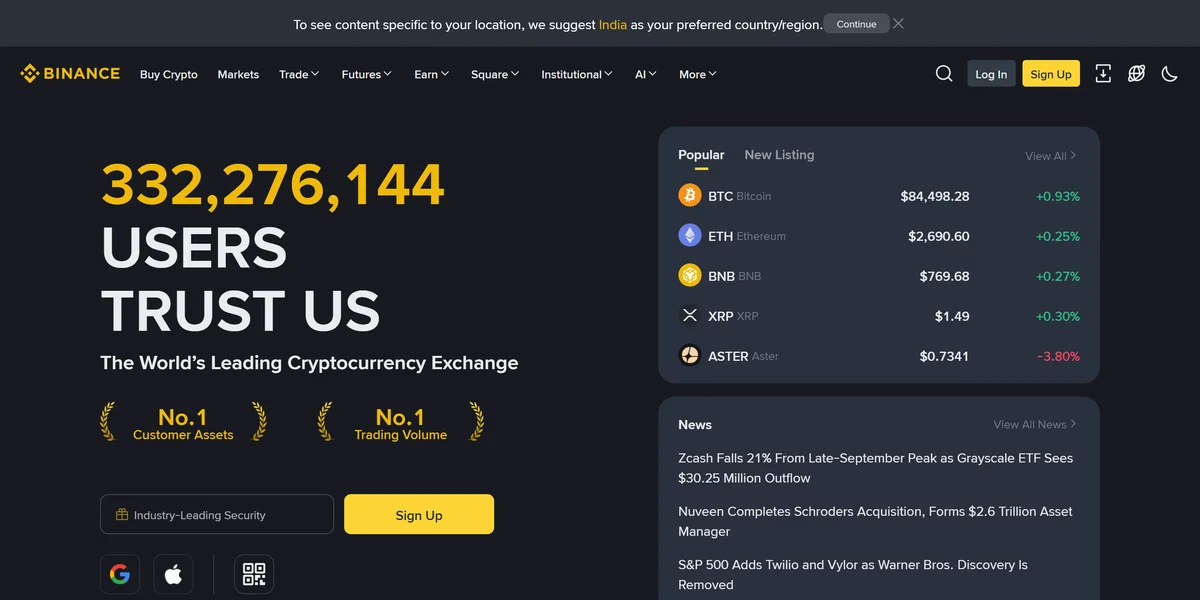
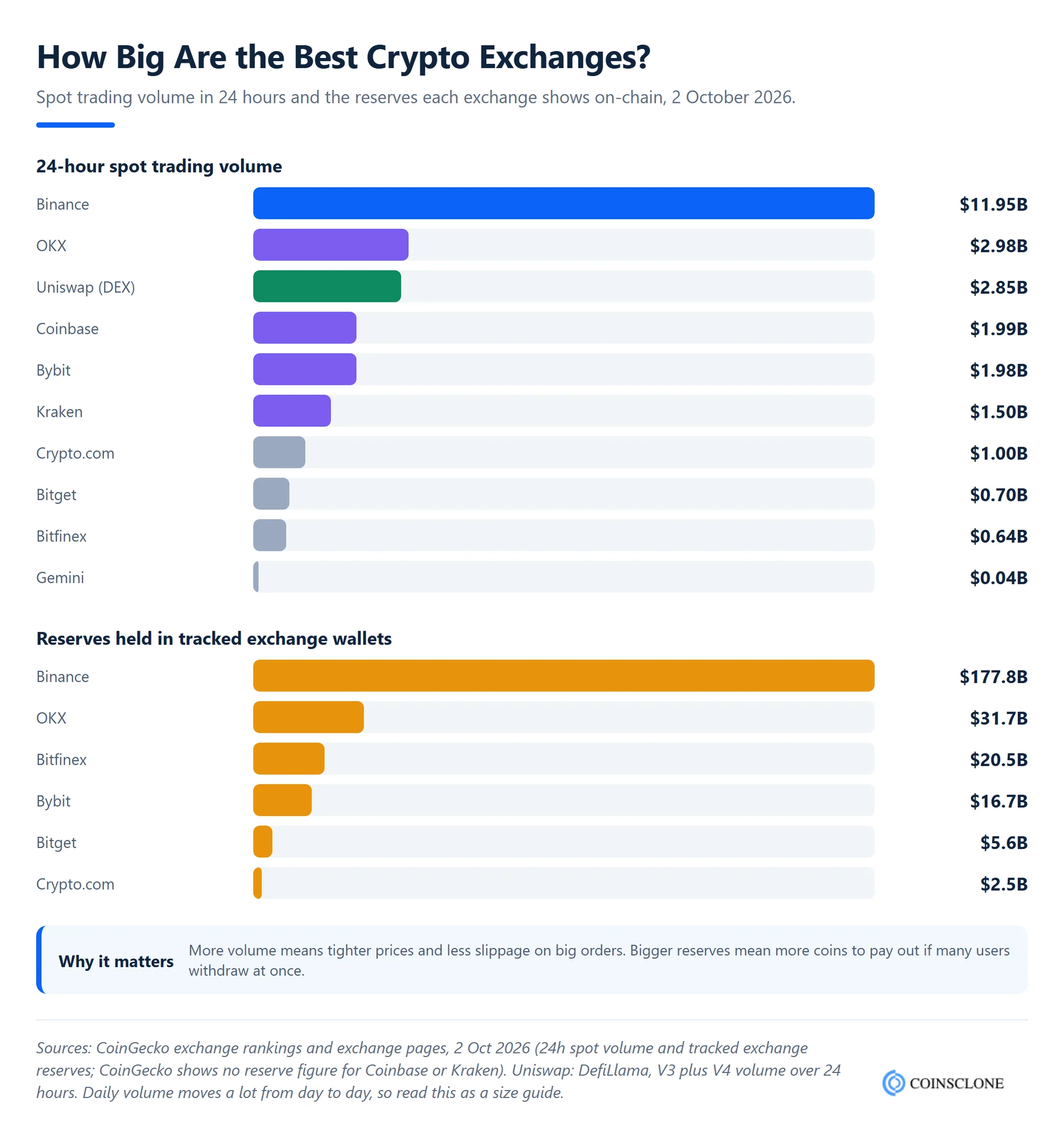
Binance is the largest crypto exchange in the world by trading volume. It started in 2017 and now has more than 323 million registered users, as it said at its ninth anniversary in July 2026. On 2 October 2026 it handled about $11.95 billion in spot trades in a single day, four times more than the next exchange.
Fees: Regular users pay 0.10% maker and 0.10% taker on spot trades. Paying fees in BNB cuts that to 0.075%, per the Binance fee schedule.
What you get: spot, margin, futures, options, P2P trading, Binance Earn for staking and savings, and a large Web3 wallet. CoinGecko lists 499 coins and gives Binance its top trust score of 10 out of 10.
What could be better: Binance paid $4.3 billion to settle US charges in 2023, and it is not available to US users (they use the separate Binance.US). In Europe, Binance withdrew its Greek application for a MiCA licence on 24 June 2026, just before the 1 July deadline, as CoinDesk reported. EU residents should check what Binance can offer them today.
2. Coinbase
Coinbase is the largest US-based crypto exchange and the easiest place for a first purchase. It was founded in 2012, trades on Nasdaq, and joined the S&P 500 in May 2025. The app now sells stocks, futures and prediction markets as well as crypto.
Fees: Simple buys in the app carry a spread plus a fee, so they cost more than most rivals. On Coinbase Advanced, the entry tier is about 0.60% maker and 1.20% taker. A Coinbase One plan can remove trading fees up to a monthly limit.
What you get: 405 coins on CoinGecko, a clean app, staking, the Base network, and strong US licences. In Europe, Coinbase holds a MiCA licence from Luxembourg.
What could be better: fees are high for small, frequent traders. In May 2025, Coinbase also said that bribed support staff had leaked some customer data. No passwords or keys were taken, but it is a reminder to watch for scam calls.
Coinbase shows how far a trust-first brand can go. If you plan to build a Coinbase-style exchange, that compliance-first model is the one to copy.
3. Kraken
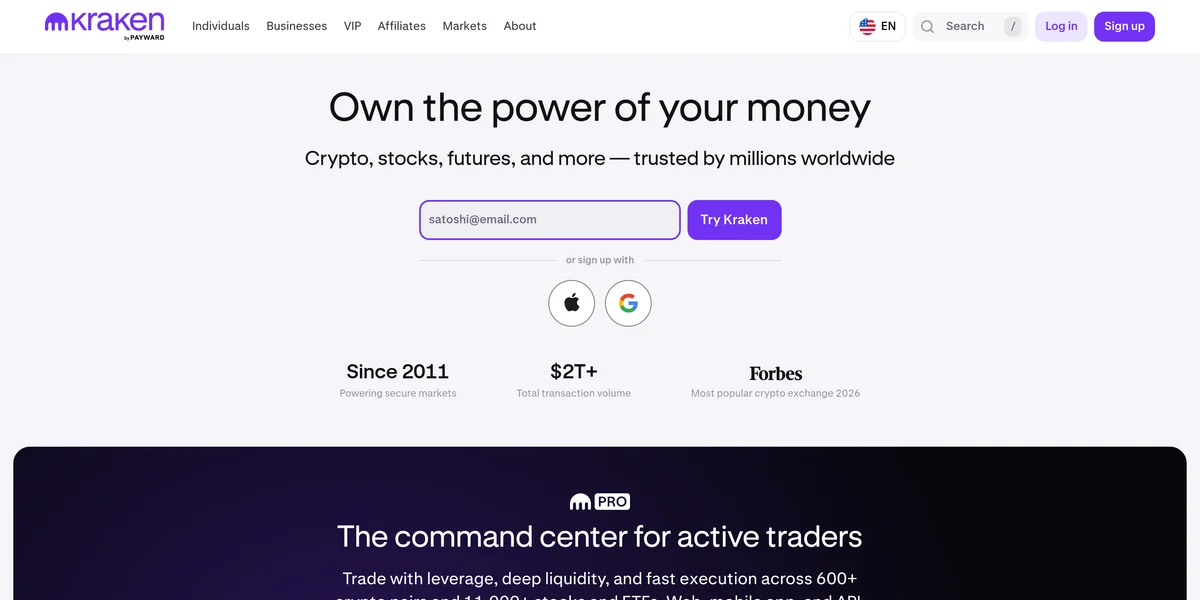
Kraken is one of the oldest exchanges still running. It opened in 2011, and its homepage lists more than $2 trillion in total trades since then. Several review sites, including Money and Yahoo Finance, rank it the best crypto exchange overall in 2026, mainly for its long safety record and wide coin list.
Fees: The Kraken app charges 1% on instant buys. Kraken Pro starts at 0.40% maker and 0.80% taker, and falls fast as your volume or balance grows, per the Kraken fee schedule.
What you get: 713 coins on CoinGecko (more than Binance, Coinbase or OKX), futures, staking, US stocks and ETFs with no commission, and 24/7 support. It holds a MiCA licence through Ireland.
What could be better: new users on Kraken Pro pay more than on Binance or Bitget until their volume grows.
4. OKX
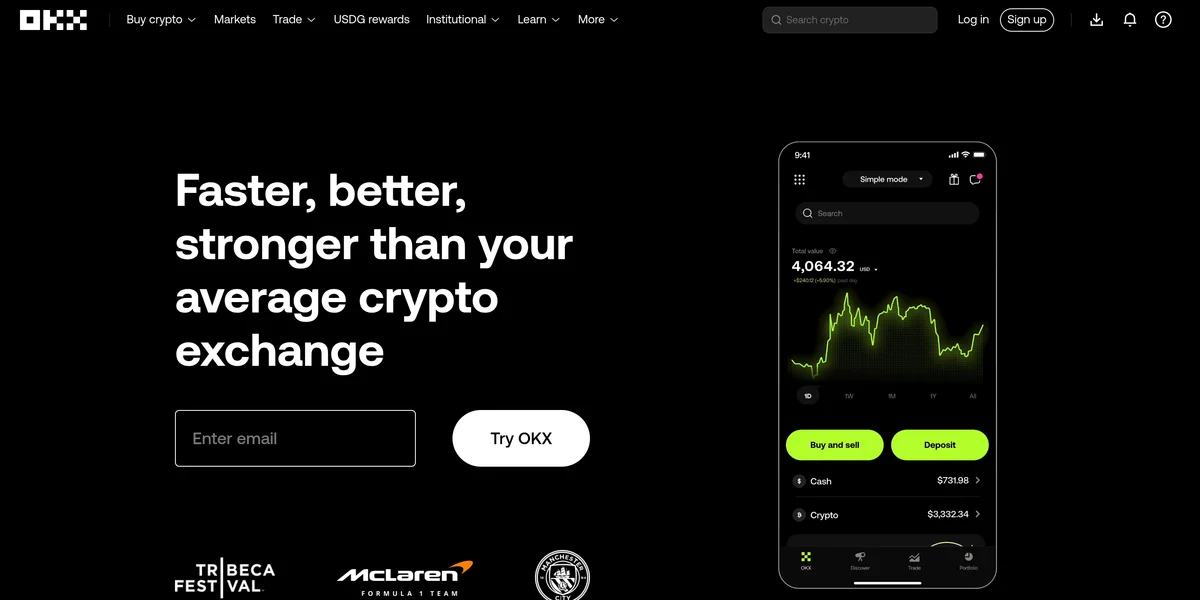
OKX is the second-largest exchange by spot volume, with about $2.98 billion traded on 2 October 2026. It suits active traders who want spot, futures, options and trading bots on one screen, plus one of the best Web3 wallets.
Fees: Regular users pay 0.20% maker and 0.35% taker on spot, per the OKX fee page. Rates drop quickly as you reach VIP tiers.
What you get: 308 coins on CoinGecko, grid and DCA bots, copy trading, and $31.7 billion in tracked reserves. OKX holds a MiCA licence through Malta and runs a separate OKX US platform.
What could be better: OKX pleaded guilty in the US in 2025 to running without a money transmitter licence, and it left India in 2024.
5. Bybit
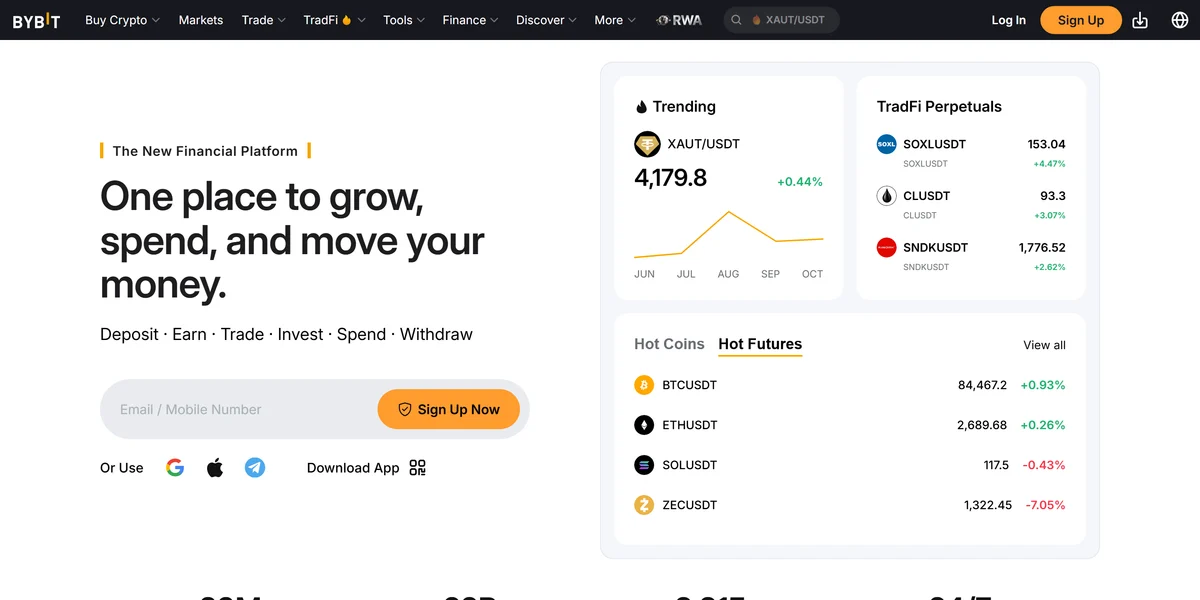
Bybit is best known for derivatives. It launched in 2018 and is now one of the busiest futures exchanges, with about $1.98 billion in daily spot volume on top of its futures trade.
Fees: Non-VIP spot traders pay 0.15% maker and 0.20% taker below $100,000 a month, per the Bybit fee page. Paying in MNT gives 25% off.
What you get: perpetual and dated futures, options, copy trading, a card and gold and forex pairs. Its EU arm, Bybit EU, holds a MiCA licence from Austria.
What could be better: in February 2025, hackers took about $1.5 billion from Bybit, which the FBI tied to North Korea. Bybit covered the loss and kept withdrawals open, but it is the largest exchange theft on record. It does not serve US users.
6. Bitget
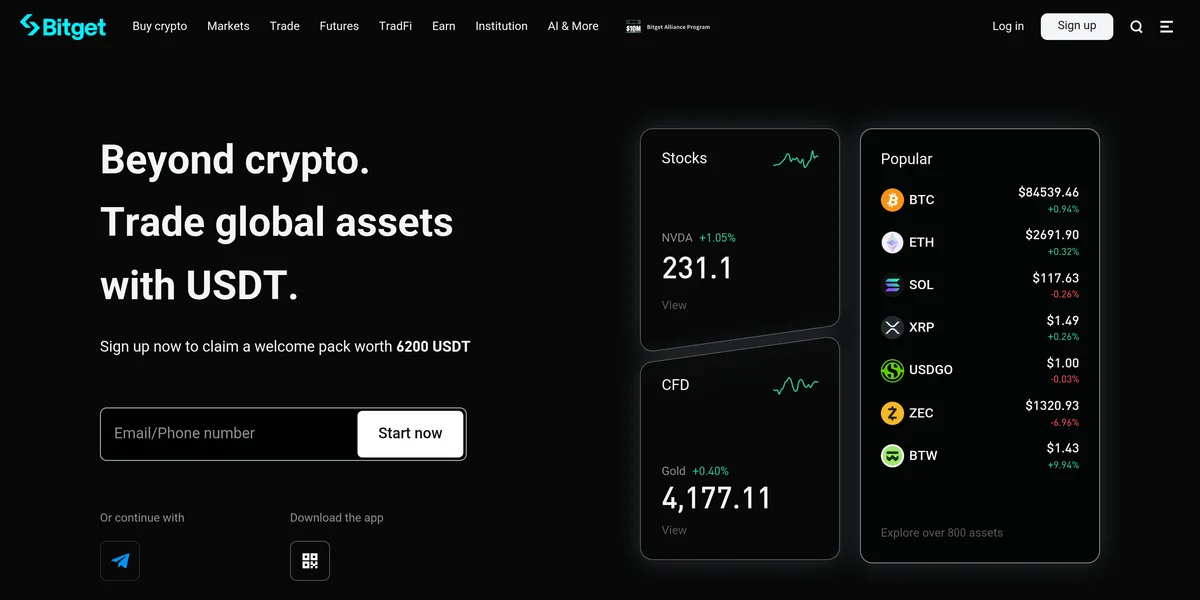
Bitget is the copy trading leader. It started in 2018 and says it serves more than 100 million users in over 150 countries. With 829 coins on CoinGecko, it lists more tokens than anyone else in this top 10, so it suits traders who hunt for new coins.
Fees: 0.10% maker and 0.10% taker at the base level, or 0.08% when you pay with BGB, per the Bitget fee page.
What you get: copy trading, futures, trading bots, stock and CFD pairs priced in USDT, and $5.6 billion in tracked reserves. CoinGecko rates it 10 out of 10 for trust.
What could be better: it does not serve the US, and the long tail of new coins carries more risk.
7. Crypto.com
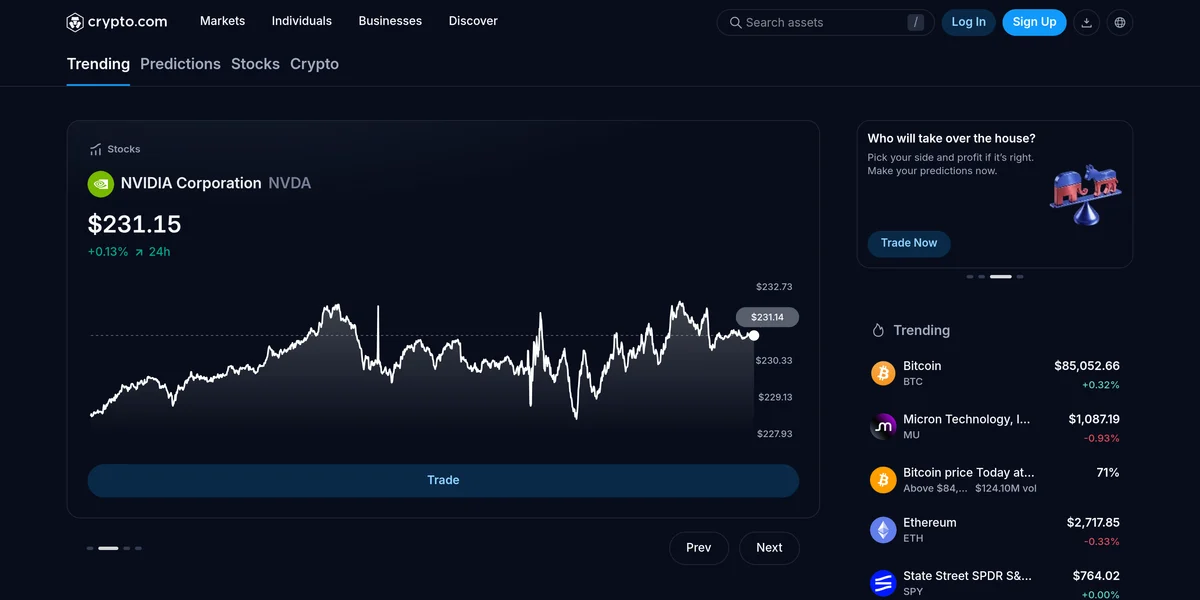
Crypto.com is an all-in-one app for buying crypto, earning rewards and spending with a card. Its exchange launched in 2019 and lists 391 coins on CoinGecko, with about $1 billion in daily spot volume.
Fees: The app adds a spread to instant buys. The Crypto.com Exchange uses maker and taker tiers that fall as your volume grows.
What you get: a Visa card with crypto rewards, staking, stocks and prediction markets, plus a MiCA licence through Malta. It also serves US users.
What could be better: simple buys in the app cost more than trading on the Exchange itself, so compare before you buy.
8. Bitfinex
Bitfinex is one of the oldest exchanges, founded in 2012, and a favourite of large Bitcoin traders. It now charges zero maker and zero taker fees on spot, margin and derivatives trades, per the Bitfinex fee page. That makes it the cheapest exchange on this list for trading.
What you get: deep Bitcoin and stablecoin order books, margin funding (you can lend coins to other traders), and $20.5 billion in tracked reserves.
What could be better: it lists far fewer coins than the big three (62 on CoinGecko), the app is built for experienced traders, and US residents cannot sign up.
9. Gemini
Gemini is a New York-based exchange built around safety and rules. It was founded in 2014, listed on Nasdaq in 2025, and runs under a New York trust charter.
Fees: ActiveTrader starts at 0.60% maker and 1.20% taker and drops with volume, per the Gemini fee schedule.
What you get: a simple app, a crypto rewards credit card, staking and prediction markets. It is a strong pick for US investors who care more about safety than price.
What could be better: a short coin list (76 on CoinGecko) and low trading volume compared with the leaders.
10. Uniswap
Uniswap is the largest decentralized exchange (DEX). You do not open an account. Instead, you connect your own wallet and swap tokens straight from it, so no company holds your coins. According to DefiLlama, Uniswap V3 and V4 handled more than $90 billion in trades over the 30 days to 2 October 2026.
Fees: each pool charges a fee set between 0.01% and 1%, plus the network’s gas fee. The Uniswap app itself now charges no extra app fee and works on more than 20 networks.
What you get: any token that has a pool, no sign-up and no withdrawal limits.
What could be better: you are on your own if you send to the wrong address or buy a scam token, and gas can be costly on Ethereum. See our list of the best decentralized exchanges for more DEX options.
How We Ranked These Exchanges
We used five tests, in this order:
- Trust: CoinGecko’s trust score, proof of reserves, and each firm’s security and legal record.
- Volume: daily spot volume, because a busy market means better prices and less slippage.
- Fees: the maker and taker rate a new user pays, plus any spread on simple buys.
- Coin choice: how many coins and pairs you can trade.
- Licences: where each exchange can legally serve you, with a focus on the US and the EU.
All figures were checked on 2 October 2026. Fees and rules change often, so always confirm on the exchange’s own site before you trade.
Crypto Exchange Fees Compared
Fees look small, but they add up fast. Every exchange uses two rates. A maker order sits on the order book and waits (for example, a limit order below the market price). A taker order fills right away, like a market buy. Takers usually pay more.
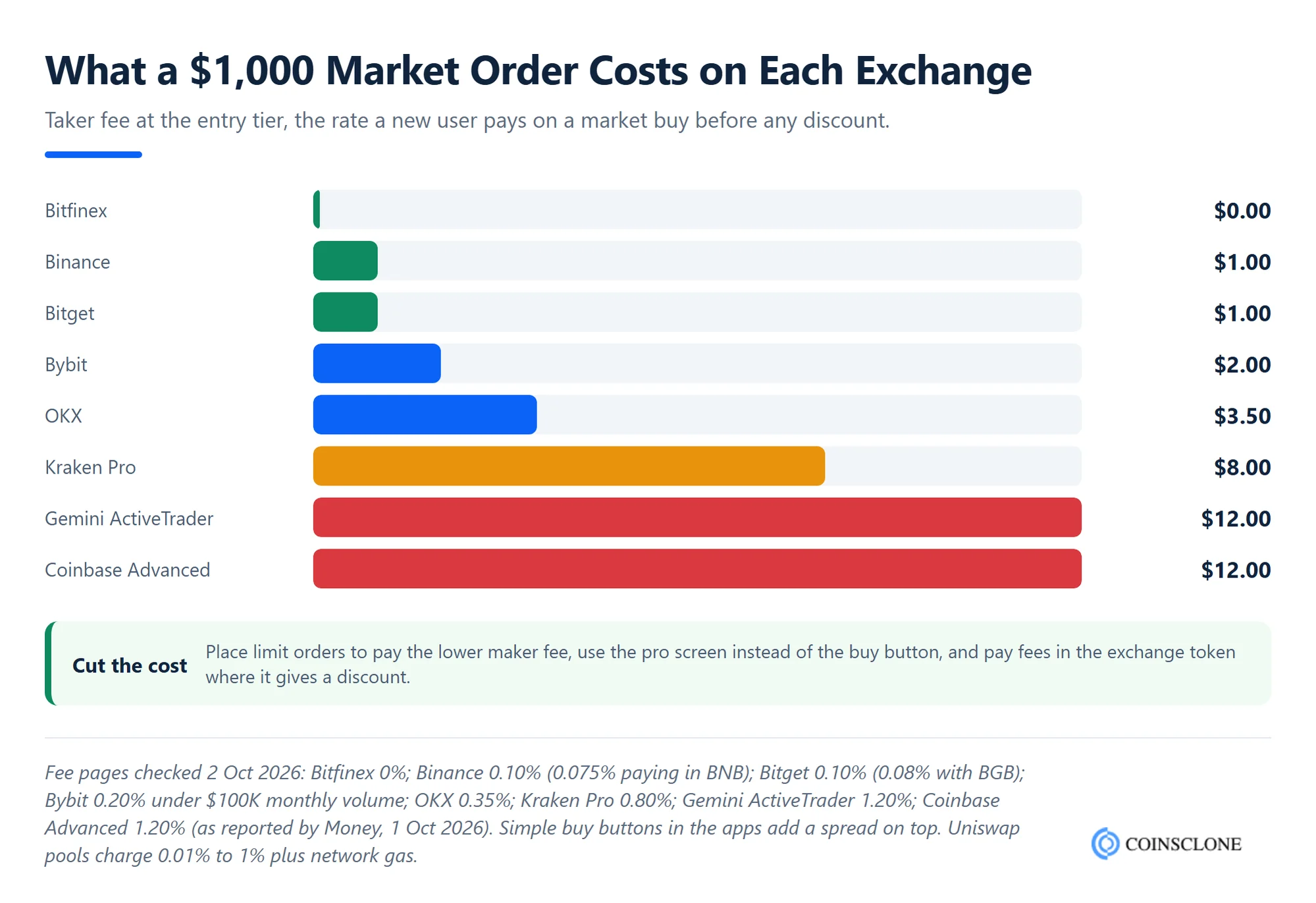
As the chart shows, the same $1,000 market order can cost nothing on Bitfinex or $12 on Coinbase Advanced. On top of that, the simple “Buy” button in most apps adds a spread of about 0.5% to 2%. So the cheapest habit is to use the pro trading screen with limit orders.
For a deeper look at fee tiers, read our guide to the crypto exchanges with the lowest fees.
Which Crypto Exchange Is Best in the USA?
For most people in the US, the answer is Coinbase for a first purchase and Kraken once you trade often, with Gemini as the safety-first pick. The full comparison, with licences and state limits, sits in the USA table near the top of this guide. Here is the short version by need:
- Beginners: Coinbase. The largest US exchange, listed on Nasdaq and part of the S&P 500, and available in all 50 states.
- Low fees: Binance.US at 0% maker and 0.02% taker, if your state is on its list. Kraken Pro once your volume grows.
- Most coins: Kraken, with 713 on CoinGecko, and Crypto.com with 391.
- Safety first: Gemini, a New York trust company, and Coinbase, with the longest US licence record.
- Stocks and crypto together: Robinhood, or eToro if you want to copy other traders.
Bybit, Bitget and Bitfinex do not accept US residents, and Binance and OKX serve the US only through Binance.US and OKX US, which list fewer coins than their global sites.
Best Exchange to Swap Crypto
Many people do not want a trading screen. They just want to swap one coin for another. Here are the best ways to do that:
- On a central exchange: Binance Convert, Coinbase and Kraken all have one-tap swap tools. They are easy, but the price includes a spread, so check the quote.
- On a DEX: Uniswap, PancakeSwap and other DEXs swap straight from your wallet. You keep your keys and pay only the pool fee and gas.
- In your wallet: MetaMask, Trust Wallet and similar wallets have built-in swaps that search several DEXs for the best price, usually for a small extra fee.
If you swap large amounts, a central exchange’s order book often gives the best price. For small swaps of newer tokens, a DEX usually lists them first.
Best Crypto Exchange for Institutions and Businesses
Companies, funds and family offices need more than a good app. They look for qualified custody, deep liquidity, OTC desks for large trades, sub-accounts for teams, and clear audit trails.
- Coinbase Prime: custody through a regulated trust company, prime brokerage and financing. A common pick for US funds and ETF issuers.
- Kraken Institutional: custody, OTC trading and a Wyoming bank charter, with service for funds, corporates and governments.
- Binance VIP and Institutional: the deepest liquidity, lower fees for high volume, and OTC and lending desks, outside the US.
- OKX Institutional: block trading, market maker programs and fast API access for trading firms.
Some businesses go further and build their own trading desk. If that is your plan, our OTC crypto exchange development team builds large-order trading platforms with their own custody and approval flows.
How to Choose the Best Crypto Exchange
The best exchange for you depends on where you live and how you trade. Use this tree to narrow it down.
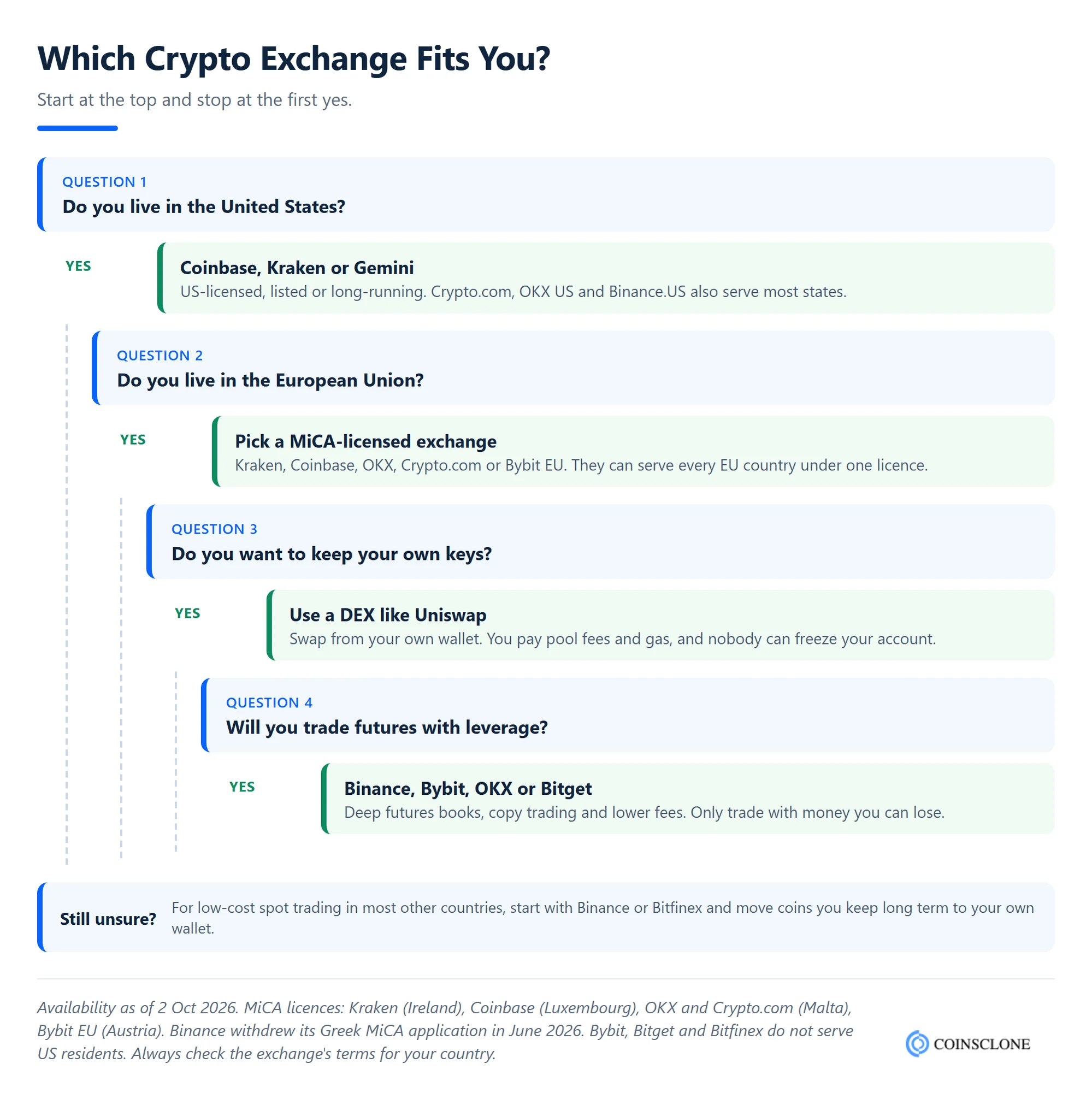
After that, check these points before you deposit:
- Proof of reserves: the exchange should publish wallet balances that cover user funds.
- Licences: look for a licence where you live, such as MiCA in the EU or state licences in the US.
- Security: two-factor login, withdrawal address whitelists and cold storage for most funds.
- Fees and limits: check the maker and taker rates, withdrawal fees and daily withdrawal limits.
- Support: 24/7 live chat matters when a deposit goes missing.
Red flags of a bad exchange
The worst exchanges tend to share the same warning signs. FTX looked solid until it collapsed in 2022, so watch for these:
- No proof of reserves, or numbers that never change.
- Yields that look too good to be true.
- No licence anywhere, or a vague company address.
- Delays on withdrawals, or new limits added without warning.
- Pressure to deposit fast for a bonus.
Even on a good exchange, move coins you plan to hold for years into a wallet you control.
What is a Cryptocurrency Exchange?
A cryptocurrency exchange is a platform where people buy, sell and swap crypto. Some exchanges act as the middleman and hold your coins. Others use smart contracts so that you trade straight from your own wallet.
As more people trade crypto, the demand for safe, fast exchanges keeps rising. That is why exchanges are still one of the most popular business ideas in crypto. Many exchanges launch each year, but only a few succeed, and the choice of exchange type plays a big part in that.
So, let’s look into…
What are the Different Types of Crypto Exchanges?
There are three main types of cryptocurrency exchanges. Each one handles trust, speed and privacy in its own way.
Centralized exchange (CEX): a company runs the platform, holds user funds and matches orders. Users pass KYC checks, and the exchange gives each one a wallet. Binance, Coinbase, Kraken and Bybit are all centralized exchanges.
Decentralized exchange (DEX): smart contracts handle every trade, and users keep their coins in their own wallets. Most DEXs need no sign-up. Uniswap, PancakeSwap and Curve are popular DEX platforms.
Hybrid exchange: a mix of both. It aims to give the speed and liquidity of a CEX with the self-custody of a DEX. On-chain order book exchanges like Hyperliquid now offer CEX-style speed with self-custody.
This is enough to get a basic idea of the types. But here, you may come up with a question…
How do Crypto Exchanges Work?
For your ease, here is how CEX and DEX platforms work from the admin’s side. This helps if you plan to build and launch your own exchange.
CEX Platform: Admin Perspective
- The admin dashboard shows every user’s trades and history.
- When new users sign up, the admin checks their identity through Know Your Customer (KYC) rules and approves the account.
- Once approved, the user can deposit funds and start trading.
- If a dispute comes up between a buyer and a seller, the admin is in charge of fixing it.
- The admin approves withdrawal requests and tracks fee income and wallet activity.
- The admin also controls the website content, theme, logo, trading fees and coin listings.
DEX Platform: Admin Perspective
As no single company controls a DEX, the admin has far fewer tasks.
- The admin manages the token pairs that users can swap.
- The admin adds or removes liquidity pools and farming pairs, and can view swap history for each pool.
That is how both types work behind the scenes. Studying the leaders above shows what users expect, and it makes the build far easier to plan.
Also Read : Explore the popular India-based Crypto exchanges for your Dream Startup business
To save time and launch faster, many founders start from a clone script of a proven exchange. With a ready crypto exchange clone script, you can launch a Binance-style or Coinbase-style platform without building every part from scratch.
Why Collaborate With Coinsclone for Cryptocurrency Exchange Development?
The exchanges in this list all started as one product that worked well, then grew. Starting your own exchange can still be a strong long-term business, as long as you pick the right development partner.
Coinsclone has been building crypto products since 2018, with more than 350 platforms delivered for 200+ clients across 20 industries. Our team builds white label crypto exchange software and clone scripts for popular exchanges like Binance, Coinbase, Kraken and OKX, and we shape each one around your business plan.
A white label exchange can go live in about 4 to 6 weeks, 7 to 10 weeks with fiat rails, and 9 to 13 weeks with mobile apps. If you want a fully custom build, our team will plan the scope with you.
Get in touch with us now!
Frequently Asked Questions
Which is the most trusted crypto exchange?
On CoinGecko’s trust score, Binance, Coinbase, Kraken, OKX, Gate and Bitget all score 10 out of 10 as of October 2026. Kraken and Coinbase have the longest clean records among US-licensed exchanges, while Binance has the most volume and the largest reserves.
What are the top 3 crypto exchanges?
By CoinGecko’s ranking, the top 3 are Binance, Coinbase and Kraken. By daily spot volume on 2 October 2026, they were Binance ($11.95 billion), OKX ($2.98 billion) and Coinbase ($1.99 billion).
What is better than Coinbase?
It depends on what you need. Kraken has more coins and lower fees on Kraken Pro once you trade more. Binance and Bitfinex charge far less per trade outside the US. Gemini suits US users who want a safety-first platform.
What are the worst crypto exchanges?
The worst exchanges usually have no licence, no proof of reserves, slow withdrawals and promises of very high returns. FTX showed in 2022 how fast an unchecked exchange can fail, so check every point in our red flags list before you deposit.
Which crypto exchange has the lowest fees?
Bitfinex charges zero maker and taker fees as of October 2026. Binance and Bitget follow at 0.10% per trade for new users, or less when you pay fees in their own tokens.
Is it safe to keep crypto on an exchange?
It is safe enough for coins you trade often, if you use a large, licensed exchange with proof of reserves. For coins you plan to hold for a long time, a wallet you control is safer, because hacks like the 2025 Bybit theft can still happen.
Which crypto exchanges are legal in the USA?
Coinbase, Kraken, Gemini, Robinhood, Crypto.com, Binance.US, eToro, OKX US and Bitstamp all run under US rules as of October 2026. Coinbase, Gemini, Robinhood, eToro and Bitstamp also hold a New York BitLicense or trust charter. Global Binance, Bybit, Bitget and Bitfinex do not accept US residents.
Do I need KYC to use a crypto exchange?
All of the central exchanges in this list ask for ID before you can trade or withdraw much. DEXs like Uniswap need no sign-up. A few smaller exchanges allow limited trading without full KYC, but they carry more risk.
Top cryptocurrency exchange for effortless trading
A Deep Dive into the Ideal Option