

This guide ranks the top DeFi lending platforms of 2026 by the money they hold, and shows what each one is best for. You will see where each app runs, how much it has out on loan, and what makes it different, from Aave and Morpho to Kamino on Solana. We checked every figure against DefiLlama and each platform’s own site on 2 October 2026.
DeFi lending lets you earn interest on crypto or borrow against it, with code in place of a bank. That is useful, but it is not risk free. A sharp price drop can close your loan for you. So this guide also shows how a loan works, what can go wrong and how to pick the right app for your coins.
In this guide:
- The 10 top DeFi lending platforms in 2026, with a side by side table of TVL, chains and tokens
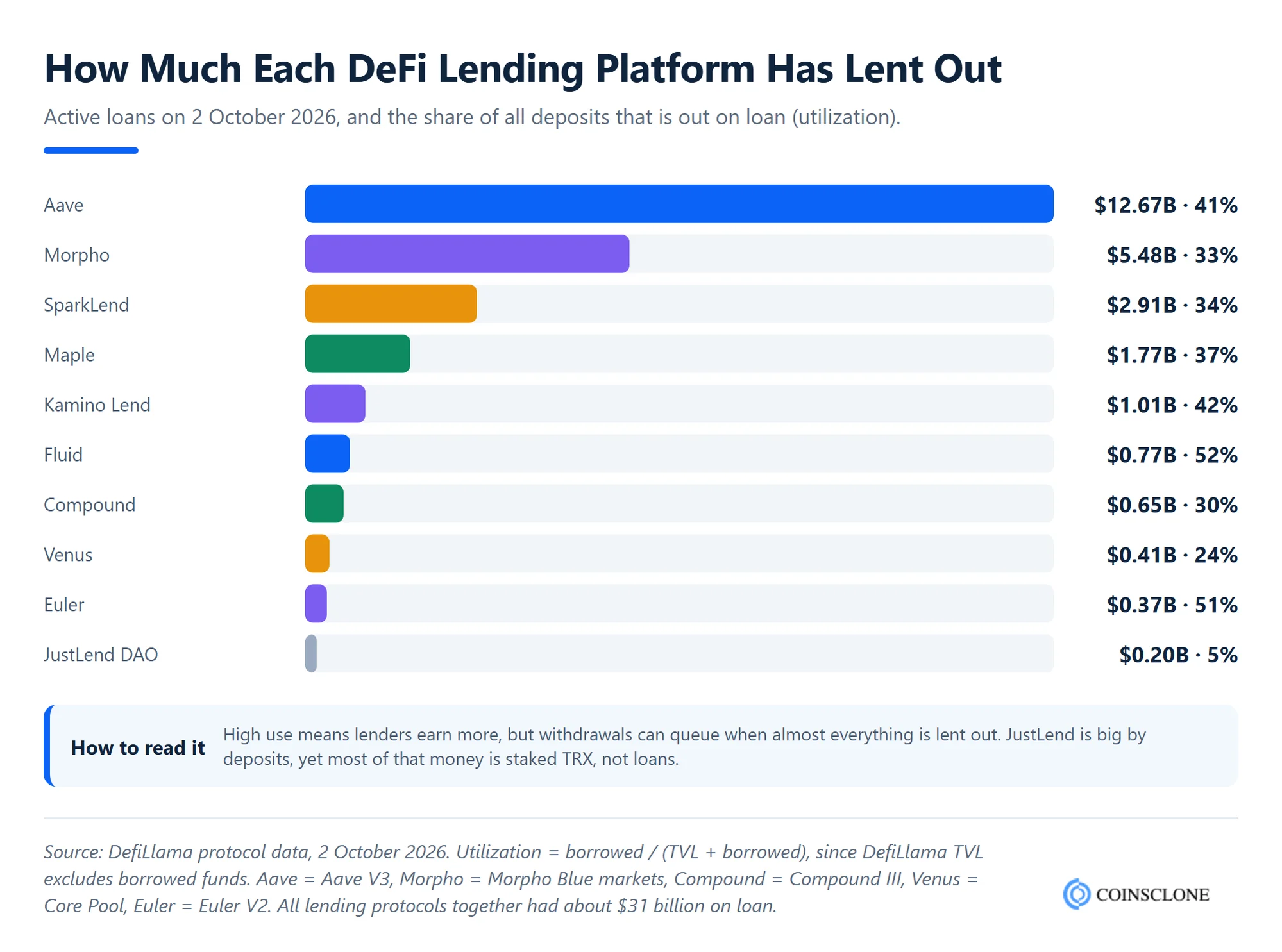
- How much each one has actually lent out, in one chart
- A worked example of how a loan gets liquidated, and how to avoid it
- The main risks, and how DeFi lending compares with CeFi lenders
- A simple way to choose the right platform, plus the trends to watch
Launch Your DeFi Lending Platform Faster With a Proven MVP System
Top DeFi Lending Platform Development — Built for Scale, Security, and Cost-Efficiency
- MVP System :Launch your top DeFi lending platform up to 90% faster.
- Real-Time Data Engine : Core lending logic, interest rate models, collateral management, and liquidation modules pre-integrated — no complex development required.
- Brand & Customization : Your assets, your collateral rules, your interest rates, your UI, your governance.
- Revenue Engine :Earn from lending interest spreads, borrowing fees, liquidation incentives, and protocol parameters.
Get a free branded demo of your DeFi lending platform MVP within 48 hours — before committing to development.
Book a free strategy call to see how our DeFi lending platform MVP can take you from idea to a live, production-ready protocol in as little as 8–12 weeks.
Top 10 DeFi Lending Platforms in 2026
The top 10 DeFi lending platforms in 2026 are Aave, Morpho, SparkLend, JustLend DAO, Maple, Compound, Kamino, Venus, Fluid and Euler. We ranked them by total value locked (TVL) on DefiLlama’s lending rankings on 2 October 2026, then checked each one’s own site. Together, all lending apps hold about $55 billion across more than 650 protocols, and Aave and Morpho alone hold over half of it.
- Aave: the largest lending market, on 21 chains
- Morpho: open lending markets with curated vaults and fixed rates
- SparkLend: cheap stablecoin loans backed by Sky (formerly MakerDAO)
- JustLend DAO: the main lending app on Tron
- Maple: stablecoin yield from loans to vetted firms
- Compound: a simple, long-running money market
- Kamino: the main lending app on Solana
- Venus: the main lending app on BNB Chain
- Fluid: high loan-to-value borrowing with a built-in DEX
- Euler: build-your-own lending vaults
DeFi Lending Platforms Compared
The table sets the 10 side by side. TVL here follows DefiLlama, which counts deposits that are not lent out, so it leaves out money already on loan.
| # | Platform | Main chains | TVL (2 Oct 2026) | Token | Best for |
| 1 | Aave V3 | Ethereum, Base, Arbitrum and 18 more | $18.2B | AAVE | Deep markets on most chains |
| 2 | Morpho | Ethereum, Base and 40+ more | $11.2B | MORPHO | Curated vaults and fixed rates |
| 3 | SparkLend | Ethereum, Gnosis | $5.7B | SPK | Borrowing USDS and DAI |
| 4 | JustLend DAO | Tron | $3.9B | JST | TRX and USDT on Tron |
| 5 | Maple | Ethereum, Solana | $3.0B | SYRUP | Stablecoin yield from firm loans |
| 6 | Compound III | Ethereum, Base, Arbitrum and 7 more | $1.5B | COMP | Simple one-asset loans |
| 7 | Kamino Lend | Solana | $1.4B | KMNO | Lending and leverage on Solana |
| 8 | Venus | BNB Chain and 7 more | $1.3B | XVS | Lending on BNB Chain |
| 9 | Fluid | Ethereum, Arbitrum, Base and 2 more | $0.7B | FLUID | High LTV loans |
| 10 | Euler V2 | Ethereum, Base and 14 more | $0.35B | EUL | Custom lending vaults |
TVL only shows what is parked. The chart below shows how much each app has actually lent out, which tells you where borrowers really go.
1. Aave
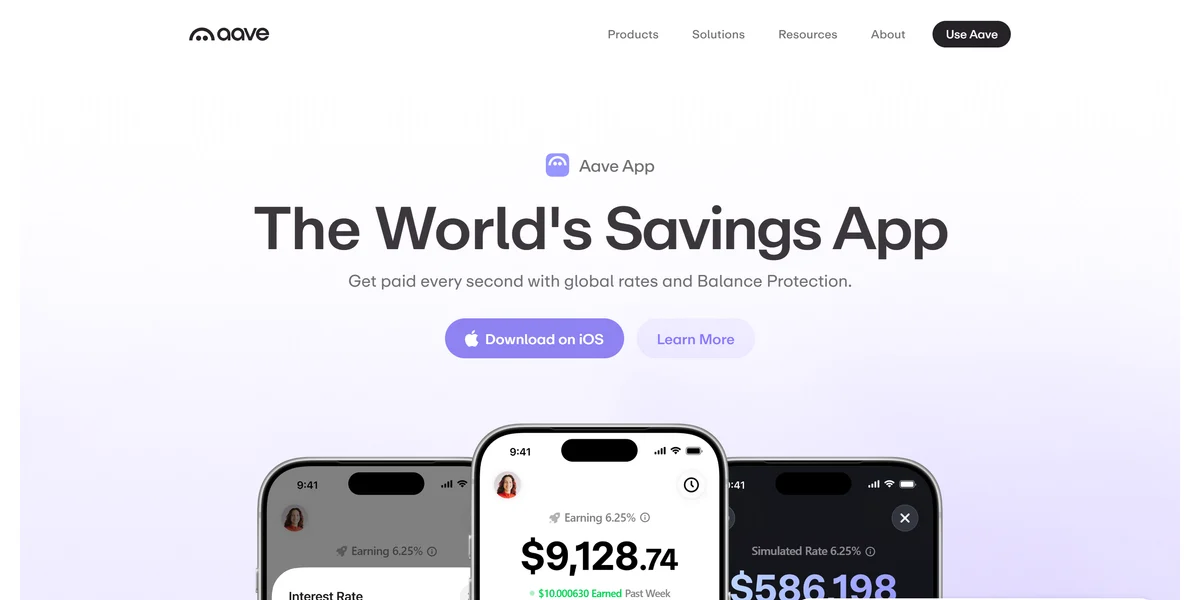
Aave is the largest DeFi lending platform. Its V3 markets held about $18.2 billion on 21 chains on 2 October 2026, with $12.7 billion out on loan, and its own site shows $33.5 billion in net deposits. You deposit a coin, earn a variable rate on it, and can borrow other coins against it. Aave V4 went live on Ethereum on 30 March 2026 with a “hub and spoke” design that lets new markets share one pool of cash. If you want to launch a market like this, our Aave clone script is the place to start.
Key Features
- Multi-chain: Ethereum, Base, Arbitrum, Avalanche, Polygon and more, all in one app
- E-Mode and flash loans: higher borrowing power for linked coins, and one-block loans for traders and bots
- GHO and the Aave App: its own stablecoin, plus a savings app that pays interest every second
2. Morpho
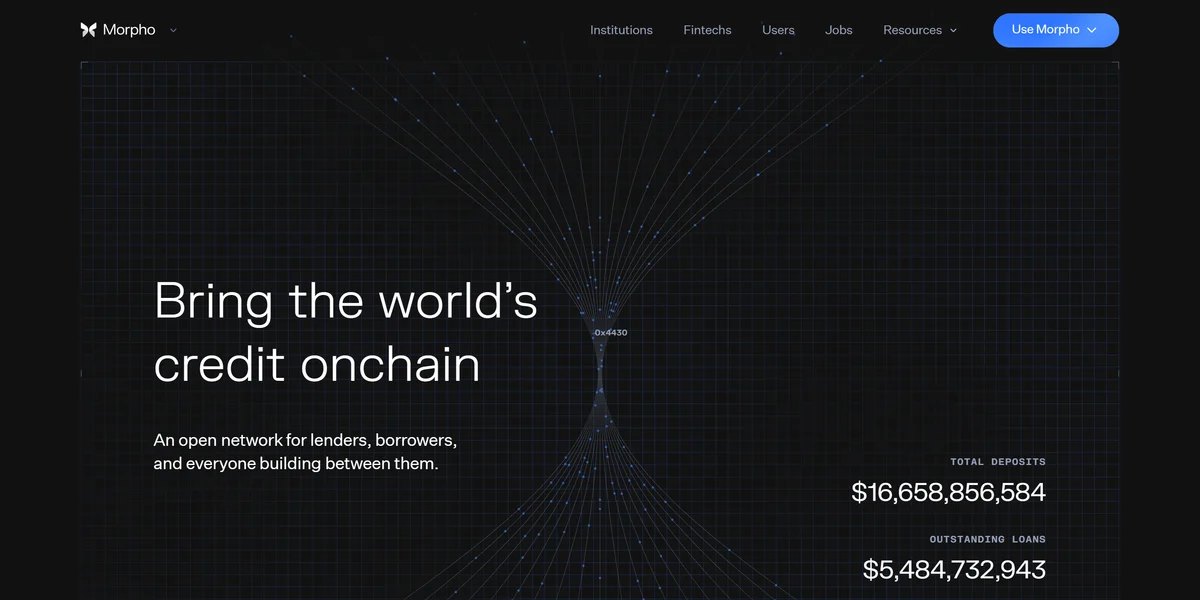
Morpho is an open lending network built from small, separate markets. Each market pairs one loan coin with one collateral coin, so a problem in one cannot spread to the rest. Risk teams such as Gauntlet and Steakhouse run “vaults” that spread your deposit across markets. Its site showed $16.7 billion in deposits and $5.5 billion in loans on 2 October 2026.
Key Features
- Fixed rates: Morpho Midnight, live on Base since July 2026, sets the rate and the repay date up front
- Fintech reach: Coinbase launched fixed-rate, bitcoin-backed USDC loans through Morpho on 22 September 2026, on top of $1.4 billion of variable loans
- Curated vaults: you pick a vault by its risk team, not each market one by one
3. SparkLend (Spark Protocol)
SparkLend is the lending market of Spark, which is part of the Sky ecosystem (once called MakerDAO). It runs on code taken from Aave V3. Sky sets the rate for borrowing its own stablecoins, USDS and DAI, which often keeps those loans cheaper than elsewhere. SparkLend held about $5.7 billion on Ethereum and Gnosis on 2 October 2026.
Key Features
- Direct liquidity: Sky supplies stablecoins straight into the market, so it does not wait for outside lenders
- Spark Savings: a separate way to earn on USDC, USDT, PYUSD and ETH
- SPK token: used to vote on how the protocol is run
4. JustLend DAO
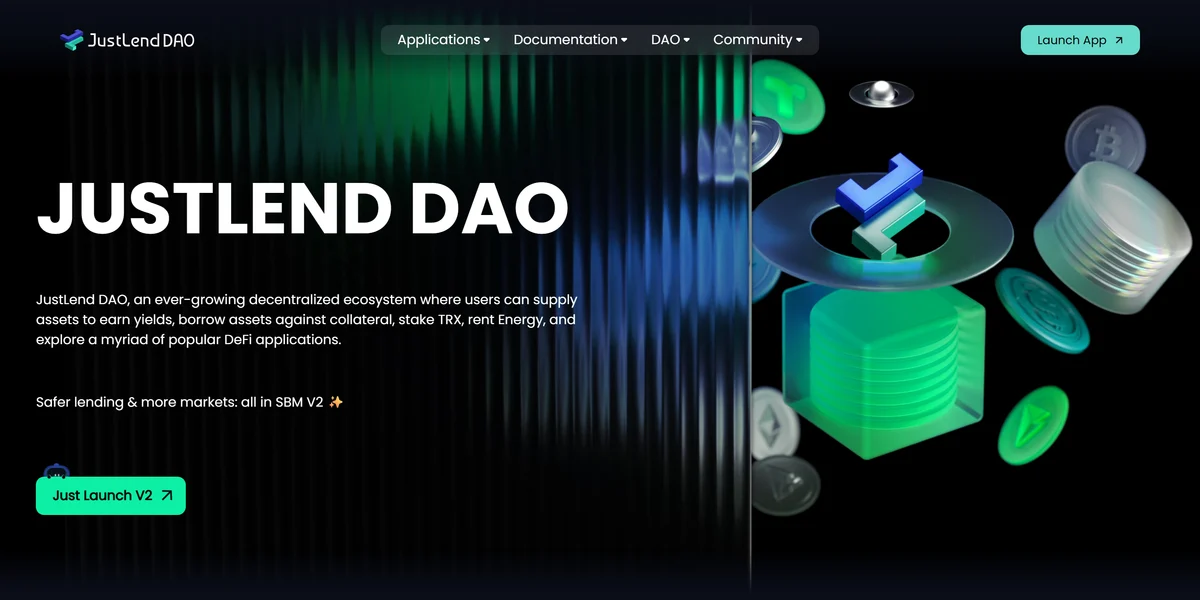
JustLend DAO is the main DeFi lending platform on Tron. It held about $3.9 billion on 2 October 2026, making it the fourth largest by TVL. However, only about $0.2 billion was on loan. Most of its value is TRX staked through the app, which also rents out Tron “Energy” so users can pay lower fees. As the platform runs on Tron, fees stay very low.
Key Features
- Tron fit: supply and borrow TRX, USDT and other TRC-20 tokens
- Staking and Energy: stake TRX for sTRX, or rent Energy to cut the cost of transfers
- JST token: holders vote in the DAO on rates and new markets
5. Maple Finance
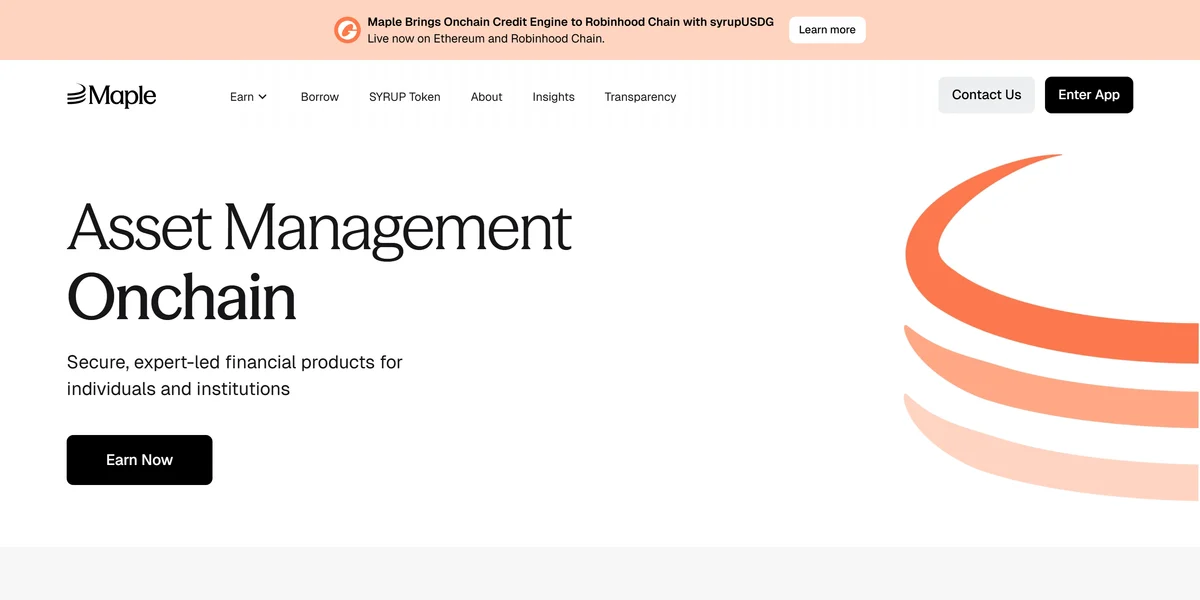
Maple is built for larger, institutional loans. Instead of matching strangers, it lends depositors’ stablecoins to vetted firms that post crypto as collateral. On 2 October 2026 its site showed syrupUSDC paying 5.2% APY and syrupUSDT 5.3%, with about $3.0 billion in TVL. It is one of the few top platforms where the yield comes from real credit demand rather than token rewards.
Key Features
- Syrup pools: deposit USDC, USDT or USDG and get a token that grows in value as loans pay interest
- On-chain records: every loan and repayment can be checked on chain
- SYRUP token: holders share in protocol revenue through buybacks
6. Compound

Compound was one of the first DeFi lending protocols, and its site now says it has run for more than six years. The current version, Compound III, keeps things simple. Each market lends one main coin, such as USDC or ETH, against a list of collateral coins. That makes risk easier to follow than in a pool where everything can be borrowed. Compound III held about $1.5 billion on 10 chains on 2 October 2026.
Key Features
- One borrow coin per market: your collateral cannot be lent out, which keeps it safer
- Rates set by use: the rate rises as more of the pool is borrowed and falls as it is repaid
- COMP token: holders vote on new markets and settings
7. Kamino Lend
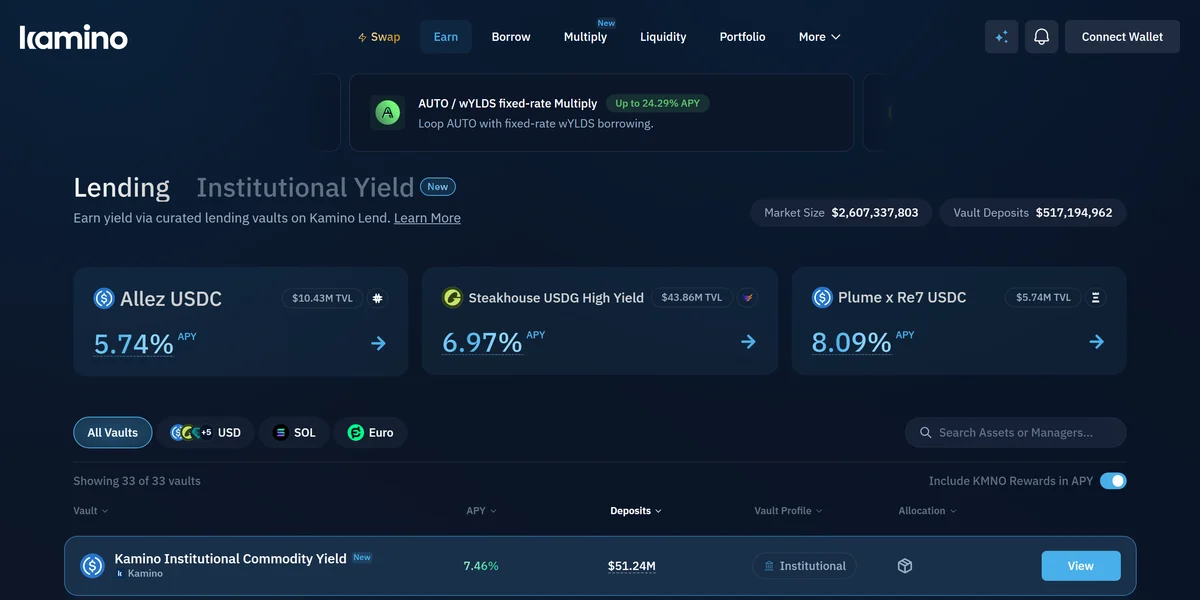
Kamino is the largest lending app on Solana. It calls itself an open source credit protocol. Kamino Lend held about $1.4 billion on 2 October 2026, and more than $1 billion of that was out on loan. That is one of the highest rates of use in this list. It also offers “Multiply”, which loops a deposit into a larger position in one click.
Key Features
- Solana speed: fast, cheap loans for SOL, USDC, USDT, JUP and other Solana coins
- Multiply and vaults: one-click leverage on staked SOL, plus vaults that manage your funds for you
- KMNO token: used for rewards and voting
8. Venus Protocol
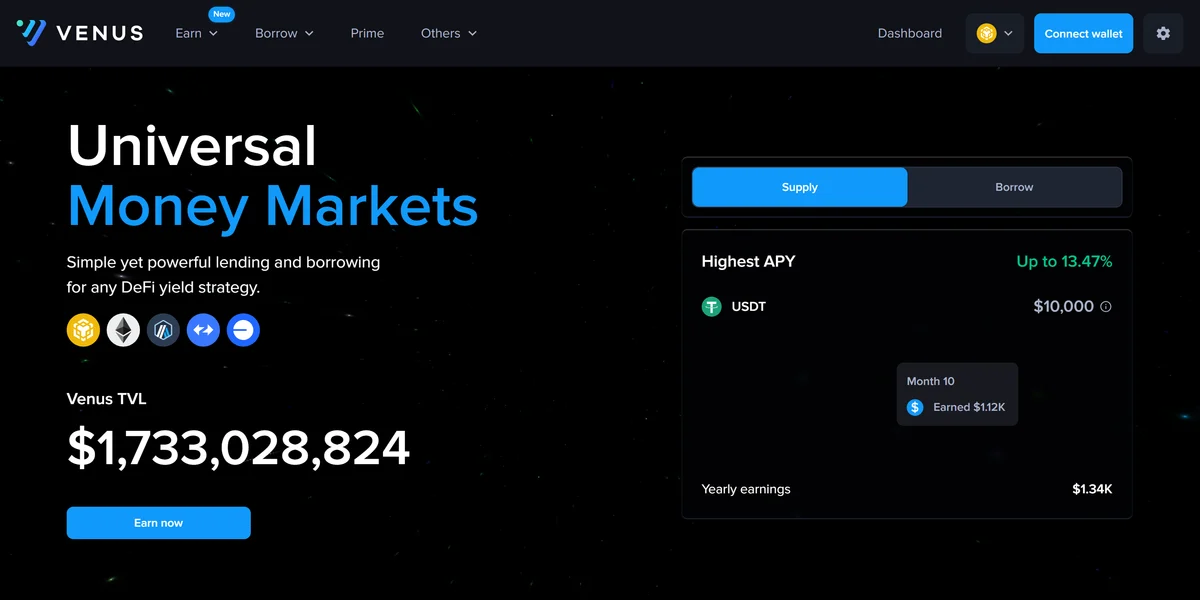
Venus is the main money market on BNB Chain, and it now runs on seven more chains too. Its Core Pool held about $1.3 billion on 2 October 2026. Venus also lets users mint VAI, its own stablecoin, against their collateral. It works much like Compound, with rates that move with demand.
Key Features
- BNB Chain first: supports BNB, BTCB, USDT and many BEP-20 tokens
- Isolated pools: riskier coins sit in separate pools so they cannot drain the Core Pool
- XVS token: used for voting and rewards
9. Fluid
Fluid, from the team behind Instadapp, puts lending and a DEX on one shared pool of liquidity. Its docs say its vaults allow loans of up to 95% of the value of your collateral, with some of the lowest liquidation penalties in DeFi. Its lending markets held about $0.7 billion on 2 October 2026, with even more than that out on loan, as the chart above shows.
Key Features
- Smart collateral and smart debt: your collateral and your loan can both earn DEX trading fees
- High LTV: up to 95% on closely linked pairs, such as ETH and staked ETH
- FLUID token: used for voting on the protocol
10. Euler Finance
Euler is a modular lending platform. With Euler V2, launched in September 2024, anyone can create a lending vault with its own rules and link it to others. Euler had a $197 million hack in March 2023, and the attacker later returned the funds. It was then rebuilt with many new audits. Euler V2 held about $0.35 billion on 16 chains on 2 October 2026.
Key Features
- Vault Kit: build a custom lending market in minutes, with your own collateral and risk settings
- Linked vaults: borrow from one vault against collateral held in another
- EUL token: holders vote on upgrades through the Euler DAO
Other DeFi Lending Platforms Worth Watching
A few platforms just missed the top 10 or fall in a different group on DefiLlama. Jupiter Lend on Solana ($1.2 billion) and Lista Lending on BNB Chain ($1.0 billion) are growing fast. Sky ($5.9 billion) and Liquity let you mint a stablecoin against ETH, rather than borrow from other users.
What Is a DeFi Lending Platform?
A DeFi lending platform is an app that lets people lend and borrow crypto without a bank. Smart contracts on a blockchain hold the money, set the rates and enforce the rules. No one checks your credit or your ID. Instead, you lock up collateral worth more than you borrow.
Lenders put coins into a shared pool and earn interest. Borrowers take coins out of that pool and pay interest. The rate moves with supply and demand, so it rises when many people borrow and falls when the pool fills up. Because it all runs on chain, anyone can check loan terms, collateral and repayments at any time. To learn the basics first, see our guide on what DeFi is.
How DeFi Lending Works
Every top DeFi lending platform follows the same basic steps, even if the details differ.
- Deposit: you supply a coin, such as ETH or USDC, to a lending pool and start to earn interest.
- Borrow: you borrow another coin against it, up to a set share of its value, called the loan-to-value (LTV) limit.
- Pay interest: your debt grows each block at the current borrow rate, and lenders receive most of it.
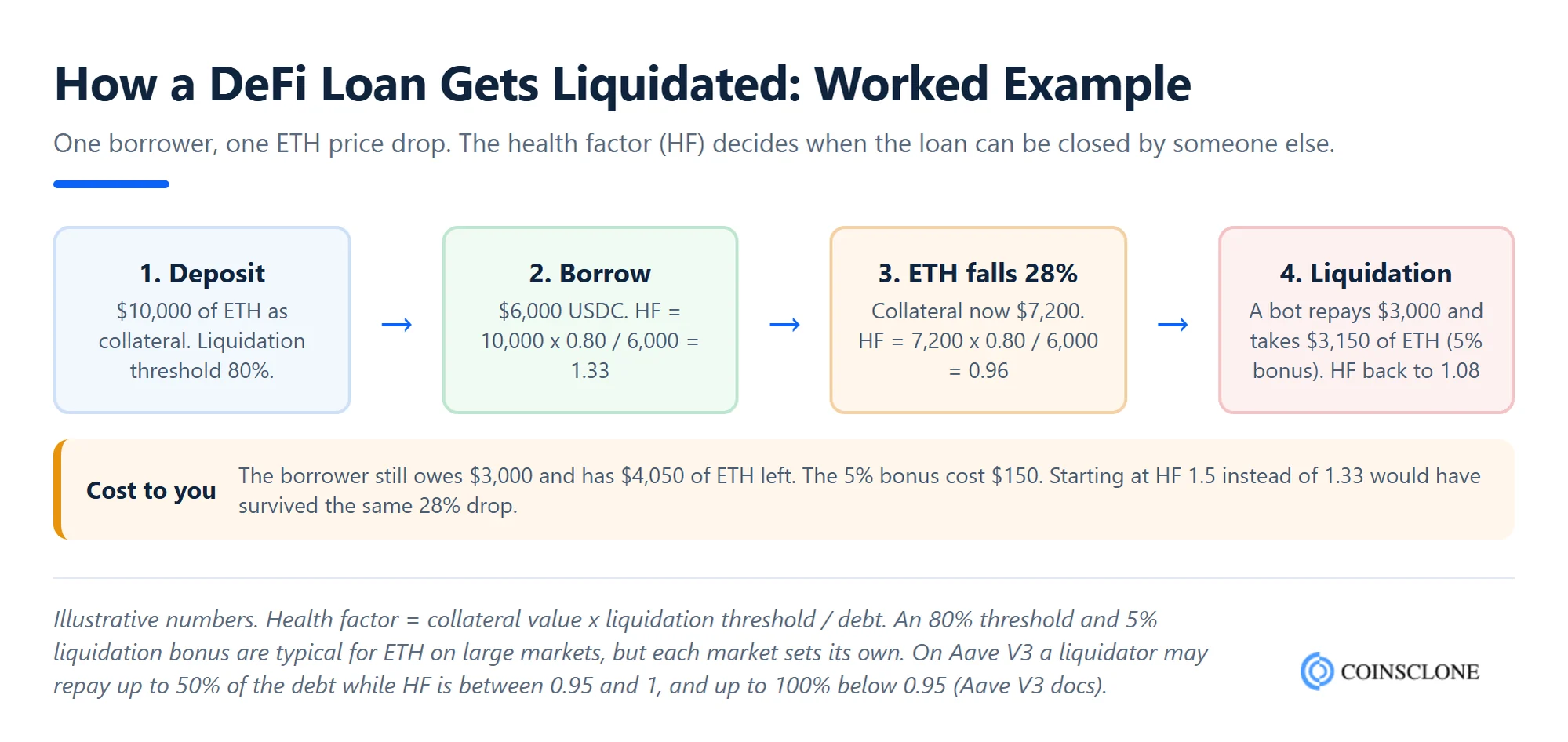
- Repay or get liquidated: you repay at any time and take back your collateral. If your collateral falls too far in value first, bots can repay part of your loan and take some of your collateral at a discount.
The key number is the health factor. It compares your collateral, after a safety cut, with your debt. Above 1 the loan is safe. Below 1 anyone can liquidate it. The worked example below shows how fast that can happen.
Some apps also offer flash loans. These are loans with no collateral that must be repaid in the same transaction, and traders use them for things like flash loan arbitrage bots.
Benefits of DeFi Lending Platforms
Top DeFi lending platforms give both users and new startups real gains. Here are the main ones.
Permissionless Access
Anyone with a crypto wallet can use a DeFi lending app. There is no sign-up form, credit check or bank in the way, so a user in any country can lend or borrow within minutes.
Borrow Without Selling
You can borrow cash against your crypto instead of selling it. This means you keep your coins if prices rise later, and in many places a loan is not a taxable sale.
Automation by Smart Contracts
Smart contracts handle deposits, rates and liquidations on their own. That cuts out human error and delay, and the app works around the clock.
Transparency
Every loan, rate and repayment is recorded on a public blockchain. You can check a platform’s reserves and bad debt for yourself, at any time, before you deposit.
Earn on Idle Coins
Stablecoins and other coins that would sit still can earn a yield. On 2 October 2026, USDC supply rates on the main markets ranged from about 3.7% on Aave to over 6% on Compound, per DefiLlama’s yield data.
In short, DeFi lending makes credit far more open than it was. However, it also moves the risk onto you, so the next section matters just as much.
Risks of DeFi Lending
DeFi lending removes the bank, but it does not remove risk. Before you deposit, weigh these.
- Smart contract bugs: a flaw in the code can drain a pool. Euler lost $197 million this way in 2023, and audits lower the risk but never make it zero.
- Liquidation: if your collateral falls fast, you lose part of it plus a penalty, often around 5%.
- Price feed (oracle) faults: apps use oracles to read prices. A wrong or tampered price can trigger unfair liquidations.
- Stablecoin depegs: if a stablecoin used as collateral loses its $1 peg, loans backed by it can fail.
- Withdrawal queues: when most of a pool is lent out, you may have to wait to take your money back.
- Governance and rules: token holders can change settings, and new laws can limit who may use a front end.
A good habit is to start small, keep a health factor well above 1, and spread funds across more than one app.
DeFi Lending vs CeFi Lending
CeFi lenders, such as crypto exchanges that run loan desks, offer a similar service in a very different way. The table shows the main gaps.
| DeFi lending | CeFi lending | |
| Who holds your coins | Smart contracts; you keep control through your wallet | The company holds them |
| Sign-up | A wallet, no ID | Account and KYC checks |
| Rates | Set by code from supply and demand, shown live | Set by the company |
| Main risk | Code bugs and liquidations | The company failing, as Celsius did in 2022 |
| Hours | Always on | Business rules and support hours |
How to Choose the Right DeFi Lending Platform?
Among the many top DeFi lending platforms, choosing the right one does not have to be hard. These checks help you find a good fit for your lending or borrowing needs.
- Security: check for audits, a bug bounty and a long record without losses.
- Chain: use a platform on the chain where your coins already live, to avoid bridge risk and fees.
- Assets: make sure it supports the coins you want to lend and the collateral you want to use.
- Rates and fees: compare live supply and borrow rates, not last month’s.
- Liquidity: bigger pools give steadier rates and easier exits.
- Features: look for fixed rates, flash loans or high LTV if you need them.
- Governance: an active DAO and clear risk team help a platform last.
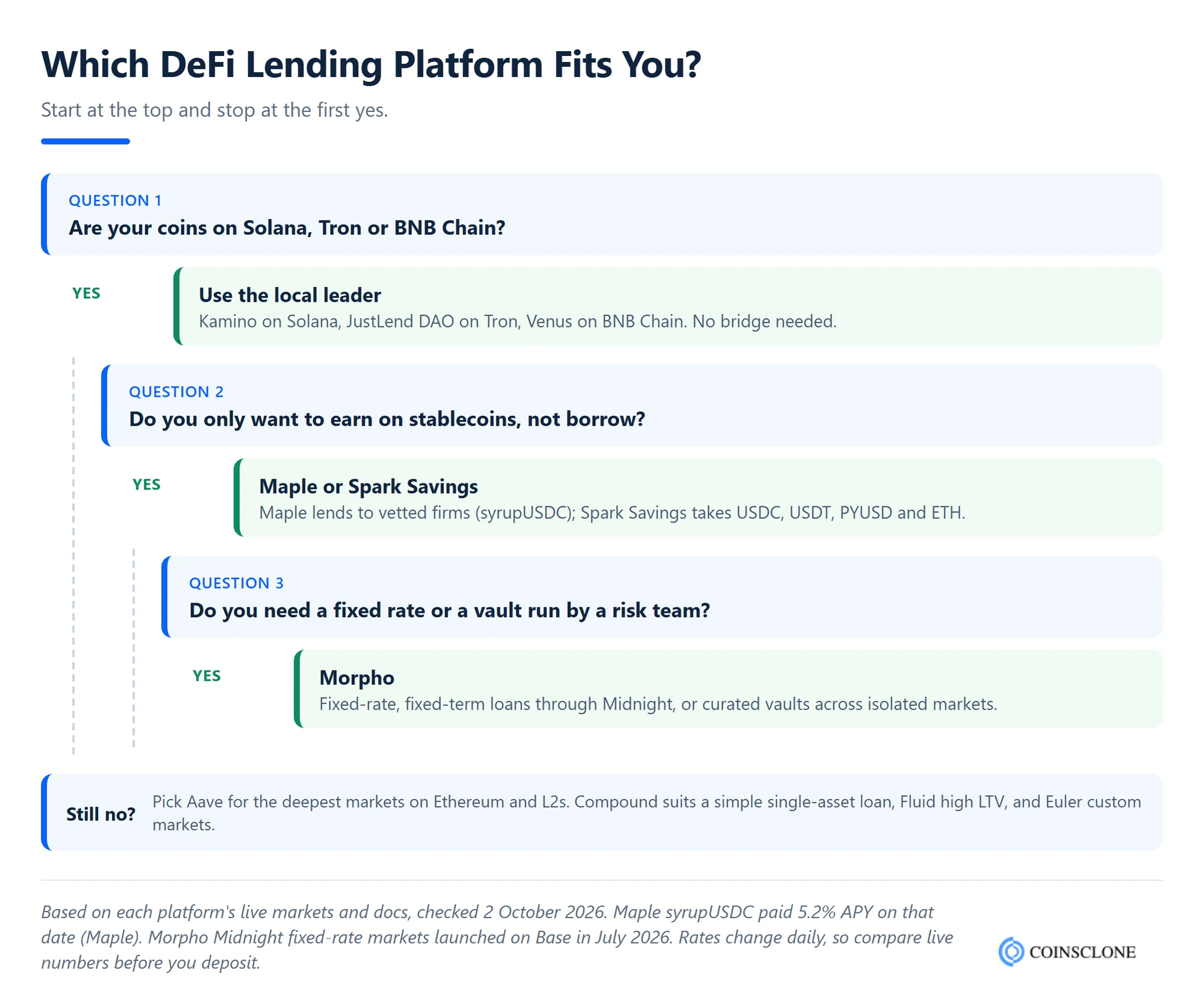
If you are still unsure, the decision tree below points to a good starting platform in three questions.
DeFi Lending Trends for 2026 and Beyond
DeFi lending in 2026 is moving from simple borrow-and-lend pools to more flexible, more efficient markets. Big apps now offer separate markets with their own risk settings, and stablecoins drive most of the demand.
- Fixed rates and modular markets: Morpho Midnight brings loans with a set rate and end date, which suits firms and fintech apps. Aave V4 splits its markets into separate “spokes” that share one pool of cash.
- Fintech distribution: apps like Coinbase now offer DeFi loans inside their own app, with the protocol running behind the scenes.
- Real-world assets: tokenized funds and bonds are being used as collateral, through markets such as Aave Horizon and Maple.
- Cross-chain lending: Morpho now runs on more than 40 chains and Aave on 21, so liquidity follows users across networks.
- AI risk tools: AI tools now help risk teams watch on-chain and off-chain data and adjust settings faster.
These trends push DeFi lending closer to mainstream finance, while keeping it open to anyone with a wallet.
Get your secure, scalable DeFi lending solution from Coinsclone
Cost-effective, White-Label Solution, Premium Features, Customizable. Live Demo Available.
Why Should You Choose Coinsclone for a DeFi Lending Platform?
Coinsclone is a leading DeFi lending and borrowing platform development company. We have built blockchain products since 2018 and delivered more than 350 platforms for over 200 clients across 20 industries. Our ready-made code helps startups launch their own lending app with the features shown above, from rate models to liquidation bots.
Our team shapes each DeFi lending platform around your business goals, users and target chains. We also build related products, such as P2P lending software and staking apps. Talk to our business team today to plan your DeFi lending platform.
Frequently Asked Questions
Which DeFi lending platform has the highest TVL?
Aave has the highest TVL. Its V3 markets held about $18.2 billion on 2 October 2026, per DefiLlama, followed by Morpho at about $11.2 billion and SparkLend at about $5.7 billion.
How does DeFi lending differ from traditional lending?
DeFi lending platforms let people lend and borrow crypto without a bank or broker. Smart contracts hold the funds and set the rates, and loans are backed by crypto collateral instead of a credit check.
How do DeFi lenders earn money?
Lenders deposit coins into a pool. Borrowers take loans from that pool and pay interest, and the platform shares most of that interest among lenders in line with their share of the pool.
Do DeFi borrowers need collateral?
Yes. On almost every DeFi lending platform, borrowers must lock up more value than they borrow. Flash loans are the main exception, because they must be repaid in the same transaction.
What happens if my collateral value falls?
Your health factor falls. If it drops below 1, bots can repay part of your loan and take some of your collateral, plus a bonus of around 5%. You can avoid this by adding collateral or repaying debt in time.
How are DeFi lending interest rates set?
Most rates are set by code. They rise as more of a pool is borrowed and fall as more is supplied. Some newer markets, such as Morpho Midnight, also offer fixed rates.
Are DeFi lending platforms safe?
They can be, but none is risk free. The largest platforms have long records and many audits, yet code bugs, price feed faults and liquidations still cause losses. Use audited apps, keep a safe health factor and never deposit more than you can afford to lose.
Can I borrow stablecoins against ETH?
Yes. This is the most common DeFi loan. Aave, Morpho, SparkLend, Compound and Fluid all let you deposit ETH and borrow USDC, USDT or another stablecoin against it.
Launch Your DeFi Lending Platform Faster With a Proven MVP System
Top DeFi Lending Platform Development — Built for Scale, Security, and Cost-Efficiency
- MVP System :Launch your top DeFi lending platform up to 90% faster.
- Real-Time Data Engine : Core lending logic, interest rate models, collateral management, and liquidation modules pre-integrated — no complex development required.
- Brand & Customization : Your assets, your collateral rules, your interest rates, your UI, your governance.
- Revenue Engine :Earn from lending interest spreads, borrowing fees, liquidation incentives, and protocol parameters.
Get a free branded demo of your DeFi lending platform MVP within 48 hours — before committing to development.
Book a free strategy call to see how our DeFi lending platform MVP can take you from idea to a live, production-ready protocol in as little as 8–12 weeks.