
This guide compares the 10 best crypto wallet clone scripts in 2026, from Trust Wallet and MetaMask to Phantom, Zengo and Trezor. For each one, you will see what the original wallet looks like today, what its clone gives you, and which kind of business it suits. Every platform fact was checked against the wallet’s own site or recent reporting in October 2026.
A crypto wallet clone script is ready-made software that copies the features of a proven wallet, so you can launch your own branded wallet in weeks instead of building one from scratch. After the list, we cover how to choose the right model, what a launch costs, how a wallet earns money and the legal points founders often miss.
In this guide:
- The 10 best crypto wallet clone scripts in 2026, with current facts for each original wallet
- A side-by-side table of chains, security and how each wallet earns
- A decision tree that matches your business to the right wallet model
- Real 2026 cost ranges, launch times and a worked swap-fee revenue example
- The brand and custody rules to clear before you launch
10 Best Crypto Wallet Clone Scripts in 2026
The wallets below lead the market in users, revenue or a clear niche. Each clone script copies the model that made the original work, while you add your own brand, chains and fees. Here are the top 10 crypto wallet clone scripts that startups, SMBs and enterprises use to enter the Web3 market in 2026.
1. Trust Wallet Clone Script
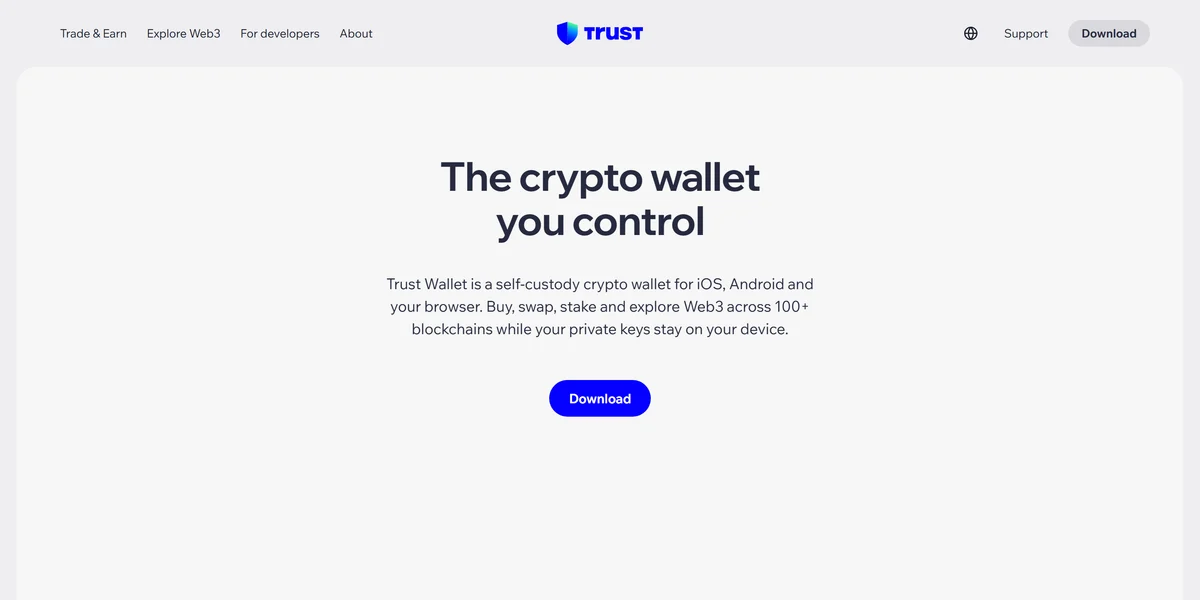
Trust Wallet is a self-custody wallet for iOS, Android and the browser, bought by Binance in 2018. Today it supports more than 100 blockchains and millions of assets, and it has added staking and more than 80 perpetual futures pairs inside the app.
A Trust Wallet Clone Script lets you launch a full-featured, non-custodial wallet on the same model. Users hold their own keys, swap tokens across chains and explore DApps from one mobile app.
Core Highlights:
- DApp access: users explore DeFi platforms through a built-in DApp browser and WalletConnect.
- Key protection: private keys and seed phrases stay encrypted on the user’s device.
- Easy login: many languages, plus fingerprint or Face ID login.
- NFT support: ERC-721 and ERC-1155 collectibles display in the app.
Why It’s Popular:
This crypto wallet clone script suits startups that want a mass-market, multi-chain wallet. It gives users self-custody without the cost of wiring up dozens of chains one by one. Trust Wallet itself charges no added service fee on swaps, so a clone can compete on price or earn through perps and partner fees.
2. MetaMask Wallet Clone Script

MetaMask is one of the most used Web3 wallets in the world, with more than 100 million downloads across Google Play, the App Store and the Chrome Web Store. It began as an Ethereum browser extension. In 2026 it also holds Bitcoin and Solana. It offers perps with up to 50x leverage, prediction markets and the MetaMask Card.
A MetaMask Wallet Clone Script copies this model for DeFi startups and Web3 projects. It works as a browser extension and a mobile app, and it connects to DApps on Ethereum and EVM chains.
Core Features:
- Two formats: a browser extension and a mobile app share one account.
- DApp access: the wallet signs DApp actions on Ethereum and similar chains.
- Custom networks: users can add custom RPC networks and swap tokens inside the wallet.
Why It’s the Top Crypto Wallet Clone Script:
MetaMask is the default wallet for DeFi users, so its clone gives instant Web3 reach. You skip building the blockchain connection layer and launch a DApp-ready wallet in a fraction of the time. MetaMask charges a 0.875% swap fee, which shows how much a well-used wallet can earn from swaps alone.
3. Coinbase Wallet Clone Script
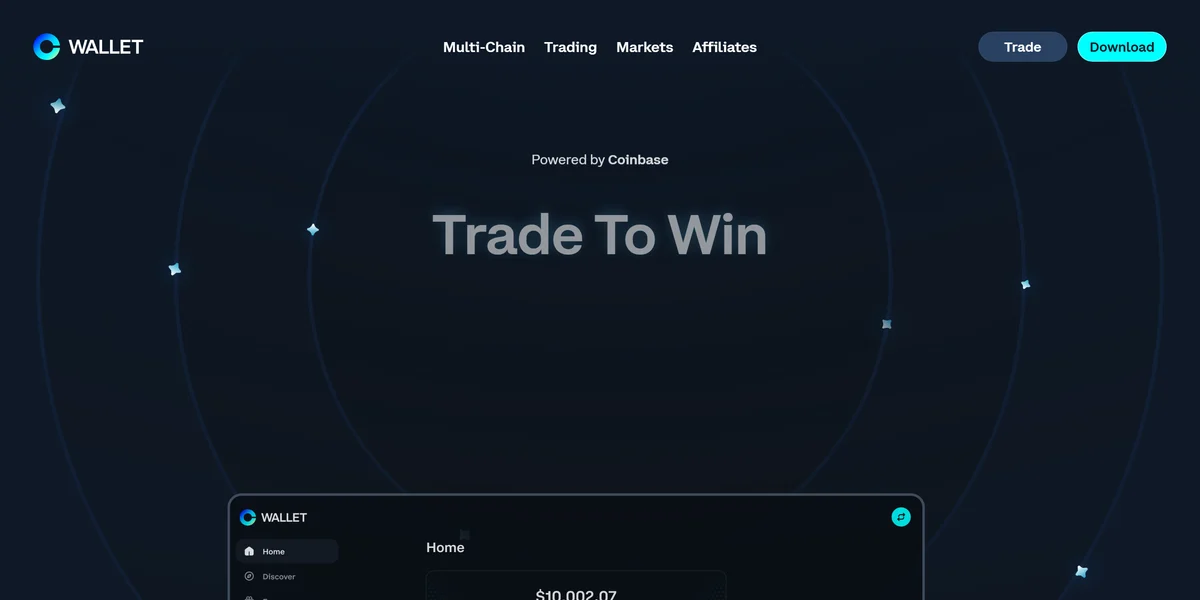
Coinbase Wallet is the self-custody wallet from the Coinbase exchange. In July 2025 Coinbase renamed it the Base App and added a social feed. On 10 September 2026 it switched the name back to Coinbase Wallet and refocused on trading. It now works on 11 chains, such as Base, Ethereum, Solana and Bitcoin. Users can also trade perps, tokenized stocks and prediction markets.
A Coinbase Wallet Clone Script gives you this “trade anything from one wallet” model. Keys stay with the user, while easy fiat on-ramps bring beginners in.
Core Features:
- One app for many assets: crypto, NFTs, DeFi access and multi-chain balances.
- User-held keys: private keys stay under the user’s control.
- Fiat on-ramp: card and bank purchases through licensed ramp partners.
Why Businesses Still Choose It:
This Coinbase wallet clone script suits exchanges and FinTech startups that want a self-custody wallet next to their main product. The rename back to Coinbase Wallet also carries a lesson for founders: users wanted a strong trading wallet more than a social app.
4. Exodus Wallet Clone Script
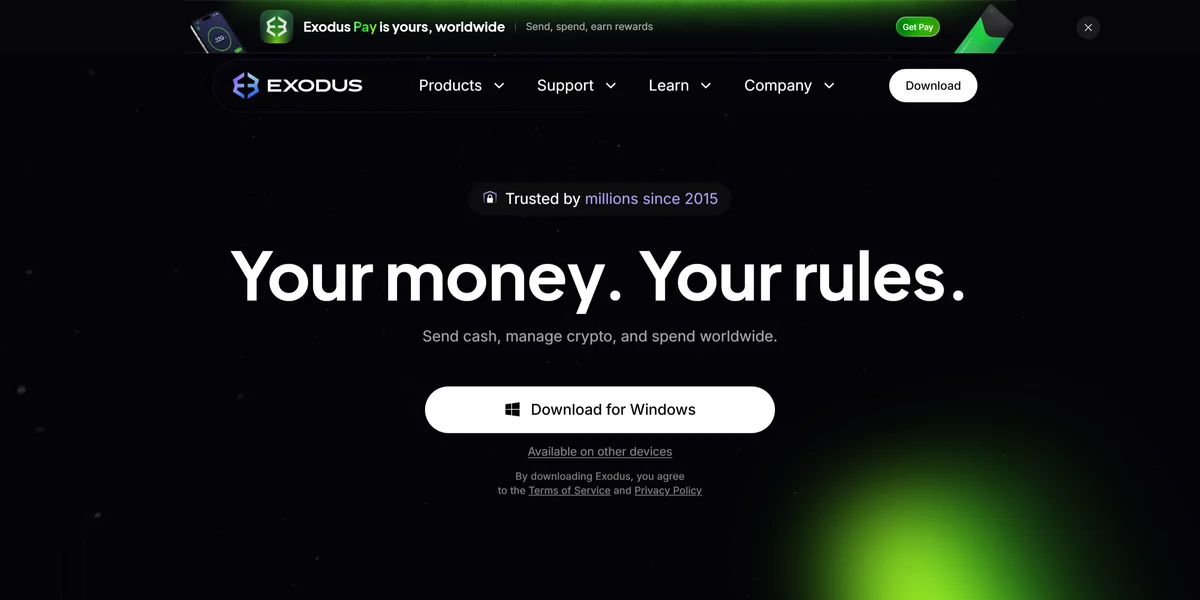
Exodus is a design-led wallet for desktop (Windows, macOS, Linux) and mobile, used since 2015. It supports more than 1,000,000 assets and works with Ledger and Trezor hardware wallets. Exodus is listed on NYSE American, and in Q2 2026 it reported 1.4 million monthly active users and $1.1 billion in swap volume.
An Exodus Wallet Clone Script copies this model for investors who value clean design and portfolio tracking.
Main Features:
- Desktop and phone: two apps that share one portfolio.
- Portfolio view: real-time charts, in-app swaps and encrypted key storage.
- Cold storage link: hardware wallet support for extra security.
Best Use Case:
This crypto wallet clone script fits brands for investors who want strong portfolio tools in an easy app. Startups gain a ready design system and avoid months of UI and UX work.
5. Phantom Wallet Clone Script
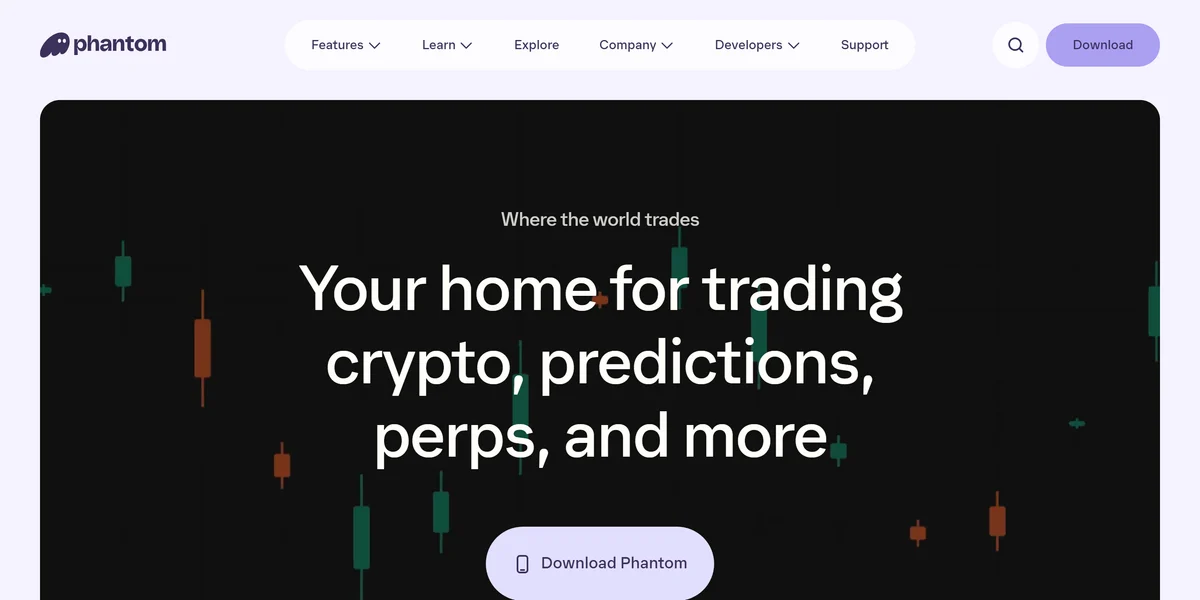
Phantom started as the leading Solana wallet and now serves more than 20 million users. It also works on Ethereum, Base, Polygon, Sui, Monad and Bitcoin. On top of swaps, it offers perps, prediction markets, a cash balance and a prepaid Visa card. Phantom charges a 0.85% fee on most swaps.
A Phantom Wallet Clone Script copies this model for NFT, gaming and trading projects.
Core Highlights:
- Fast, low-fee trading: SPL tokens, NFT storage, staking and in-app swaps.
- Safer signing: transaction previews and scam alerts before users sign.
- Multichain reach: Solana first, with EVM chains and Bitcoin added.
Why It’s Popular:
Phantom earned more than any other wallet on this list, about $114 million over the 12 months to 2 October 2026, according to DefiLlama. Its clone suits startups that want the same mix of fast swaps, memecoin trading and perps for active traders.
6. Guarda Wallet Clone Script
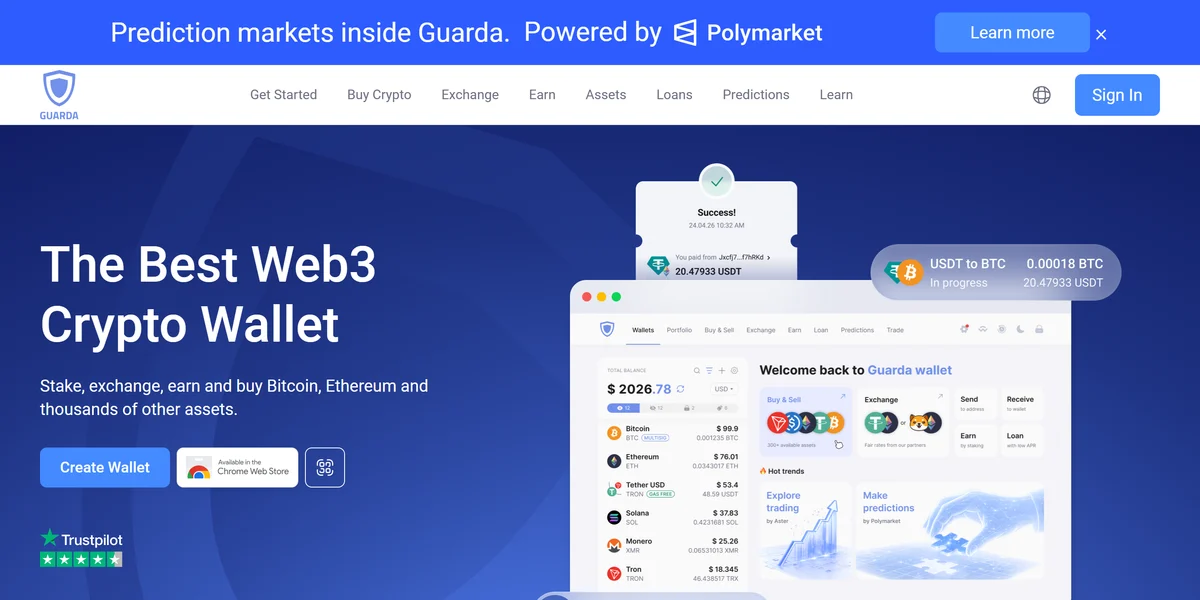
Guarda is a multi-platform wallet that supports more than 70 blockchains and over 1 million tokens. It runs on the web, desktop, mobile and as a Chrome extension, with staking on 14 networks, a built-in exchange and card purchases.
The Guarda Wallet Clone Script copies this wide-coverage model for businesses that serve many markets at once.
Core Highlights:
- Wide coverage: dozens of chains and a very large token list.
- Works everywhere: web, desktop, phone and browser add-on.
- Earn and trade: staking, built-in exchange and encrypted backups.
Why It’s Popular:
This crypto wallet clone script stands out for broad asset coverage. It suits a global wallet brand that does not want to add every token by hand.
7. ZenGo Wallet Clone Script
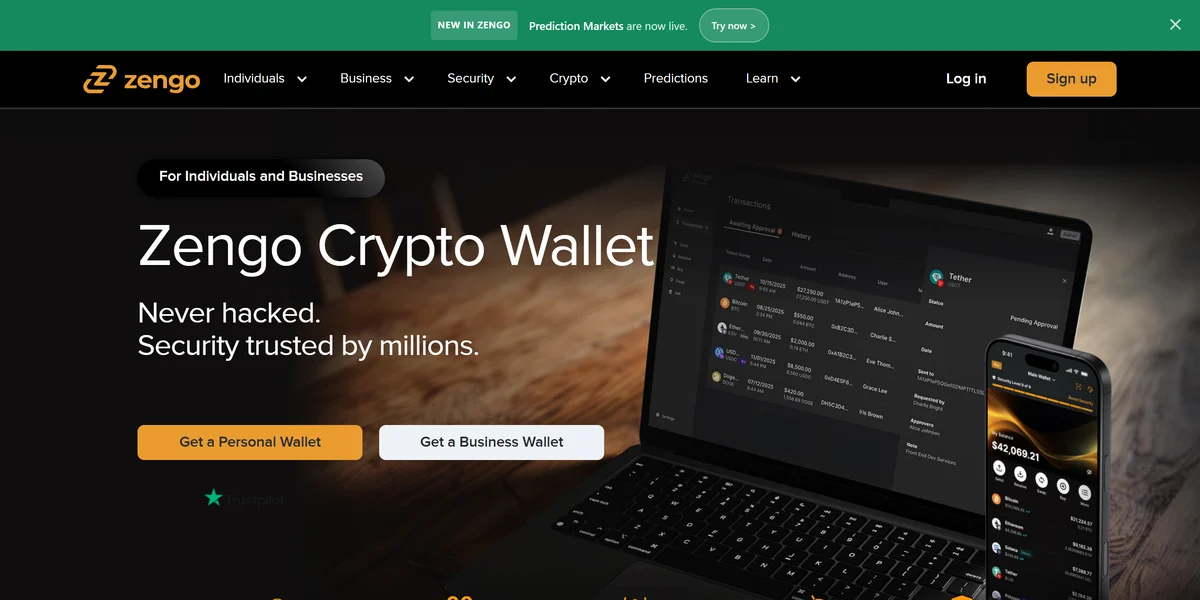
Zengo is a self-custody wallet with no seed phrase. It uses MPC (multi-party computation) to split the signing key into two shares: one on the user’s phone and one on Zengo’s server. Users recover their wallet with three factors: email, a recovery file and a 3D face scan.
A ZenGo Wallet Clone Script copies this keyless model for founders who want strong security without asking users to guard a seed phrase.
Core Highlights:
- No seed phrase: the full private key never exists in one place.
- Easy restore: face or fingerprint login, and a three-step restore on a new phone.
- Everyday features: multi-chain balances, in-app buy and swaps.
Why It’s Popular:
Lost seed phrases are one of the biggest reasons new users lose funds or never sign up. This crypto wallet clone script removes that problem while keeping the wallet non-custodial.
8. Rainbow Wallet Clone Script
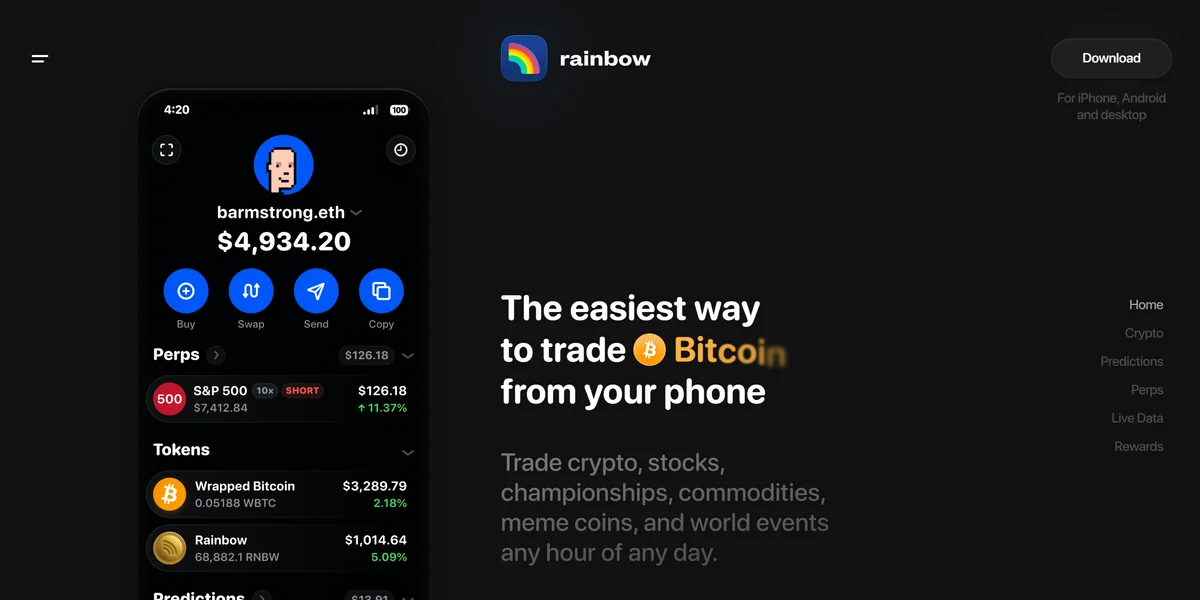
Rainbow is a colorful Ethereum and EVM wallet for iPhone, Android and desktop browsers. It began as an NFT-friendly wallet. In 2026 it also offers perps with up to 50x leverage, run on Hyperliquid. It adds prediction markets and its own $RNBW reward token.
The Rainbow Wallet Clone Script copies this design-first model for NFT communities and lifestyle brands.
Top Features:
- NFT view: each user’s NFTs shown in a clean, simple grid.
- WalletConnect: sign in to DApps across EVM chains.
- ENS names: send to readable names instead of long addresses.
Why It’s Popular:
The Rainbow wallet clone script suits creators, NFT projects and Web3 communities. It gives you a fun, polished wallet without heavy UI work, plus a rewards model you can adapt to your own token.
9. Zerion Wallet Clone Script
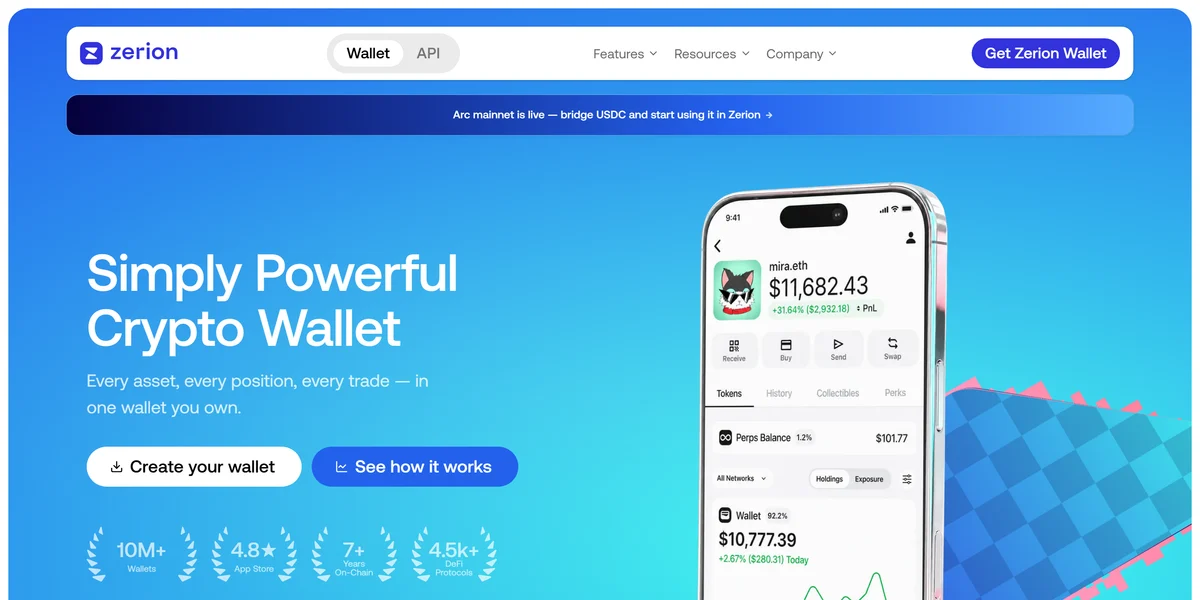
Zerion is a DeFi portfolio wallet that tracks more than 10 million wallets across 66 chains. It shows every token, NFT and DeFi position in one place and charges a 0.67% fee on swaps and bridges.
The Zerion Wallet Clone Script copies this model for users who invest across many DeFi protocols.
Core Highlights:
- Live portfolio: DeFi positions tracked across many networks in real time.
- Protocol access: lending, staking and liquidity platforms from one dashboard.
- Clear records: past trades plus profit and loss views.
Why It’s Popular:
This crypto wallet clone script suits DeFi-focused startups, because it removes the need to build an analytics engine from scratch. Instead of writing your own indexers and data parsers, you launch a ready DeFi portfolio wallet quickly and safely.
10. Trezor / Hardware Wallet Clone Script
Trezor makes open-source hardware wallets that keep private keys offline. Its 2026 range covers the Safe 3, Safe 5 and Safe 7. The Safe 7 costs $249 and adds Bluetooth, USB-C, two secure elements and wireless charging.
A hardware wallet clone script copies the companion app and signing flow of this model, so you can pair it with your own device or a partner’s hardware.
Core Highlights:
- Offline keys: private keys never leave the device.
- Strong access control: PIN and passphrase protection, with firmware checks.
- Easy pairing: USB or Bluetooth link to the phone or desktop app.
Why It’s Popular:
This crypto wallet clone script suits funds, custody firms and brands that serve big holders. It gives you a proven cold storage design without years of hardware security research.
Beyond these 10, other wallet models are worth a look. Rabby, OKX Wallet, Solflare and SafePal each serve a clear niche, from EVM power users to Solana and hardware-plus-app users. Whichever model you choose, the key is matching it to your users and business plan.
Key Features Comparison of the Top Crypto Wallet Clone Scripts in 2026
| Crypto Wallet Clone Script | Wallet Type | Chain Support (original, Oct 2026) | Security Model | How the Original Earns | Best For |
| Trust Wallet Clone Script | Mobile + extension | 100+ blockchains | Seed phrase + biometrics | Perps, partner fees (no added swap fee) | Mass-market retail |
| MetaMask Clone Script | Extension + mobile | EVM chains, Bitcoin, Solana | Seed phrase | 0.875% swap fee, perps, predictions | DeFi and Web3 startups |
| Coinbase Wallet Clone Script | Mobile + extension | Base, Ethereum, Solana, Bitcoin and 7 more | User-held keys | Swaps, bridges, referral fees | Exchanges and FinTech |
| Exodus Clone Script | Desktop + mobile | 1,000,000+ assets | Seed phrase + hardware support | Swaps, payments | Investors |
| Phantom Clone Script | Extension + mobile | Solana, Ethereum, Base, Polygon, Sui, Monad, Bitcoin | Seed phrase | 0.85% swap fee, perps | Traders, gaming, NFTs |
| Guarda Clone Script | Web, desktop, mobile, extension | 70+ chains, 1M+ tokens | User-held keys | Exchange and buy partners | Global multi-asset apps |
| ZenGo Clone Script | Mobile | Major chains | MPC, no seed phrase | In-app buy and trade | Beginners |
| Rainbow Clone Script | Mobile + extension | Ethereum and EVM chains | Seed phrase | Swaps, perps | NFT creators and communities |
| Zerion Clone Script | Mobile + extension | 66 chains | Seed phrase | 0.67% swap and bridge fee | DeFi investors |
| Trezor Clone Script | Hardware + app | Major chains | Offline cold storage | Device sales | Institutions |
The table shows that no single wallet wins on every point. Some lead on chain coverage, some on security and some on trading revenue. The best crypto wallet clone script is the one whose strengths match your users and your revenue plan.
How a Crypto Wallet Clone Script Works
A wallet clone script is not one app. It is a set of parts that work together, and knowing them helps you judge any vendor’s demo.
- Key management: the core of any wallet. It creates and stores keys with a seed phrase, MPC shares or a hardware device.
- Blockchain connection: node or RPC providers link the wallet to each chain, so it can read balances and send transactions.
- Indexer and data layer: this pulls token prices, NFT data and transaction history, so the app loads fast.
- Swap and bridge engine: an aggregator finds the best route across DEXs and bridges, and your fee is added here.
- On-ramp partners: licensed providers let users buy crypto with a card or bank transfer.
- Admin panel: your team sets fees, lists tokens, sends alerts and tracks usage.
Because these parts already exist in a clone script, your build time goes into branding, extra features and testing. That is why a clone launches in weeks rather than months.
How to Choose the Best Crypto Wallet Clone Script for Your Business
Many founders make a mistake at this stage. They focus only on features and ignore strategy. Choosing the best crypto wallet clone script is not about copying a popular wallet. It is about understanding your users, your rules and your long-term growth.
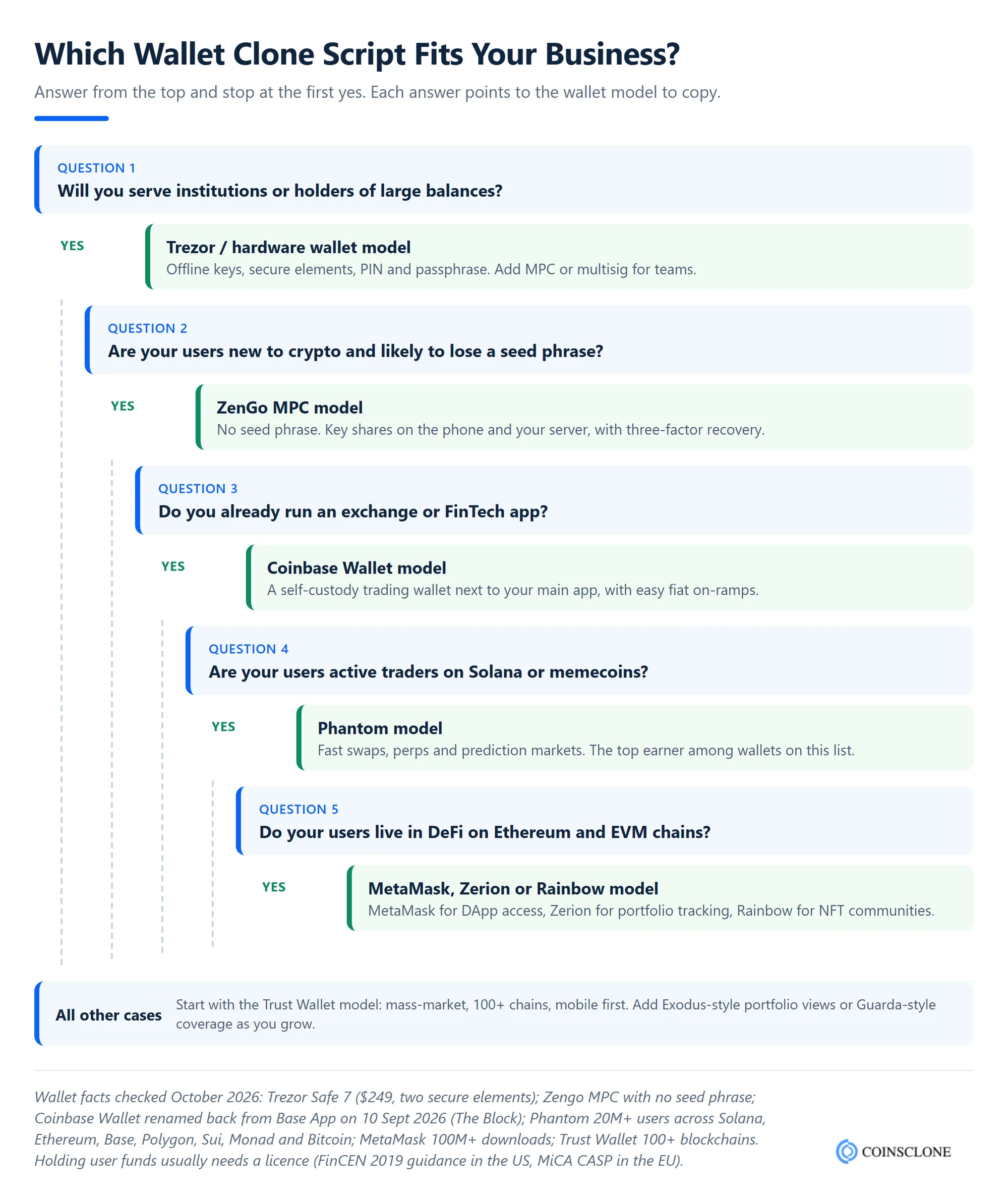
The decision tree below gives you a fast starting point. Answer from the top and stop at the first yes.
What Founders Must Check Before Choosing a Crypto Wallet Clone Script
- Define your target audience: retail users, DeFi users and NFT creators all expect different things. Without a clear picture of your users, even advanced crypto wallet clone software can fail.
- Make security the base: in 2026, users expect face or fingerprint login, encrypted keys, clear previews before they sign, and MPC or hardware options. Without strong security, you cannot build trust.
- Check the vendor’s real experience: never choose a vendor on marketing claims alone. Ask for live demos, case studies and wallets already in app stores.
- Pick the right chains: match chains to your users. Ethereum, BNB Chain, Solana, Base and other Layer 2 networks are the most common picks.
- Plan DeFi and NFT features: staking, swaps, perps, NFT storage and portfolio tracking keep users active.
- Plan for scale: the backend must handle growing users and busy network days. The code should allow full branding and new features.
- Get compliance ready: if you hold user funds or sell crypto directly, you need KYC and AML checks. More on this below.
Checklist of Features Before Selecting a Crypto Wallet Clone Script
- Strong security: two-step login, multisig or MPC, strong encryption and DDoS shields.
- Custom design: freedom to change the UI, apply your brand and add plugins that set you apart.
- High performance: smooth handling of swaps, staking and busy days without slowdowns.
- Full features: multi-coin support, stablecoins, smart contract support and a clear dashboard.
- Vendor support: past work, case studies, clear support terms and 24/7 help.
- Ready for rules and devices: KYC and AML modules where needed, and native apps for Android and iOS.
Finally, ask for clear pricing, good documentation, onboarding help and a written post-launch support plan. That includes how often you get updates and how fast the team responds. When all of this lines up, a crypto wallet clone script becomes a strong base for long-term growth.
How Much Does a Crypto Wallet Clone Script Cost in 2026?
Cost depends on how much you change and how many chains you support. Published 2026 agency cost guides put a basic wallet MVP at about $15,000 to $50,000. A wallet with many chains and swaps costs $50,000 to $200,000. A large wallet for banks or funds runs $200,000 to $500,000 or more. A clone script usually sits at the lower end of each band, because the core is already built and tested.
Time matters as much as money. With Coinsclone, a white label wallet launches in about 3 to 5 weeks, and a basic custom wallet takes about 8 to 12 weeks. Extra chains, MPC security, hardware support and native apps add time.
Also plan for running costs after launch. These include node and data APIs, app store fees, audits, support and updates. Our full breakdown of crypto wallet development cost covers each line.
How a Wallet Built From a Clone Script Makes Money
A wallet is free for users, so you need a clear revenue plan from day one. The top wallets in this list show the main options:
- Swap and bridge fees: the biggest stream. MetaMask charges 0.875%, Phantom 0.85% and Zerion 0.67%.
- Perps and prediction builder fees: MetaMask, Phantom, Trust Wallet and Rainbow now all offer perps, and earn a builder fee on each trade.
- Staking commission: a share of staking rewards. MetaMask keeps 15% of rewards in its pooled staking.
- On-ramp referrals: a share of fees when users buy crypto through a partner.
- Premium plans and hardware: Zerion sells a $99 a year Premium plan, and Trezor sells devices.
How much can swaps earn? The worked example below uses real swap volume per Exodus user from Q2 2026. It shows what a new wallet with 10,000 active users could earn each month.
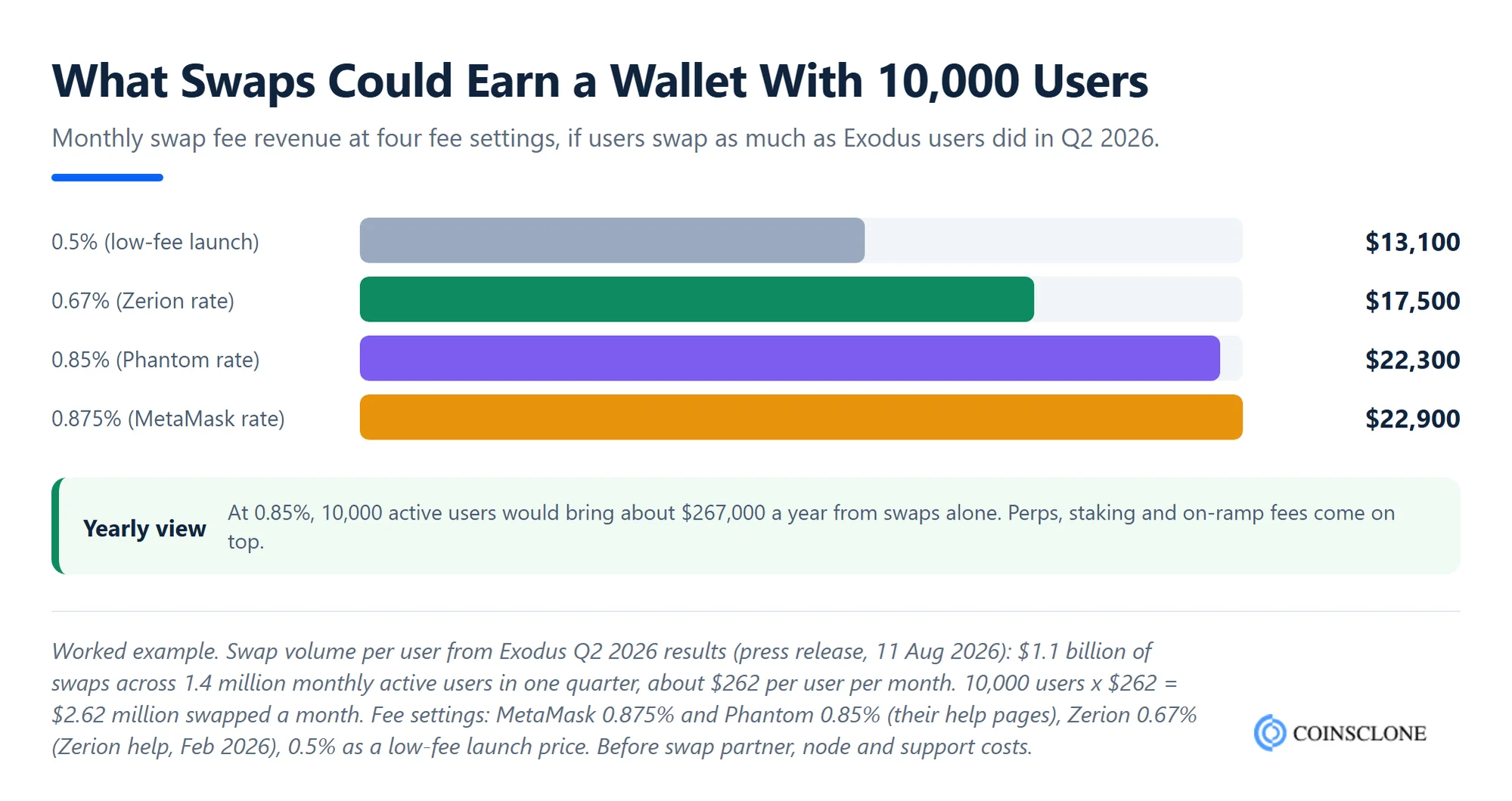
Your real numbers will depend on how active your users are and on what your swap partners charge. For more detail, see our guide on how crypto wallets make money.
Legal Points to Clear Before You Launch a Wallet Clone
A clone script copies features, not a brand. Two legal points matter most.
- Brand and design: never use another wallet’s name, logo or look. “Trust Wallet clone” describes the feature set; your app must carry your own name and design, or you risk trademark claims and app store removal.
- Custody rules: in the US, FinCEN’s 2019 guidance says firms that only provide self-custody wallet software are not money transmitters. Wallets that hold user funds usually are. In the EU, MiCA treats holding crypto for clients as a licensed service, so a custodial wallet needs a CASP licence.
This is why most clone scripts on this list are non-custodial. If you plan to hold user funds, read our comparison of custodial vs non-custodial wallets and get legal advice in each market you serve.
Key Business Benefits of the Best Crypto Wallet Clone Script
Using the best crypto wallet clone script in 2026 gives you clear advantages. It cuts build time from months to weeks while keeping proven features. It lowers costs and removes the hard work of building wallet architecture from scratch.
The software brings tested security, multi-chain support and DeFi access. Encrypted key storage and biometric login build user trust. Full customization lets you create a unique brand.
Most importantly, it gives startups the speed to catch market openings early. In a fast-moving Web3 market, timing is everything.
Why Hire Coinsclone for Crypto Wallet Clone Development?
Many founders believe buying a crypto wallet clone script is enough. This belief often leads to failure. A crypto wallet clone script without expert customization and security checks is just a template.
Hiring Coinsclone as your crypto wallet development partner means your wallet is not only deployed but tuned for speed, security and user growth. Many founders do not know nodes, smart contract audits and key storage in depth. Without a skilled team, hidden flaws can slip through.
Since 2018, Coinsclone has delivered 350+ platforms for 200+ clients across 20 industries. We shape your wallet clone to match your brand and set up the chains you need. Our crypto wallet developers add compliance modules where needed and test every flow before launch. We also provide post-launch updates and scaling support.
If you want a branded wallet fast, our white label crypto wallet launches in about 3 to 5 weeks. When a founder tries to manage everything alone, delays, security gaps and poor user experience become common. Working with a trusted crypto wallet development company closes that gap and gets you to market faster with stable software.
Frequently Asked Questions
What is a clone wallet?
In business terms, a clone wallet is a wallet app built from a crypto wallet clone script. The script is ready-made code that copies the features of a proven wallet, such as MetaMask or Trust Wallet, under your own brand. Be careful with the term, though. Scammers also publish fake “clone” apps that copy a real wallet’s name to steal seed phrases. A legitimate clone uses its own name and design and never imitates another brand.
How do I create a wallet like MetaMask?
Decide your chains and custody model first, then choose a route: a MetaMask clone script, a white label wallet or a custom build. Add a browser extension and a mobile app, DApp connection, swaps and strong key storage. Then run a security audit and publish under your own brand. A clone script is the fastest route, since the core is already built.
How do crypto wallet apps make money?
Most earn from swap and bridge fees, usually under 1% of each trade: MetaMask charges 0.875%, Phantom 0.85% and Zerion 0.67%. In 2026, perps and prediction market builder fees have become a fast-growing second stream. Other sources include staking commissions, on-ramp referral fees, premium plans and, for hardware wallets, device sales.
How long does it take to make a crypto wallet?
With Coinsclone, a white label wallet launches in about 3 to 5 weeks, and a basic custom wallet takes about 8 to 12 weeks. Larger multi-chain, MPC or institutional wallets take several months, because they need more features, testing and audits.
Can I create my own crypto wallet?
Yes. Anyone can set up a personal wallet for free in apps such as Trust Wallet or MetaMask. If you want to launch a wallet business, you can build one from a clone script, a white label solution or custom code. Check the custody rules in your target markets before launch, especially if your wallet will hold user funds.