

Each time you check a wallet balance or send a coin, a node answers. Someone pays to keep that node online. More and more, that someone is a business, not a hobbyist.
Crypto node hosting is now a real market. Validators take a cut of the rewards on stake that clients hand them. API firms sell access to nodes by the request.
This guide is for founders and product teams sizing up that market. You may want to sell node services. Or you may just want to stop relying on someone else’s nodes. Either way, you will learn which node types matter, which business models make money, how much stake and hardware each network needs, and the one risk that can wipe out a year of profit in an afternoon.
What Is Crypto Node Hosting, and How Do Validators Earn?
Crypto node hosting means running blockchain software on servers that stay online, in sync and easy to reach at all hours. A validator is a node with stake locked behind it. It helps the network agree on new blocks, and the network pays it rewards for that work.
This matters for a business, because only some nodes earn money on their own:
- Validators earn network rewards on the stake they lock up. When the stake belongs to clients, the validator keeps a cut of those rewards.
- API nodes earn nothing from the network. But apps will pay for fast, steady access to read data and send coins.
- Full nodes and archive nodes earn nothing by themselves. Their value is trust: you check the chain yourself instead of taking a third party’s word for it.
So a node only turns into income when it links to one of four things. Those are staking rewards, a cut of client rewards, paid API use, or a cost you would pay someone else if you did not run it.
What Types of Nodes Can a Business Run?
Five node types cover almost every paid setup. They differ far more in cost than in software.
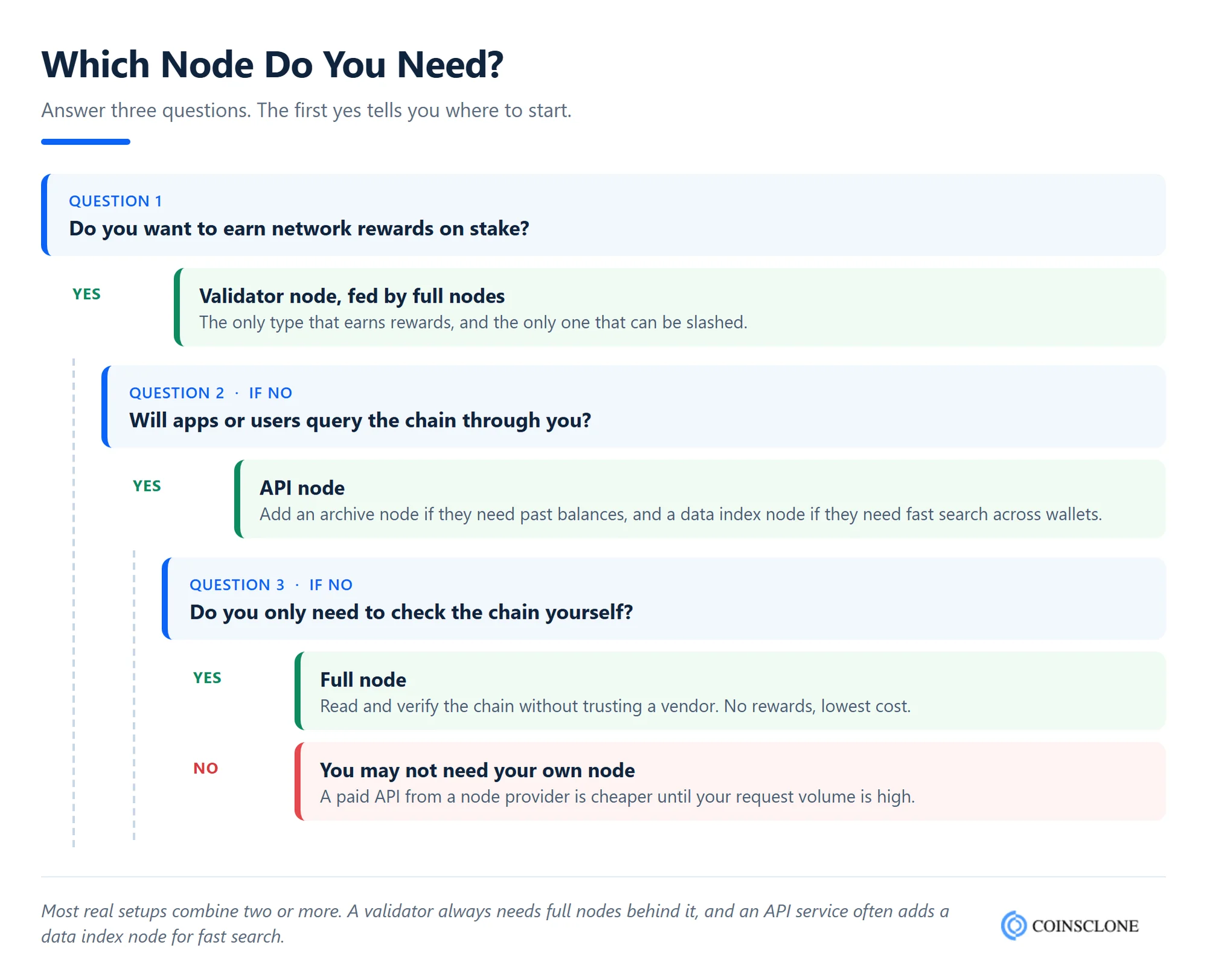
- Full node: stores the current state of the chain and checks each block. It is the base for anyone who wants to read the chain without trusting a vendor.
- Archive node: keeps every past state, not just the latest one. Block explorers, tax tools and data teams need it, and it uses far more storage than a full node.
- API node: a full or archive node that apps can query to read balances and send coins. This is the node that wallets and apps talk to.
- Validator node: holds signing keys and helps agree on new blocks. It is the only type that earns network rewards, and the only type that can be fined.
- Data index node: turns raw chain data into tables that are quick to search. An app can then ask for each transfer a wallet made without scanning millions of blocks.
Most real setups mix them. A wallet company often runs API and data nodes for its own app and never touches a validator. A staking firm runs validators plus the full nodes that feed them.
Five Business Models Built on Nodes
The software is free and open. What firms sell is uptime, safety and the work they take off someone else’s plate.
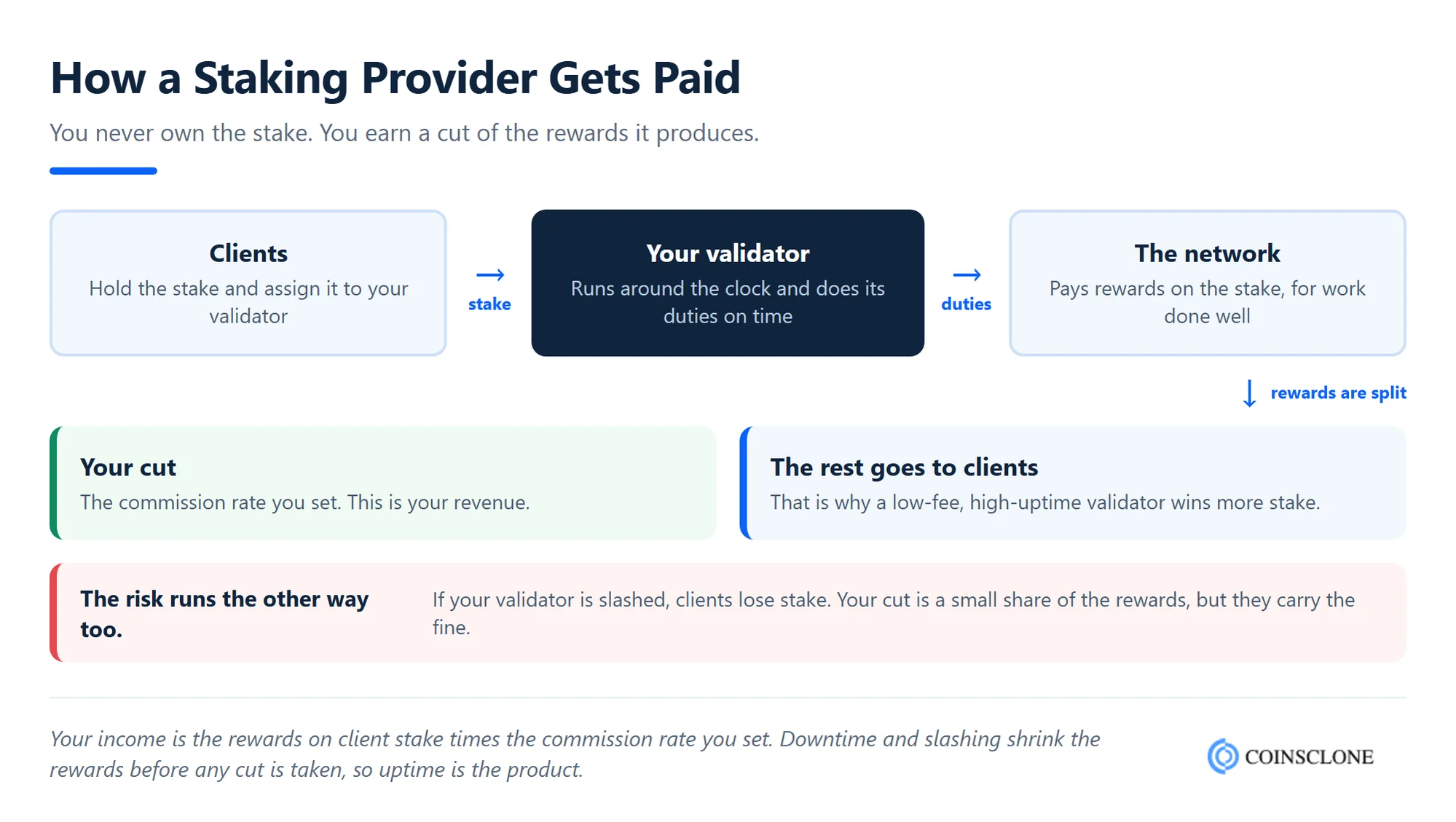
- Staking provider: run validators and keep a cut of the rewards on stake that clients assign to you. Income grows with the stake you win, so your track record and uptime are the product.
- Staking under another brand: exchanges, wallets and custodians want to offer staking without running validators. You run the servers under their name and share the cut.
- Node access as a service: sell API access by the request or by the month. This is the model behind the big API firms. They compete on speed, uptime and how many chains they cover.
- Private nodes for large firms: run single-client nodes for companies that cannot share servers, for legal or speed reasons.
- Nodes to cut your own costs: run your own nodes for your own product. It adds no new income. But at high request volume it can beat a third-party API bill, and it removes a supplier you depend on.
These models can overlap. The firms that last tend to start with one, then add a second once the team to run it exists.
How Much Stake Does It Take to Run a Validator?
Each network sets its own stake rules. For a new business, this is often what decides which chains it can serve.
| Network | Stake needed | What to know |
| Ethereum | 32 ETH per validator, up to 2,048 ETH | Since the Pectra upgrade in 2025, one validator can hold up to 2,048 ETH, so large firms now run far fewer validators |
| Solana | No fixed floor | The real limit was the cost of voting, about 1.1 SOL a day, which set how much stake you needed to break even |
| Cosmos SDK chains | No fixed floor, but a cap on active slots | Only the top validators by stake get a slot, so the real bar is whatever the last one in holds |
Two points change the math for a business. First, the stake does not have to be yours. A staking firm earns its cut on client stake it never owns. Second, the bar moves. On Cosmos chains it rises and falls with the fight for a slot.
A change landing this month. Solana’s Alpenglow upgrade passed a vote of validators in August 2026. It is due to go live on the main network on 28 September 2026. It drops the vote sent with each block and swaps in a smaller entry fee. That cuts the daily cost of running a Solana validator, and so cuts the stake you need to break even. If you are pricing a Solana business, redo your math once the upgrade is live. Do not reuse numbers from before it.
What Does It Cost to Run a Validator?
The stake is rarely the biggest cost to plan for. The day-to-day running of the nodes is, and it is easy to guess too low.
- Hardware: needs vary a lot by chain. Solana sits at the heavy end. The docs for its Agave client ask for a fast CPU with at least 12 cores and 24 threads, 256 GB of RAM or more, several NVMe drives, and at least 1 Gbit/s of network speed each way, with 10 Gbit/s preferred. Ethereum validators run on far lighter machines.
- Network traffic: often the shock line on a cloud bill, because nodes move a lot of data all day.
- Backup setup: a second site ready to take over, so one data center outage does not cost you weeks of rewards.
- Alerts and on-call staff: someone has to answer at 3am when a node falls out of sync. This is often the largest cost, and you cannot automate all of it.
- Software upgrades: networks ship upgrades on their own schedule, sometimes with short notice. Miss a required one and your validator goes offline.
- The cost of your own stake: if the stake is yours, it stays locked, and its value moves with the token price for as long as you run.
Build the budget around the running costs, not the hardware. A server is one line on an invoice. A team that picks up the phone at 3am is a payroll.
What Is Slashing, and How Do You Avoid It?
Slashing is the fine a network charges when a validator breaks the rules. It is the single largest risk in this business. It burns part of the locked stake, and for a staking firm, that stake is client money.
Three kinds of fault matter:
- Signing twice: signing two blocks or votes that clash for the same time slot. This is the classic offense, and it almost always comes from running the same keys in two places at once.
- Downtime: being offline. On most networks this costs you missed rewards and small fines rather than slashing. On some chains it can grow worse.
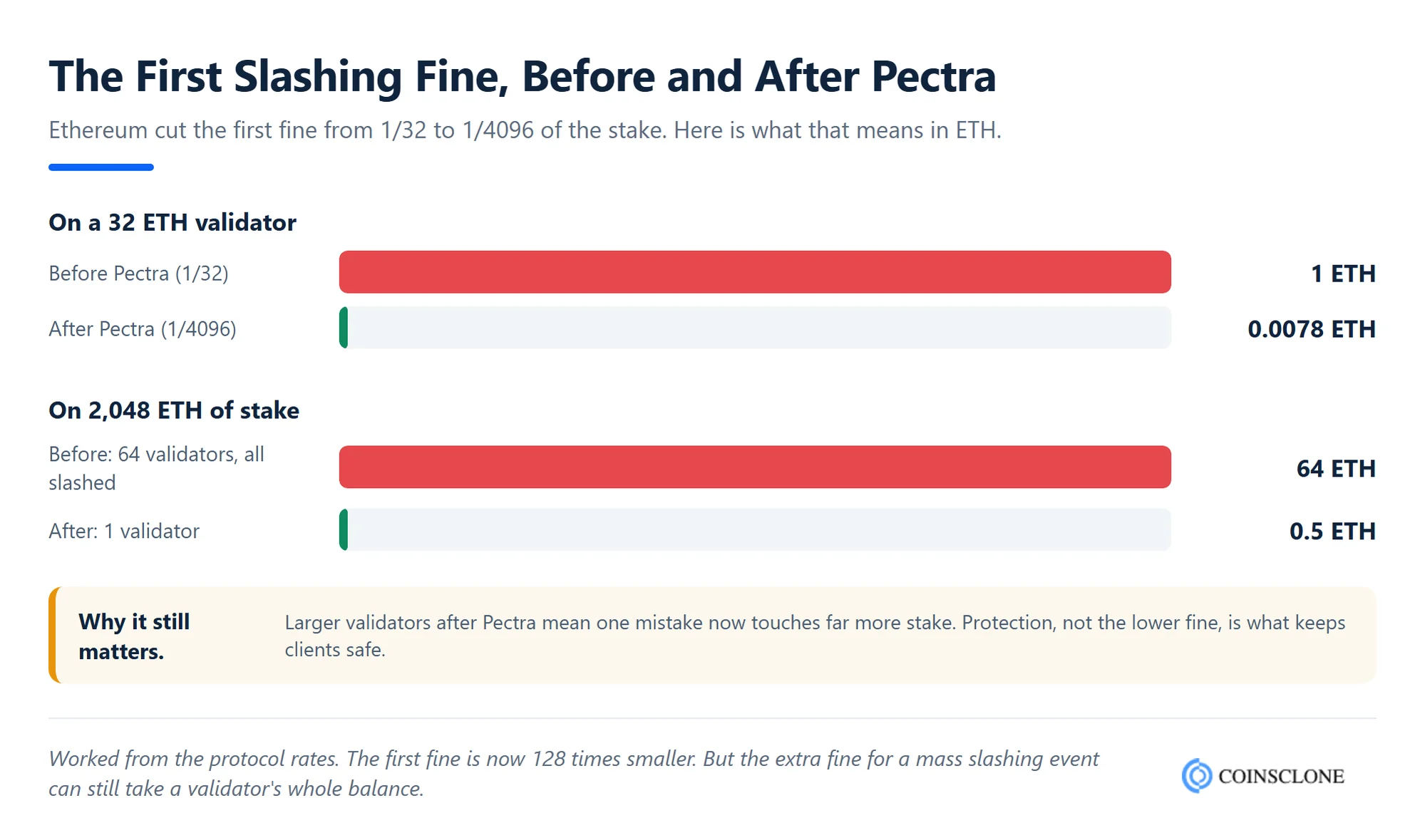
- Failures that hit many at once: when lots of validators fail at the same time, the fine grows with the size of the event. On Ethereum, the Pectra upgrade cut the first slashing fine from 1/32 to 1/4096 of the staked balance. But the extra fine for a mass event can still take a validator’s whole balance.
Most slashing cases follow one pattern. A team tried to boost uptime by running a backup validator with the same keys, and both came online. Uptime is worth guarding. Never guard it with two live signers.
Controls that stop it:
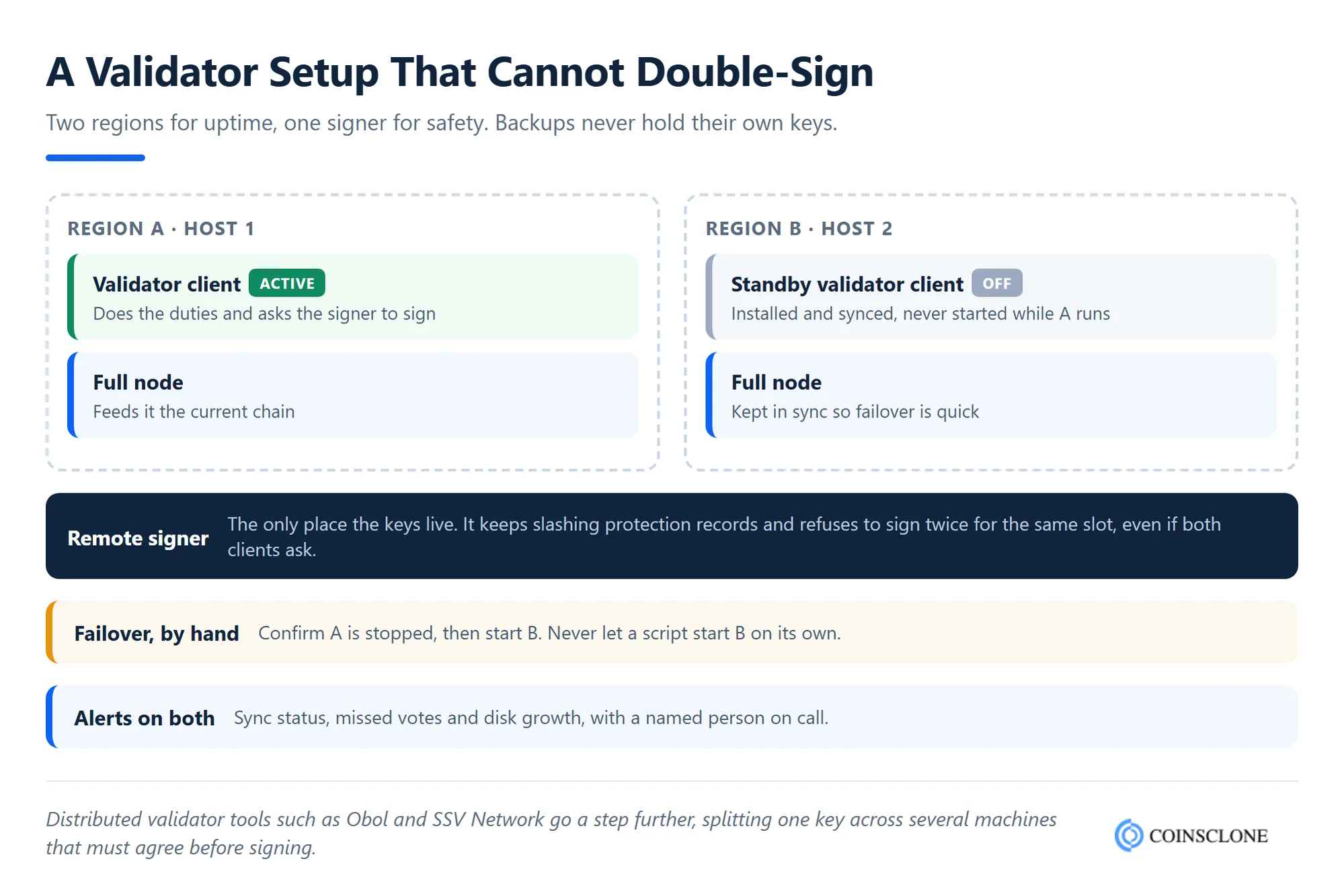
- Run one live signer per validator key, always.
- Use a remote signer with slashing protection, so it refuses to sign anything that clashes.
- Move the slashing protection records with the keys when you switch servers. Never start fresh on a new machine.
- Switch to a backup by hand and on purpose. Do not let a script bring a second signer online.
- Spread validators across different client software, regions and hosts, so one bug or outage does not hit them all at once.
Shared validator tools, from projects such as Obol and SSV Network, split one validator’s key across several machines. The machines must agree before they sign. That removes the single weak point without creating a second live signer, which is why large firms use it more and more.
Should You Self-Host, Use Bare Metal, Cloud or a Managed Provider?
No answer fits every case. But there is a right answer for your appetite for risk and the size of your team.
- Home or office hardware: the cheapest option, and fully in your hands. But one power or internet cut takes you offline. Fine for testing and very small setups, not for a paid service.
- Your own hardware in a data center: good power and network, full control. But each hardware fault is yours to fix.
- Rented bare metal: whole servers you rent from a host. No other tenants slow you down, speed stays steady, and it is the most common choice for serious validators.
- Public cloud: fast to start and easy to grow. But traffic costs add up. And when too many validators sit with a few big cloud firms, one outage can hit them all, which networks try hard to avoid.
- Managed provider: someone else runs the servers and carries the on-call load. You give up some profit so you do not have to build a team.
Most paid operations end up on bare metal across at least two hosts and two regions. They add a managed partner for any chain their own team does not know well.
Are There Rules for Running a Validator?
It depends on whether you hold client funds, and the rules shifted a lot in 2025.
In the United States, the SEC’s Division of Corporation Finance put out a staff statement on 29 May 2025. It said that staking to help run a network does not, by itself, count as a sale of securities. That covers staking on your own, staking with others’ stake, and some setups where a firm holds the coins. A second staff statement on liquid staking followed. Two limits apply. Staff statements are not binding law. And the guidance does not cover restaking. Firms that hold client coins should also make sure their terms do not suggest they choose how rewards are handled.
In the European Union, the question under MiCA is whether you hold assets for a client. If you do, you are likely offering custody, which needs a license. A firm that only runs validator servers for stake it never controls is in a very different spot from one that holds client tokens.
Everywhere, tax on staking rewards, sanctions checks on who you take stake from, and your terms of service matter more than most node teams expect. None of this is legal advice. Take it to a lawyer in each market you serve before you accept client stake.
How Do You Start a Node Business, Step by Step?
- Pick the model first: staking provider, branded staking, node access or cost saving. Each needs a different team, budget and sales plan.
- Start with one or two networks: weigh the stake rules, hardware cost, reward rates and how crowded the market already is. Depth on one chain beats a thin spread across ten.
- Settle the legal side: decide whether you will ever hold client funds, and get the legal view in writing before launch, not after.
- Build with slashing protection from day one: remote signing, one live signer per key, and backups that never run two signers at once.
- Set up alerts and on-call: alerts for sync status, missed votes and disk growth, with a named person in charge at each hour.
- Test first, then launch small: run on a test network through at least one network upgrade before you touch real stake.
- Publish your track record: uptime, results and past incidents are what win client stake. Firms that publish them win the clients who check.
Build Your Node or Staking Setup with Coinsclone
Most of the work in a node business is not the node. It is the staking platform, the dashboards, the client reports, the wallet links and the admin tools around it. That is the part Coinsclone builds.
Coinsclone builds staking platforms, validator dashboards, branded staking products and the wallet and exchange links around them, for firms launching node and staking services. Talk to our blockchain experts for a free talk and live demo.
Frequently Asked Questions
What is crypto node hosting?
Crypto node hosting means running blockchain software on servers that stay online and in sync at all hours. It covers full nodes, archive nodes, API nodes, validators and data index nodes. You can run them on your own hardware, in a data center, on rented bare metal, in the cloud, or through a managed provider.
How do validators make money?
Validators earn network rewards for helping agree on new blocks, based on the stake they lock up. When the stake belongs to clients, the validator keeps a cut of those rewards. Staking firms build their business on that cut, and it grows with the stake they win.
How much ETH do you need to run an Ethereum validator?
You need at least 32 ETH per validator. Since the Pectra upgrade in 2025, one validator can hold up to 2,048 ETH, so large firms now pool stake into fewer validators. You can also earn from Ethereum staking without 32 ETH of your own, by running validators for client stake.
What is slashing in crypto staking?
Slashing is a fine that burns part of a validator’s locked stake when it breaks the rules. The most common cause is signing two votes that clash for the same time slot. It almost always happens when a team runs the same validator keys in two places at once, often while trying to boost uptime.
Is it better to host a validator in the cloud or on bare metal?
Most paid operations prefer bare metal, because whole servers give steady speed with no other tenants. Cloud is faster to set up. But traffic costs add up, and when too many validators sit with a few cloud firms, one outage can hit them all at once.
Is running a validator legal?
In the United States, an SEC staff statement from May 2025 said that staking to help run a network does not, by itself, count as a sale of securities. It is not binding law, and it does not cover restaking. In the EU, holding client funds likely makes you a custody firm under MiCA. Rules differ by country, so get legal advice before you accept client stake.
What does Solana’s Alpenglow upgrade change for validators?
Alpenglow passed a vote of validators in August 2026 and is due to go live on 28 September 2026. It drops the vote sent with each block and swaps in a smaller entry fee. That cuts the daily cost of running a Solana validator, and the stake you need to break even.